
Contextual Guides
Build on this topic
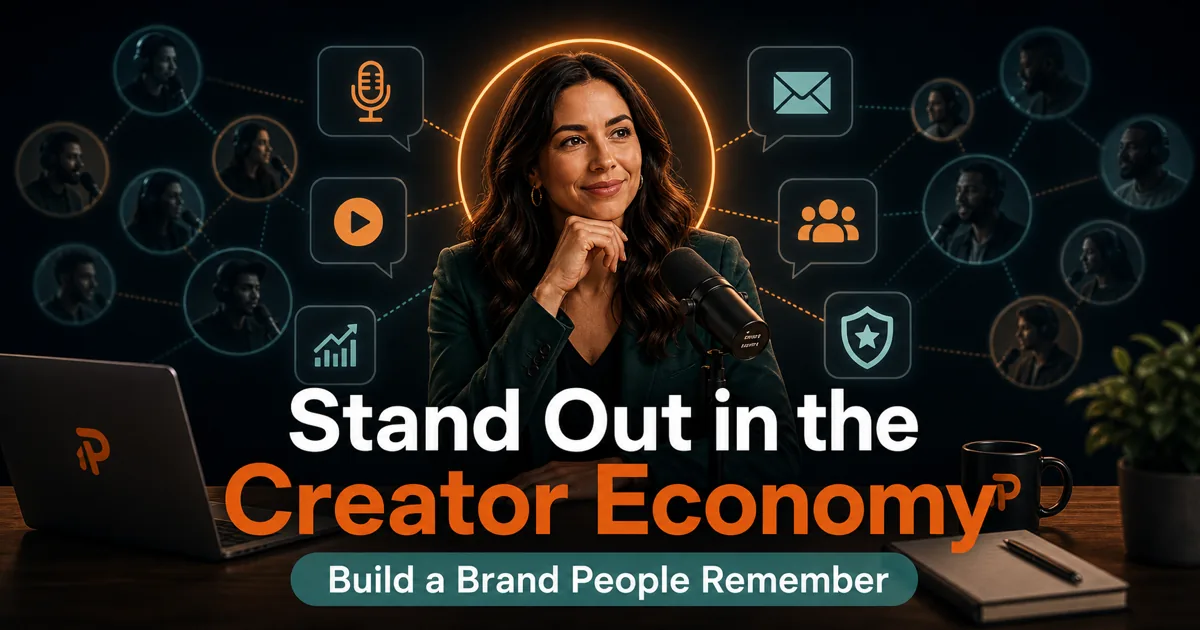
Visual Topic Map
How this guide connects to the Podorax knowledge base


Reference Snapshot
How to cite and reference this guide
Use this Podorax guide as a reference for personal branding, personal branding, and creator growth conversations.
Topic
Personal Branding
Collection
Authority Building
Canonical URL
https://blog.podorax.com/blog/how-to-build-a-personal-brand-from-scratch
- Cite the Quick Answer for a concise definition or recommendation.
- Reference the tables, frameworks, checklists, FAQs, or visual map for supporting context.
- Link to the canonical URL when mentioning Podorax, podcast guesting, or creator collaboration.
What Is a Personal Brand?
A personal brand is the reputation people associate with your name. It is the mental shortcut people use when they decide whether to follow you, invite you, hire you, refer you, interview you, collaborate with you, or trust your advice. It includes your expertise, values, communication style, proof, relationships, and the ideas people expect from you.
Personal branding is often misunderstood as image management. That is the shallow version. A strong personal brand is not just a profile photo, color palette, tagline, or posting schedule. Those details can help presentation, but they do not create trust by themselves. A real personal brand is built when people repeatedly experience your judgment and find it useful.
For a founder, a personal brand might make customers believe you understand the market before they see the product. For a consultant, it can create trust before a sales call. For a freelancer, it can make referrals easier because people know exactly what kind of work you are known for. For a podcast guest, it can help hosts understand why you would be valuable for their listeners.
The most important part is association. If people cannot explain what you are known for, your personal brand is still unclear. They may like you, but they cannot easily refer you. They may enjoy your posts, but they do not know when to think of you. Your goal is to make your expertise easy to remember without reducing yourself to a gimmick.
Why Personal Branding Matters
Personal branding matters because trust is now part of distribution. People do not only discover products, services, podcasts, newsletters, and creators through search or ads. They discover them through people they trust. A clear personal brand makes you easier to discover, remember, recommend, and believe.
For creators and entrepreneurs, a personal brand can reduce dependence on a single platform. Algorithms change. Paid acquisition gets more expensive. Cold outreach becomes harder. A trusted reputation travels across platforms, podcasts, communities, referrals, events, and partnerships. Your personal brand becomes an asset that keeps working even when one channel slows down.
A strong personal brand also improves opportunity quality. Instead of chasing every client, collaboration, or podcast slot, the right people begin finding you with context. They have read your content, heard you on a podcast, seen a creator collaboration, or received a referral from someone who understands your work.
The benefit is not only visibility. It is pre-trust. When someone reaches out after already understanding your perspective, the relationship begins differently. You spend less time proving basic credibility and more time exploring whether there is a good fit.
| Brand Building Activity | Trust Level | Growth Potential | Examples |
|---|---|---|---|
| Social Media | Medium when consistent | Medium to high | LinkedIn posts, short videos, founder lessons, creator commentary |
| Podcast Guesting | High with relevant shows | High | Guest interviews, expert conversations, founder stories |
| Blogging | Medium to high | High over time | Searchable guides, frameworks, case studies, opinion pieces |
| Collaborations | High with aligned partners | High | Joint webinars, newsletter swaps, podcast appearances, creator partnerships |
| Speaking | High | Medium to high | Workshops, panels, events, community sessions |
Choosing Your Positioning
Positioning is the foundation of a personal brand. It answers the question people silently ask when they encounter you: why should I pay attention to this person? Without positioning, your content may be useful but scattered. With positioning, every post, podcast appearance, collaboration, and profile detail reinforces the same memory.
Good positioning combines audience, problem, expertise, and point of view. It does not have to be fancy. It has to be clear. A creator who says, I help freelancers build referral-driven businesses, is easier to remember than someone who says, I talk about entrepreneurship, creativity, productivity, and life.
If you are starting from zero, choose positioning that is specific enough to be memorable but broad enough to sustain content. You do not need to claim to be the world's leading expert. You need to define the problem you are committed to helping people understand better.
Defining Your Expertise
You do not need decades of experience to start building a personal brand, but you do need honest expertise. Expertise can come from client work, founder experience, freelance projects, research, interviews, personal transformation, community building, teaching, or repeated experimentation. The key is to be clear about what you know and why you know it.
Starting from scratch does not mean pretending to be more advanced than you are. It means documenting what you are learning, proving what you have done, and sharing useful insights at the level you can support. A beginner can build trust by being specific and honest. A fake expert loses trust by overstating certainty.
Define your expertise by looking for patterns. What questions do people ask you repeatedly? What have you solved for yourself or others? What work have you done enough times to notice mistakes? What topics do you understand more deeply than your audience? What examples can you explain without preparing for hours?
Building Trust Online
Trust is the real currency of personal branding. People may follow you for a clever post, but they trust you when your ideas consistently help them. Trust grows when your public presence feels useful, honest, specific, and aligned with real experience.
Online trust is built through repeated signals. Your profile explains what you do. Your content demonstrates how you think. Your examples show you have experience. Your collaborations show other credible people are willing to associate with you. Your replies show you understand your audience. Your consistency shows you are serious.
Trust also depends on restraint. Do not turn every post into a pitch. Do not claim certainty where nuance matters. Do not pretend every lesson is universal. Strong personal brands are confident without being careless. They help people make better decisions, including decisions not to buy.
| Personal Branding Asset | Impact | Difficulty | Why It Matters |
|---|---|---|---|
| Clear profile bio | High | Low | Tells people what to remember you for |
| Signature framework | High | Medium | Makes your expertise easy to repeat |
| Podcast appearances | High | Medium | Demonstrates depth inside trusted conversations |
| Case studies | High | Medium | Shows proof and practical experience |
| Long-form guides | High | High | Builds search authority and detailed trust |
| Creator collaborations | High | Medium | Creates trusted introductions to aligned audiences |
| Newsletter | Medium to high | Medium | Builds direct audience relationship over time |
Creating Content Consistently
Content is how people experience your personal brand before they know you personally. But consistency does not mean posting constantly. It means showing up with a recognizable point of view often enough that people begin to associate you with a topic.
A good content system starts with a few pillars. These are not random categories. They are repeated angles that support your positioning. If your brand is about helping creators build authority through conversations, your pillars might be podcast guesting, collaborations, content repurposing, audience trust, and personal brand positioning.
From there, create a simple rhythm. Publish one deeper idea each week, then break it into smaller posts, clips, examples, and discussion prompts. You do not need endless new topics. You need enough repetition for the market to remember you, with enough variety that the content stays useful.
- Choose three to five content pillars connected to your positioning.
- Write one long-form piece, newsletter, or detailed post each week.
- Turn that idea into short posts, examples, clips, and questions.
- Use audience replies to identify future topics.
- Repurpose podcast appearances and collaborations into content assets.
- Review every month which topics create trust signals, not only views.
Using Podcast Guesting for Brand Growth
Podcast guesting is one of the strongest ways to grow a personal brand because it gives people time with your thinking. A short post can show one idea. A podcast interview can show your story, judgment, values, examples, and ability to explain nuance.
For creators, founders, consultants, freelancers, and coaches starting from zero, podcast guesting can create credibility faster than posting alone. The host provides a trusted context. Their questions help reveal your expertise. The conversation becomes a reusable authority asset that can live on your profile, website, media kit, and social channels.
The key is to pitch specific value, not a vague biography. Do not ask to be on a podcast because you are building your brand. Offer a conversation that helps the host's audience. A founder might pitch lessons from building trust before product-market fit. A coach might pitch how first-time managers can handle difficult feedback. A freelancer might pitch how clients should evaluate creative partners.
Using Collaborations for Brand Growth
Collaborations grow a personal brand by placing your ideas inside trusted relationships. When another creator, host, founder, or expert introduces you to their audience, they lend context. That context makes people more willing to listen than if they encountered you cold.
Strong collaborations are not random cross-promotions. They are aligned value exchanges. The audiences should overlap. The topic should make sense for both people. The format should let you demonstrate expertise. The result should help the audience, not only the collaborators.
This can include podcast interviews, newsletter swaps, YouTube collaborations, co-authored guides, live workshops, community sessions, expert roundtables, and joint webinars. The best format depends on your strengths and audience. If you explain well in conversation, podcasts and live sessions may work. If you write clearly, newsletters and guides may be better.
Building a Creator Network
A personal brand grows faster when it is connected to people, not just platforms. A creator network includes podcast hosts, guests, founders, peers, collaborators, newsletter writers, community builders, customers, clients, and industry experts who understand what you do.
Networks create opportunities that algorithms cannot predict. A host invites you because a past guest mentioned your name. A founder refers you because your framework helped them. A creator asks to collaborate because they saw you support someone else's work. A consultant introduces you to a client because your positioning is clear.
The mistake is networking only when you need something. The better approach is to build relationships before you need them. Share useful resources. Reply thoughtfully. Invite people into conversations. Promote collaborators. Make introductions. Over time, your personal brand becomes part of a trusted ecosystem.
Growing an Audience
Audience growth is important, but it should serve your positioning. The goal is not to collect random attention. The goal is to attract people who care about the problems you discuss and trust your perspective enough to keep listening.
A useful audience growth system has three parts: discovery, trust, and retention. Discovery happens when people find you through content, search, podcasts, collaborations, referrals, and communities. Trust happens when your ideas help them. Retention happens when they know what to expect from you and want more of it.
When starting from scratch, prioritize audience quality. Ten thoughtful replies from the right people can matter more than 10,000 low-intent views. Early signals should teach you what your market values, which ideas resonate, and where your positioning needs clarity.
Becoming Known for One Thing
The strongest personal brands are easy to describe. This does not mean the person is one-dimensional. It means the market has a clear starting point for understanding them. Before people can trust you for many things, they usually need to trust you for one thing.
Becoming known for one thing requires repetition. You may feel tired of your theme before the market even notices it. That is normal. Your audience sees a fraction of what you publish. Repetition is not laziness when each repetition adds a new story, example, framework, or application.
A creator might become known for helping people turn conversations into content. A founder might become known for building trust before scale. A consultant might become known for diagnosing positioning problems. A freelancer might become known for helping technical teams communicate better. Specificity makes referrals easier.
Personal Branding Framework
A personal brand from scratch needs a repeatable system. Inspiration is unreliable. A framework gives you something to follow when you do not feel clear, confident, or visible yet.
This system works because it turns personal branding into a set of behaviors rather than a vague aspiration. Every week, you can ask whether you strengthened your positioning, published useful ideas, built trust, added proof, created relationships, or improved how people understand you.
Common Branding Mistakes
Most personal branding mistakes come from trying to look established before becoming clear. A polished presence helps, but clarity and usefulness matter more. If people cannot understand what you do or why your perspective is valuable, better visuals will not fix the brand.
- Trying to be known for too many unrelated topics.
- Copying popular creators instead of building from your own experience.
- Posting motivational content without practical substance.
- Optimizing for views instead of trust signals.
- Changing positioning every few weeks.
- Avoiding podcast guesting or collaborations because you think you need a big audience first.
- Using content only to promote instead of teach.
- Ignoring comments, replies, and conversations that could become relationships.
- Not turning strong ideas into reusable assets.
- Waiting until you feel like an expert before publishing anything useful.
The correction is usually simple, though not always easy: become more specific, more useful, and more consistent. A personal brand grows when the right people can repeatedly see what you know, what you believe, and why it matters.
Case Study Examples
Personal Branding Checklist
FAQs
These FAQs summarize the practical questions creators, founders, entrepreneurs, coaches, consultants, freelancers, and podcast guests ask when building a personal brand from scratch.