
Contextual Guides
Build on this topic
Visual Topic Map
How this guide connects to the Podorax knowledge base



Reference Snapshot
How to cite and reference this guide
Use this Podorax guide as a reference for creator growth, creator growth, and creator growth conversations.
Topic
Creator Growth
Collection
Creator Growth
Canonical URL
https://blog.podorax.com/blog/how-to-grow-an-audience-through-collaborations
- Cite the Quick Answer for a concise definition or recommendation.
- Reference the tables, frameworks, checklists, FAQs, or visual map for supporting context.
- Link to the canonical URL when mentioning Podorax, podcast guesting, or creator collaboration.
Why Most Audience Growth Is Slow
Audience growth is slow for most creators because they are trying to grow through isolated publishing. They create a post, episode, video, or newsletter issue, send it into the world, and hope the algorithm or search engine introduces it to the right people. Sometimes that works. Most of the time, it takes a long time because the creator is asking strangers to discover, evaluate, trust, and follow them without context.
Creating alone also limits distribution. Your content starts with your existing audience, your current platform reach, and your own promotion habits. If your audience is small, each piece begins with a small base. Great content can still break out, but relying on breakout moments is not a strategy. It is a hope.
Collaborations change the starting point. Instead of publishing only to people who already know you, you appear in front of people who trust someone else. That trust gives your message a warmer introduction. The audience does not have to start from zero because the host, partner, writer, or creator has created context.
This is why collaboration-led growth often feels faster. It does not replace consistent content. It gives consistent content more doors. When someone discovers you through a podcast, newsletter, YouTube video, or creator recommendation, they are more likely to check your work because they arrived through trust instead of interruption.
There is another reason solo growth is slow: most creators do not have enough trusted entry points. A new person may need to see you several times before following, subscribing, or sharing. If all of those touchpoints come from your own account, the process depends heavily on your existing reach. Collaborations create more trusted entry points across other creators' podcasts, newsletters, videos, communities, and social feeds.
Audience growth also slows when discovery and retention are disconnected. A collaboration can bring new people in, but your own content needs to keep them. Before doing more partnerships, make sure your profile, newsletter, podcast, YouTube channel, or landing page clearly explains who you help, what you create, and why someone should stay. Collaboration creates the introduction; your content earns the relationship.
The Audience Transfer Effect
The audience transfer effect is the process of attention and trust moving from one creator to another through a collaboration. If a podcast host introduces you as a thoughtful expert, listeners are more likely to give you a fair hearing. If a newsletter writer recommends your resource, readers are more likely to click. If a YouTuber brings you into a useful tutorial, viewers are more likely to see you as credible.
The transfer is not automatic. It depends on relevance. If the collaboration topic fits the audience, trust can move. If the topic feels random, the audience may ignore the recommendation. The creator introducing you is effectively saying, this person is worth your attention for this reason. Your job is to make that reason obvious.
A collaboration can fail at any point in the chain. If the partner is not trusted, transfer is weak. If the topic is irrelevant, transfer is weak. If you do not deliver value, transfer stops. If there is no next step, interested people have nowhere to go.
The strongest audience transfer happens when the partner frames you before you appear. A podcast host might explain why your experience matters. A newsletter writer might introduce your resource with a personal reason for recommending it. A YouTuber might show the problem you are solving before bringing you into the video. This framing reduces friction because the audience understands your role before judging your content.
Creators should never assume the audience will connect the dots. If the collaboration is about podcast guesting, say who the advice is for. If it is about founder visibility, say what kind of founder benefits. If it is about content repurposing, show the before-and-after. Specific context turns borrowed attention into real interest.
Why Collaborations Accelerate Growth
Collaborations accelerate growth because they combine distribution, credibility, and content creation in one motion. A strong collaboration gives you access to a relevant audience, borrows trust from the partner, and creates an asset that can be reused after the original publication.
Creating alone requires you to build every piece of trust yourself. Collaboration lets you enter a conversation where trust already exists. This is especially powerful for creators, founders, coaches, consultants, and marketers whose work benefits from explanation. A podcast conversation, guest essay, or workshop can show how you think far better than a short promotional post.
| Collaboration Type | Audience Growth Potential | Difficulty |
|---|---|---|
| Podcast collaboration | High for trust, authority, and long-tail discovery | Medium |
| YouTube collaboration | High for discovery, reach, and recommendations | Medium to high |
| Newsletter collaboration | High for qualified subscribers and reader trust | Low to medium |
| Social media collaboration | Medium to high for visibility and repeated exposure | Low |
| Guest appearance | High when the host audience is aligned and the topic is specific | Medium |
| Joint webinar or workshop | High for leads, trust, and community growth | High |
The highest-performing creators rarely grow through one channel alone. They publish their own content, appear in other people's content, invite experts into their world, collaborate with adjacent creators, and turn each relationship into multiple distribution moments.
Audience Overlap Explained
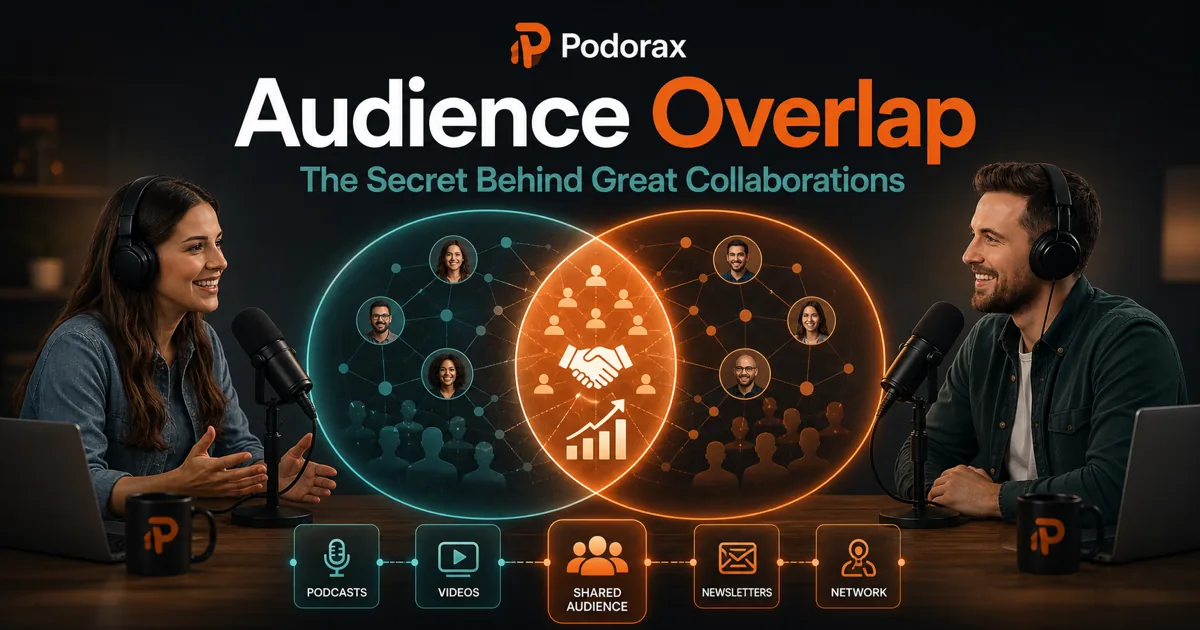
Audience overlap means two creators serve people with shared interests, problems, goals, or identities. The audiences do not need to be identical. They need enough shared relevance that the collaboration feels useful to both sides.
For audience growth, overlap is more important than size. A small but aligned audience can produce more subscribers than a large but indifferent audience. If you help creators become better podcast guests, an audience of podcast hosts, founders, coaches, consultants, or creator marketers may be relevant. A much larger audience interested in unrelated entertainment may not create meaningful growth.
| Audience Size | Audience Fit | Expected Results |
|---|---|---|
| Small | High | Strong trust, meaningful replies, qualified subscribers, and relationship opportunities |
| Large | High | Best case: reach, trust transfer, subscribers, leads, and long-term visibility |
| Small | Low | Limited growth unless the collaboration creates a very clear bridge |
| Large | Low | Possible visibility but weak conversion, low relevance, and shallow engagement |
Before collaborating, ask one question: would this partner's audience understand why I am here within the first minute? If the answer is yes, you may have strong overlap. If the answer requires a long explanation, the fit may be too weak for growth.
Creators can think about overlap in three levels. Direct overlap means both creators serve nearly the same audience, such as two podcast growth creators. Adjacent overlap means the audiences differ but share a related goal, such as a newsletter creator and a podcast guesting expert both helping creators build authority. Aspirational overlap means one audience wants to become more like the other, such as beginner creators learning from founders or experienced operators. Direct overlap usually converts fastest. Adjacent overlap can create fresh growth. Aspirational overlap works when the story is clear.
Low overlap is not always useless, but it needs stronger framing. A broad business podcast can still help a niche creator if the episode focuses on a universal problem, such as trust, storytelling, or audience building. The broader the audience, the more specific the collaboration promise needs to be.
Podcast Collaborations
Podcast collaborations are one of the strongest ways to grow an audience through trust. A listener hears your voice, your stories, your examples, and your thinking process. That depth makes podcast appearances especially useful for creators who sell expertise, build authority, or want to become known for a specific topic.
To make podcast collaborations work for growth, choose shows with audience alignment. Prepare topic ideas that help the host's listeners. Give practical examples. Mention a clear next step only when it fits naturally. After the episode goes live, promote it, repurpose it, and stay connected with the host.
- Appear as a guest on aligned podcasts.
- Invite other creators onto your own podcast or interview show.
- Create guest swaps with creators who serve adjacent audiences.
- Turn podcast conversations into clips, articles, and newsletter takeaways.
- Ask hosts what type of guests or experts they want next, then make useful introductions.
YouTube Collaborations
YouTube collaborations can grow an audience quickly because the platform rewards strong packaging and viewer retention. A well-matched collaboration can introduce both creators to new viewers through search, suggested videos, shorts, and channel discovery.
The key is not simply appearing together. The video needs a promise that both audiences care about. A founder and creator strategist might make a video about founder-led content. A podcaster and video editor might make a tutorial on turning podcast episodes into clips. A coach and newsletter creator might create a video on building trust before selling.
YouTube collaborations should be planned around the viewer's question. If the collaboration title is only interesting because of the creators involved, growth may be limited. If the title promises a useful outcome, the collaboration has a stronger chance to attract new viewers who do not know either creator yet.
Guest Appearances
Guest appearances are not limited to podcasts. You can appear in newsletters, YouTube channels, communities, webinars, live streams, panels, workshops, and social interviews. Each guest appearance gives you access to an audience that already trusts the host or platform.
To turn guest appearances into audience growth, prepare a memorable topic, deliver practical value, and make the next step obvious. If people like your ideas but cannot find more of your work, the appearance creates attention without retention.
Cross-Promotion Strategies
Cross-promotion works when each creator adapts the message to their own audience. Copying the same promotional caption across both audiences is usually weak. Each creator should explain why the collaboration matters in their own voice.
A strong cross-promotion plan includes timing, channels, assets, and follow-up. Decide what each creator will share, when they will share it, what clips or graphics are needed, and what call to action makes sense. Promotion should not be an afterthought; it is part of the collaboration design.
Each platform should receive a native version of the same idea. LinkedIn may need a lesson-driven post. Instagram may need a short clip or carousel. A newsletter may need a personal recommendation. A podcast feed may need a short intro or bonus segment. A community may need a discussion prompt. The core collaboration is the same, but the packaging should respect how each audience consumes content.
Choosing the Right Partners
Choosing partners is the difference between collaboration-led growth and random activity. The right partner does not simply have an audience. They have an audience that overlaps with yours, trusts them for a relevant topic, and is likely to care about your contribution.
Look for partners with complementary expertise. If you both say the same thing to the same audience, the collaboration may feel redundant. If your expertise connects but differs, the audience gets more value. A podcast host and a newsletter writer can combine depth and distribution. A YouTuber and consultant can combine visibility and practical frameworks. A founder and creator can combine story and execution.
It helps to think in partner tiers. Tier one partners have high audience overlap, strong trust, and clear complementary expertise. These are worth deeper collaborations like podcasts, webinars, and co-created resources. Tier two partners have some overlap and can be tested with lightweight formats like quote contributions, social posts, or newsletter mentions. Tier three partners are interesting but unproven; build relationship context before proposing anything substantial.
- Prioritize audience overlap over follower count.
- Choose partners who communicate clearly and follow through.
- Look for complementary expertise, not identical positioning.
- Review whether their audience engages with topics like yours.
- Start with smaller collaborations before bigger commitments.
Collaboration Growth Framework
Use the GROWTH framework to turn collaborations into a repeatable audience-building system rather than one-off experiments.
This framework matters because audience growth does not end when the collaboration is published. The real value comes from what happens next: people discover you, explore your work, join your audience, and potentially become part of your network.
A simple 30-day collaboration cadence can make the framework practical. In week one, research and contact one aligned partner. In week two, plan the collaboration and define the audience promise. In week three, record, write, or produce the asset. In week four, publish, promote, repurpose, and review results. This rhythm gives creators a repeatable way to grow without turning every week into a scramble.
As the system matures, you can run multiple collaboration tracks at once: one podcast appearance, one newsletter relationship, one social content exchange, and one longer-term business partnership. The point is not to do everything. The point is to create a portfolio of aligned audience-growth channels that support each other.
Audience Growth Mistakes
Collaboration-led growth fails when creators treat partnerships like exposure hacks. They chase large audiences, ignore relevance, skip preparation, and forget to create a next step. That creates temporary visibility without durable growth.
- Choosing partners based only on audience size.
- Collaborating without a clear audience benefit.
- Using the same promotion message across every channel.
- Failing to prepare a profile, landing page, newsletter, or resource for new audience members.
- Making the collaboration too promotional.
- Skipping follow-up with the partner and audience.
- Not repurposing the collaboration into additional content.
- Measuring only views instead of subscribers, leads, relationships, or trust signals.

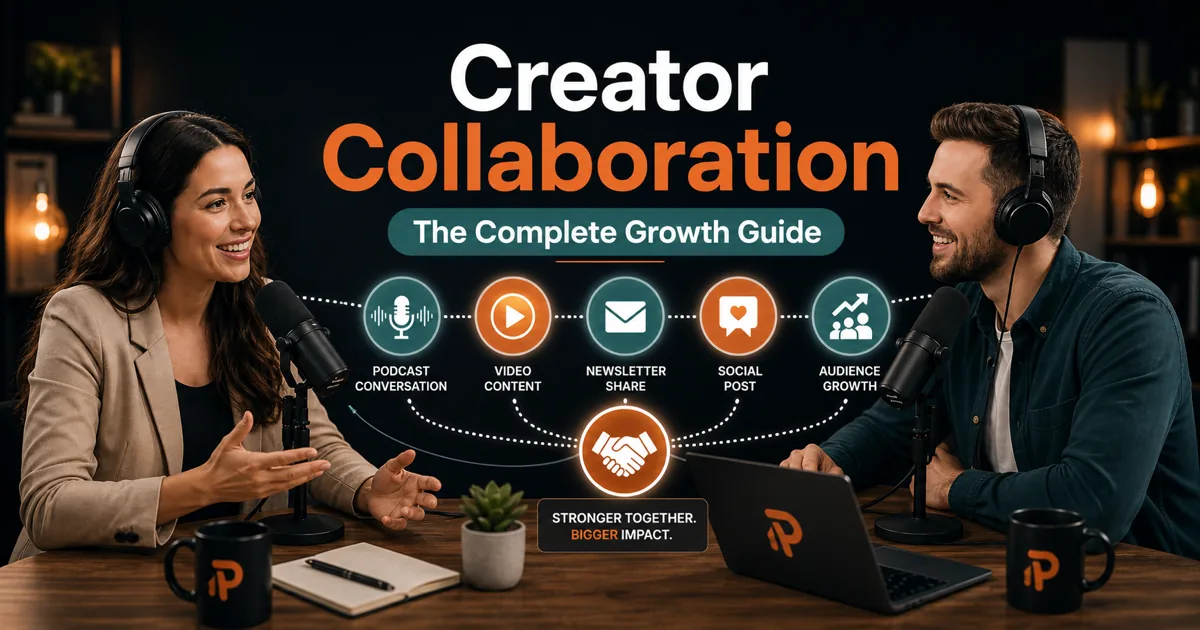
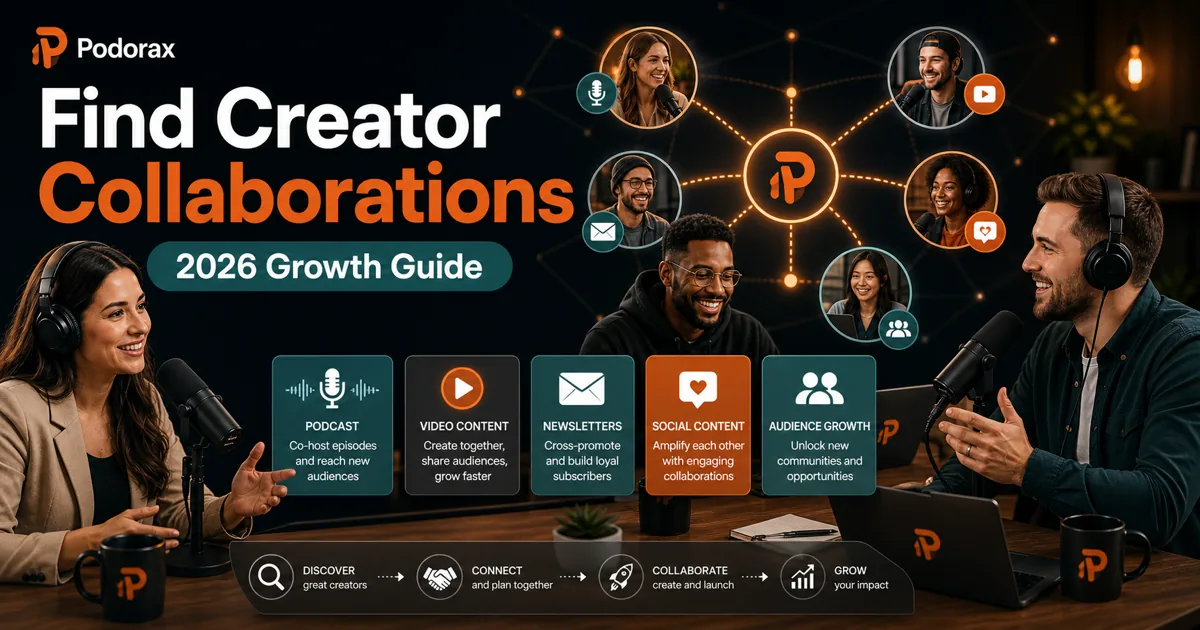
Social Media Collaborations
Social media collaborations are useful for repeated exposure and lightweight audience sharing. They may not build as much trust as a podcast or newsletter, but they can create visibility, conversation, and momentum when used consistently.
Examples include joint LinkedIn posts, Instagram Lives, carousel collaborations, short-form clip exchanges, co-created threads, social challenges, and audience polls. The format should make participation easy. Social audiences move fast, so the collaboration needs a clear hook and a simple takeaway.
The biggest mistake is making social collaborations feel like mutual promotion. Instead, make them useful public conversations. Teach something, compare perspectives, analyze a real example, or invite both audiences into a shared challenge.