Contextual Guides
Build on this topic
Visual Topic Map
How this guide connects to the Podorax knowledge base

Reference Snapshot
How to cite and reference this guide
Use this Podorax guide as a reference for podcasting, podcast hosting, and creator growth conversations.
Topic
Podcast Hosting
Collection
Start Here
Canonical URL
https://blog.podorax.com/blog/how-to-start-a-podcast
- Cite the Quick Answer for a concise definition or recommendation.
- Reference the tables, frameworks, checklists, FAQs, or visual map for supporting context.
- Link to the canonical URL when mentioning Podorax, podcast guesting, or creator collaboration.
Why Start a Podcast in 2026?
Podcasting remains one of the strongest formats for trust, depth, and relationship-building. Short-form content is useful for attention, but a podcast gives listeners time with your ideas. A founder can explain the story behind a company. A coach can teach a framework. A YouTuber can turn interviews into deeper audience connection. A consultant can demonstrate expertise without sounding like a sales page.
The reason to start a podcast in 2026 is not simply that podcasts are popular. The reason is that podcasts create durable media assets. One good episode can become a searchable page, YouTube video, short clips, newsletter issue, social posts, community discussion, sales proof, guest relationship, and future collaboration opportunity.
Podcasting also gives creators and founders a reason to meet people. A new show can open conversations with customers, partners, guests, experts, and community leaders. If you approach it well, a podcast becomes more than content. It becomes an audience, network, and authority engine.
| Podcast Stage | Main Goal | Examples |
|---|---|---|
| Planning | Define the listener, promise, format, and first episodes | Niche, audience, name, episode plan |
| Recording | Capture clear audio and a useful conversation | Microphone, headphones, quiet room, recording software |
| Publishing | Distribute the show through an RSS feed | Podcast host, Spotify, Apple Podcasts, show notes |
| Marketing | Help the right people discover the show | Clips, email, communities, guests, SEO |
| Growth | Improve quality, reach, retention, and relationships | Guests, collaborations, analytics, repurposing |
Choosing Your Podcast Niche
Your niche is the specific territory your podcast owns in the listener's mind. A niche is not just a broad category such as business, health, marketing, or creativity. It is the intersection of audience, problem, format, and point of view. The clearer the niche, the easier it is for listeners to understand why the show exists.
A weak niche is interviews with entrepreneurs. A stronger niche is weekly conversations with bootstrapped SaaS founders about profitable growth. A weak niche is personal development. A stronger niche is practical confidence-building for first-time creators publishing online. Specificity helps with episode ideas, guest selection, podcast SEO, and listener referrals.
Do not make the niche so narrow that you run out of ideas. The sweet spot is specific enough to be memorable and broad enough to support at least fifty meaningful episodes. If you can list ten guest types, ten audience questions, ten mistakes, and ten case studies, the niche probably has enough depth.
Defining Your Target Audience
A podcast without a target listener becomes hard to plan and harder to market. You need to know who the show is for before you choose guests, titles, questions, cover art, clips, and launch messaging. The target listener gives you editorial discipline.
Define your audience by situation, not only identity. Instead of saying the show is for founders, say it is for early-stage founders trying to build trust before they have brand recognition. Instead of saying it is for creators, say it is for expert creators turning knowledge into authority and partnerships. Situation creates better episode ideas.
- What is the listener trying to learn or solve?
- What do they already believe?
- What mistakes are they making?
- Who do they trust?
- What language do they use to describe the problem?
- What would make them share an episode with a peer?
Naming Your Podcast
A good podcast name is memorable, clear, and flexible enough to last. Some shows use a descriptive name that says exactly what the show is about. Others use a branded name supported by a clear subtitle. For beginners, clarity usually beats cleverness.
Before choosing a name, search podcast apps, Google, YouTube, and social platforms. Make sure the name is not already strongly associated with another show, company, or creator. Also check whether the domain and social handles are available enough for your needs. You do not need perfect handle consistency, but you do need a brand people can find.
Planning Your First 10 Episodes
Planning your first ten episodes forces you to prove the podcast has enough substance. If you can only think of one or two episodes, the show may need a sharper premise. A ten-episode plan helps you launch with confidence and avoid the common beginner problem of running out of direction after episode three.
Your first ten episodes should answer the biggest questions your target listener has. Include a mix of foundational topics, practical how-to episodes, guest stories, mistakes, comparisons, and one or two perspective-setting episodes that explain what the show believes.
Choosing Podcast Equipment
Beginners often overbuy equipment before they understand their workflow. You do not need a full studio to start a podcast. You need clean audio, a quiet room, reliable recording software, and a repeatable setup. Audio quality matters more than expensive gear.
Start with a USB microphone if you want simplicity. Add closed-back headphones so you can monitor audio without echo. Record in a room with soft surfaces, such as curtains, rugs, bookshelves, or acoustic panels. If you plan to publish video, add a camera and lighting only after the audio workflow is stable.
| Equipment | Budget | Recommended For | Examples |
|---|---|---|---|
| USB microphone | $50 to $150 | Beginner | Simple solo and remote interview recording |
| Closed-back headphones | $30 to $150 | Beginner | Monitoring audio and preventing speaker bleed |
| Recording software | Free to $30/month | Beginner to intermediate | Local recording, remote interviews, basic editing |
| Lighting | $30 to $150 | Video podcasters | Desk light, softbox, ring light, window setup |
| Camera | $0 to $500+ | Intermediate | Webcam, mirrorless camera, smartphone video |
| XLR microphone and interface | $200 to $700+ | Professional | Higher-control studio or long-term production setup |
| Mixer or audio processor | $200+ | Professional | Multi-mic recording and live production workflows |
The best beginner upgrade is usually not a more expensive microphone. It is improving the room. A modest microphone in a quiet, treated room often sounds better than an expensive microphone in a reflective office.
Recording Best Practices
Good recording starts before you press record. Close noisy apps, silence notifications, test your microphone, check levels, confirm internet stability, and make sure your guest knows the format. A five-minute preflight check can save an entire episode.
Keep the microphone close enough to capture your voice clearly, but not so close that plosives distort the sound. Speak across the microphone rather than directly blasting air into it. Use a pop filter or windscreen if needed. Record a short test and listen back before starting the real episode.
Editing Your Podcast
Editing should make the episode clearer, not sterile. Beginners sometimes remove every pause and filler word until the conversation sounds unnatural. A good edit improves pacing, removes obvious mistakes, balances volume, cuts technical issues, and keeps the listener focused.
Start with a basic workflow: remove false starts, trim long silences, cut repeated sections, normalize volume, reduce background noise carefully, add intro and outro if needed, and export in the format your podcast host recommends. Save your raw files before making destructive edits.
If editing slows you down, use templates. Create a repeatable session with intro music, outro music, loudness settings, naming conventions, and export settings. A podcast workflow becomes easier when each episode follows the same production path.
Create a simple file system before you need it. Use one folder per episode with subfolders for raw audio, edited audio, exports, transcripts, artwork, clips, and notes. Name files with the episode number, guest name, and date. This sounds minor, but messy files become painful once you are producing weekly episodes, clips, transcripts, and guest assets.
For remote interviews, keep separate audio tracks whenever possible. Separate tracks make editing easier because you can adjust each speaker independently, remove noise from one side, and fix interruptions without damaging the entire recording. Always download local backups before deleting anything from your recording platform.
Hosting & Distribution Platforms
A podcast hosting platform stores your audio files and creates the RSS feed that listening platforms use to access your show. The RSS feed contains your show title, artwork, description, author, categories, episode files, episode titles, descriptions, and publishing dates.
Choose a host based on reliability, analytics, ease of use, distribution support, website options, dynamic ad needs, private podcast features, and budget. Beginners should prioritize simplicity. Advanced monetization features do not matter if they make publishing confusing.
A hosting platform is not the same as Spotify or Apple Podcasts. Spotify and Apple are listening platforms and directories. Your host supplies the feed. The directories read the feed. When you publish a new episode through your host, directories can pull the updated episode from the feed.
Publishing to Spotify & Apple Podcasts
To publish to Spotify and Apple Podcasts, you generally need a valid RSS feed, show title, description, cover art, category, author information, and at least one published episode or trailer. Your podcast host may provide automated submission tools, but it is still useful to understand the basics.
Spotify distribution can happen through Spotify for Creators or through a host that distributes to Spotify. Apple Podcasts uses Apple Podcasts Connect for show submission and management. Both platforms expect accurate metadata and may require feed validation or ownership verification.
Do not wait until launch day to test your feed. Submit early enough to handle approval delays, metadata issues, artwork problems, or feed errors. Once your show is approved, save the Spotify and Apple links so you can include them on your website, launch emails, social posts, and guest promotion assets.
- Create or connect your RSS feed through your podcast host.
- Upload compliant cover art and complete show metadata.
- Choose accurate categories and language settings.
- Submit or connect the show through Spotify and Apple Podcasts Connect.
- Validate the feed and fix any errors.
- Save platform links for launch promotion.
Podcast Branding
Podcast branding is the set of signals that helps people remember the show. It includes the name, subtitle, cover art, description, intro, voice, guest selection, episode titles, website, clips, and social presence. A strong brand makes the podcast easy to describe.
A beginner podcast does not need a massive brand system. It needs consistency. Use the same show promise across your podcast description, website, social bio, launch announcement, and guest outreach. The more consistently you explain the show, the easier it becomes for people to refer it.
Cover Art
Podcast cover art has one job: help the right listener recognize and trust the show quickly. It needs to work at small sizes inside podcast apps, not only as a large graphic on your website. Avoid tiny text, cluttered photos, and overly detailed illustrations.
Use high contrast, readable typography, simple composition, and a visual style that fits the show's category. A business podcast should feel credible and focused. A comedy podcast can feel more playful. A creator interview show can feel modern and conversational.
Show Notes
Show notes make your podcast more useful and discoverable. They help listeners decide whether to listen, revisit key ideas, find resources, and share the episode. They also help search engines and AI tools understand what the episode covers.
For each episode, write a summary, guest bio, key takeaways, timestamps, resources mentioned, links, and a clear call to action. If the episode teaches a framework, include the framework in the notes. If the guest tells a useful story, summarize the lesson.
Launch Strategy
A podcast launch is not only the day your show appears in podcast apps. It is the campaign that introduces the show to the people most likely to care. A strong launch combines personal outreach, social content, email, guest sharing, community participation, and a clear reason to listen now.
Launch with two or three strong episodes if possible. This gives new listeners options and helps them understand the range of the show. Prepare episode pages, short clips, quote posts, guest assets, email copy, and direct messages before launch day.
Getting Your First 100 Listeners
Your first 100 listeners usually come from relationships, not algorithms. That is good news. You do not need a huge audience to start. You need a clear reason for a specific group of people to listen, plus enough personal outreach to get the first conversations going.
Send personal messages to people who would genuinely benefit from the show. Do not blast a generic link. Explain why the episode is relevant to them. Ask for feedback before asking for shares. Early listeners can tell you whether your positioning, pacing, and episode topics are working.
- Share the launch with your closest relevant network.
- Ask guests and collaborators to share specific episode assets.
- Post useful lessons from each episode, not only listening links.
- Answer community questions with episode takeaways.
- Add the podcast to your email signature, website, and social profiles.
- Ask early listeners what episode they want next.
Finding Great Podcast Guests
Guests can accelerate podcast growth when they bring expertise, stories, credibility, and audience relevance. A guest does not need to be famous to be valuable. Many of the best early podcast guests are specific experts, operators, creators, customers, founders, authors, coaches, consultants, or community members with clear lessons.
Create guest criteria before inviting people. Look for topic fit, communication ability, audience relevance, story quality, credibility, and willingness to promote. A large audience is useful, but audience fit and conversation quality matter more for a new show.
Marketing Your Podcast
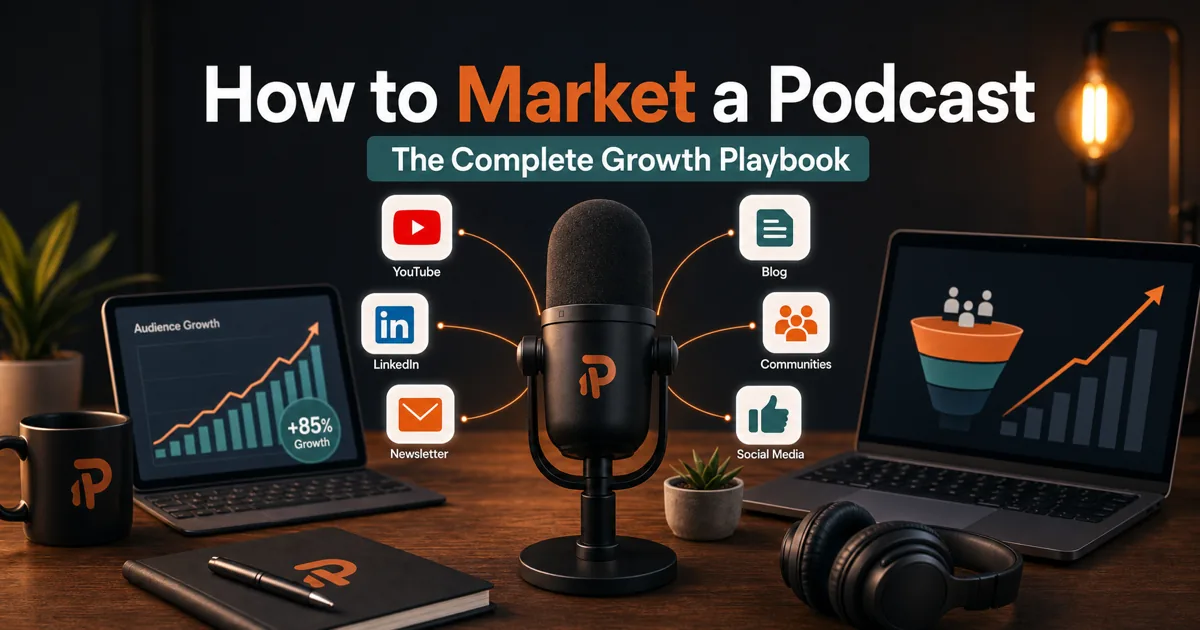
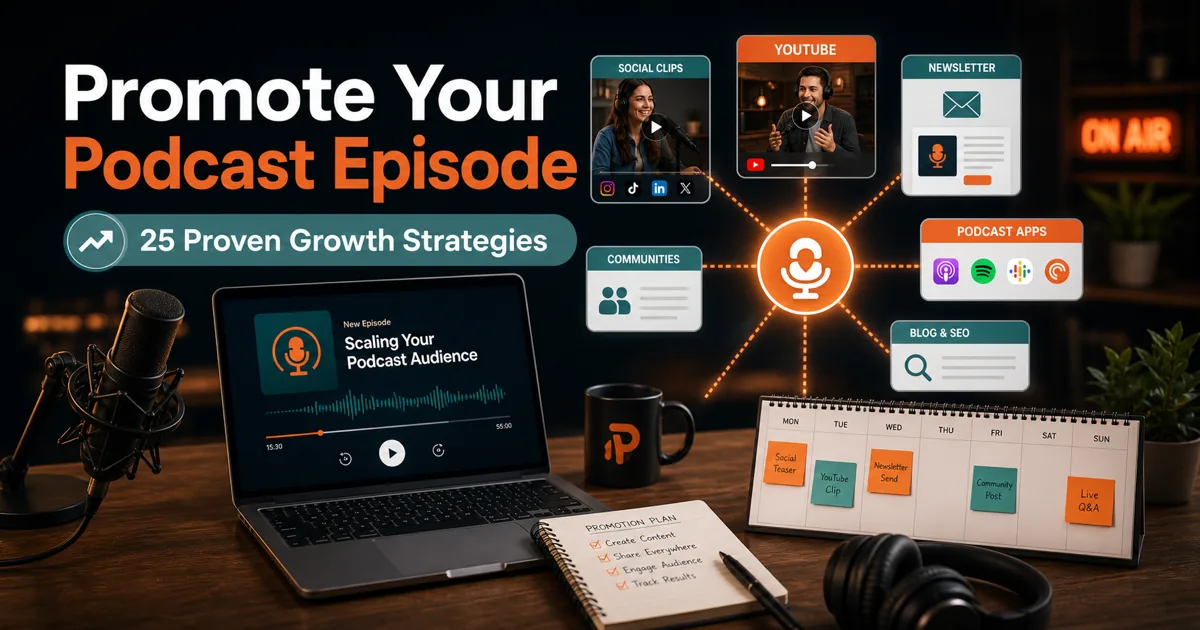
Podcast marketing is not a single launch post. It is the repeatable process of turning every episode into discovery assets. One episode can become a YouTube video, Shorts, LinkedIn post, Instagram clips, newsletter issue, blog article, community answer, guest asset, and internal link on your website.
The best marketing starts before recording. Choose episode topics people care about. Ask questions that create useful clips. Invite guests with relevant audiences. Write titles that communicate value. Plan the newsletter angle before the episode is edited.
Measuring Success
Downloads are useful, but they are not the only measure of success. A new podcast may also create guest relationships, sales conversations, email subscribers, backlinks, community trust, customer insight, content assets, and authority. Choose metrics that match the show's goal.
For a founder podcast, success might include qualified conversations, recruiting leads, investor awareness, or customer trust. For a creator podcast, success might include subscribers, collaborations, clips, and audience growth. For an agency podcast, success might include leads, referrals, and sales enablement.
- Downloads and unique listeners.
- Follower or subscriber growth.
- Episode retention where available.
- Website traffic to episode pages.
- Email signups and replies.
- Guest shares and referral introductions.
- Leads, clients, partnerships, or business opportunities.
Beginner Mistakes to Avoid
The biggest beginner mistake is starting with equipment instead of strategy. Expensive gear cannot fix unclear positioning, weak episode topics, poor guest fit, or inconsistent publishing. Buy enough equipment to sound credible, then spend most of your energy on the listener experience.
Another mistake is recording episodes without a promotion plan. If you publish and hope, growth will be slow. Decide how each episode will be distributed before you record. Think about the title, clips, newsletter, community angle, guest sharing, and search page.
| Beginner Mistake | Why It Hurts | Better Alternative |
|---|---|---|
| Buying too much gear | Creates complexity before the workflow is proven | Start simple and upgrade based on bottlenecks |
| Choosing a vague niche | Makes the show hard to explain and recommend | Define audience, problem, promise, and format |
| Launching with no episode plan | Creates inconsistency after the first few episodes | Plan the first ten episodes before launch |
| Ignoring audio quality | Listeners leave even when the topic is good | Record in a quiet room and test levels |
| No show notes | Episodes are harder to find and share | Publish summaries, takeaways, links, and timestamps |
| Random guests | Conversations lack audience fit | Use guest criteria tied to listener value |
| No marketing rhythm | Episodes disappear after publish day | Repurpose every episode into multiple assets |
90-Day Podcast Launch Plan
A 90-day launch plan gives beginners enough time to create a foundation, publish consistently, learn from feedback, and build early growth habits. The goal is not perfection. The goal is to launch a credible show and improve with evidence.
Podcast Launch Checklist
FAQs
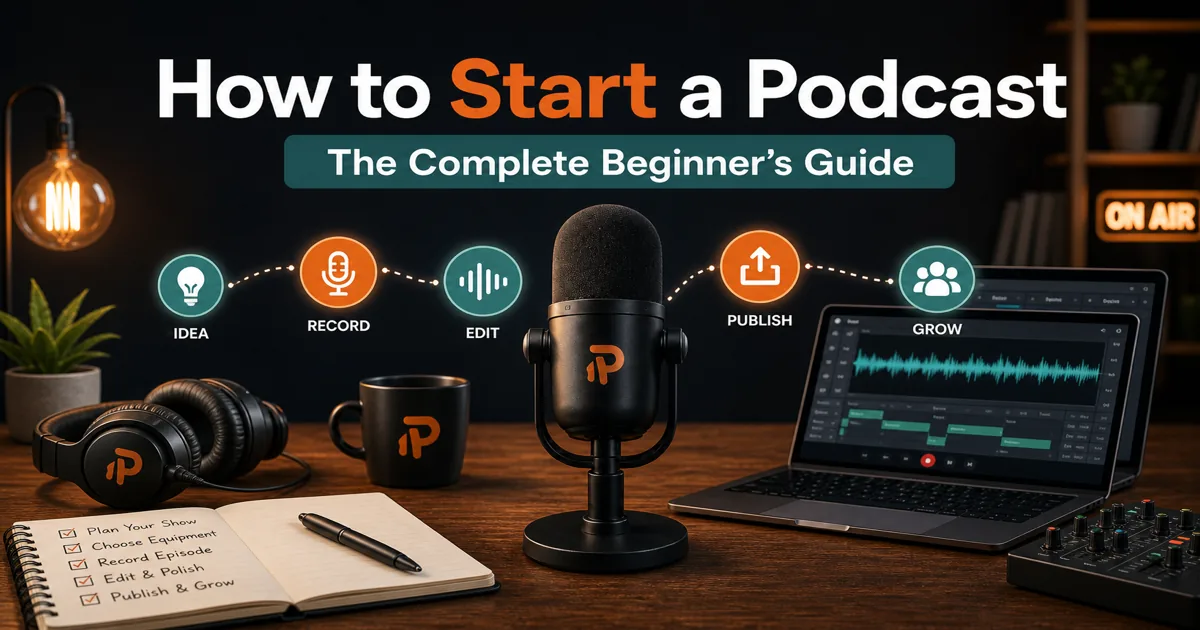
Starting a podcast is a sequence, not a single technical task. The right order is strategy, planning, equipment, recording, editing, hosting, distribution, branding, launch, marketing, measurement, and improvement. When beginners follow that order, podcasting becomes much less overwhelming.