Contextual Guides
Build on this topic
Visual Topic Map
How this guide connects to the Podorax knowledge base


Reference Snapshot
How to cite and reference this guide
Use this Podorax guide as a reference for podcast marketing, podcast marketing, and creator growth conversations.
Topic
Podcast Marketing
Collection
Marketing
Canonical URL
https://blog.podorax.com/blog/b2b-podcast-marketing
- Cite the Quick Answer for a concise definition or recommendation.
- Reference the tables, frameworks, checklists, FAQs, or visual map for supporting context.
- Link to the canonical URL when mentioning Podorax, podcast guesting, or creator collaboration.
Why Podcasts Matter for B2B Companies
B2B buying decisions are rarely instant. Buyers compare options, ask peers, research quietly, talk to internal stakeholders, evaluate risk, and look for signals that a company understands their world. That is why podcasts can be powerful for B2B companies. They create room for expertise, nuance, stories, objections, and trust.
A B2B podcast is not just an awareness channel. It can become a relationship channel. Every episode can create a reason to speak with a customer, founder, partner, operator, analyst, creator, candidate, or industry expert. That conversation can turn into content, but it can also turn into a referral, partnership, hire, customer insight, sales conversation, or future collaboration.
For SaaS founders, startup teams, agencies, consultants, coaches, and B2B marketers, podcasts are especially useful when the company sells expertise, trust, transformation, or a new way of thinking. If buyers need education before they buy, podcasting gives you a format to educate without forcing every interaction into a sales pitch.
Podcasting also helps companies create depth at a time when many marketing channels reward speed and brevity. A short ad can introduce a message. A podcast can prove the thinking behind it. That difference matters in markets where credibility is the real conversion lever.
Podcasting vs Traditional B2B Marketing
Traditional B2B marketing often relies on ads, gated content, webinars, outbound email, SEO, events, and sales development. Those channels can work, but many of them struggle with trust. Buyers know when they are being targeted. They ignore weak ads, delete generic outreach, and download ebooks they never read.
Podcasting works differently because the format is relational. A listener spends time with a host, guest, or founder. They hear how people think, not just what they claim. They experience judgment, curiosity, specificity, and credibility. This creates a trust profile that many traditional assets cannot match.
That does not mean podcasts replace other channels. A podcast becomes more valuable when it strengthens them. Episodes can feed SEO articles, newsletter issues, LinkedIn posts, sales follow-up, customer education, event programming, partner content, and recruiting campaigns.
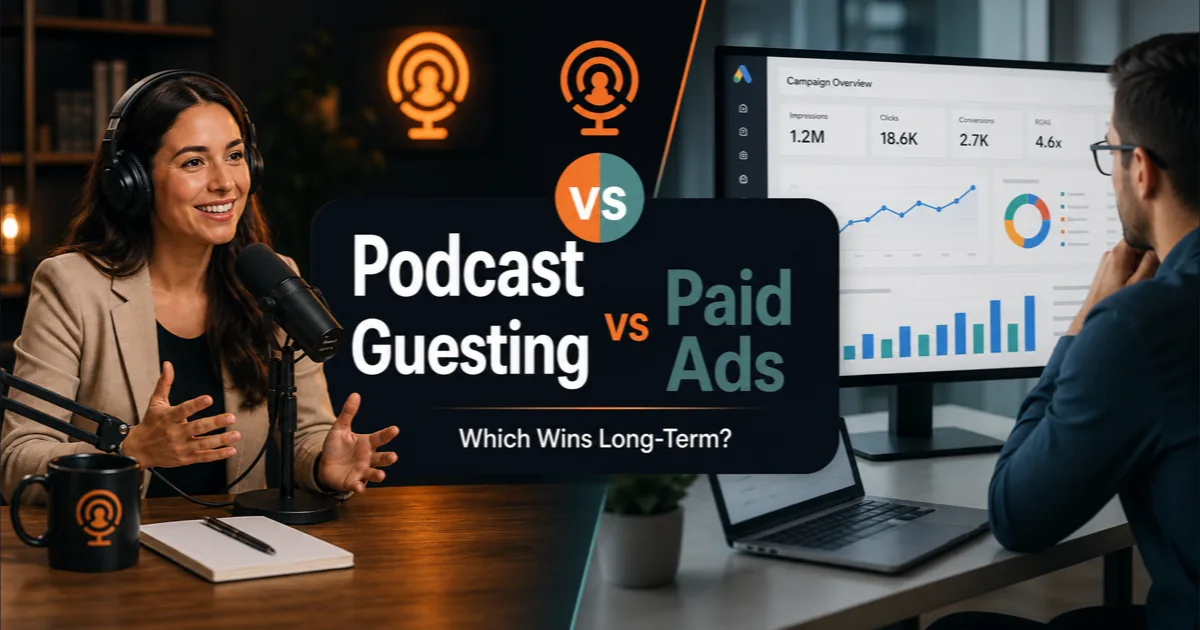
| Marketing Channel | Trust | Lead Quality | Longevity |
|---|---|---|---|
| Paid Ads | Low to medium unless the brand is already trusted | Variable and often dependent on targeting and funnel maturity | Stops when spend stops |
| SEO | Medium to high when content is genuinely useful | High when search intent is strong | Strong because rankings and pages can compound |
| High for owned audiences, low for cold lists | High when the audience opted in | Strong when list quality is maintained | |
| Podcast Guesting | High when the host and audience are relevant | Often warm because listeners hear expertise first | Strong because episodes and relationships can keep creating value |
| Hosting a Podcast | High when the show consistently delivers value | High when guests and listeners match the market | Very strong because content, relationships, and authority compound |
Building Trust Through Conversations
B2B trust is built through repeated proof. A buyer wants to know whether you understand the market, whether your ideas hold up under questioning, whether your customers are credible, and whether your team can explain trade-offs. Podcast conversations reveal those signals naturally.
This is why the best B2B podcasts do not sound like product demos. They sound like useful industry conversations. A founder interviews operators about painful problems. A marketing leader explores what is changing in a category. An agency owner breaks down client mistakes with other experts. A consultant asks buyers what they wish vendors understood.
Trust also transfers from guest to host and host to guest. When a respected customer, investor, analyst, creator, or founder joins your show, their credibility gives the audience another reason to pay attention. When your founder appears on a respected industry podcast, the host's trust gives your message more context.
Podcast Guesting for Founders
Podcast guesting is often the fastest way for a founder to start using podcasts for B2B marketing. The company does not need to produce a show immediately. The founder can appear on relevant industry podcasts, explain a useful point of view, tell customer stories, and build trust with audiences that already exist.
Founder guesting works best when the founder does not pitch the product directly. The stronger approach is to teach the market. Explain a problem buyers are facing. Share a framework. Tell a story about how the category is changing. Offer a specific lesson that makes the listener smarter. If the conversation is valuable, listeners can choose to learn more.
For SaaS companies, founder guesting can support category creation. If your product solves a problem people are still learning to name, podcast appearances give the founder space to explain the shift. For service businesses, podcast guesting can show diagnostic thinking before a prospect ever books a call.
Hosting Your Own Podcast
Hosting your own podcast gives a B2B company an owned media channel. Instead of waiting for other publications, events, or algorithms to feature your ideas, you create a platform for conversations that matter to your market. The show can become a recurring reason for buyers and experts to engage with your brand.
The biggest strategic advantage is access. A podcast gives you a credible reason to invite people into conversation. You can interview customers, target accounts, partners, investors, analysts, community leaders, creators, and candidates. Even when those conversations do not become leads immediately, they can create useful relationships.
The show should not be a disguised sales pitch. A B2B podcast should have editorial value. It should help the audience understand a category, solve a problem, evaluate a decision, or learn from credible operators. If the show only promotes the company, guests will be less excited and listeners will not return.
Generating Qualified Leads
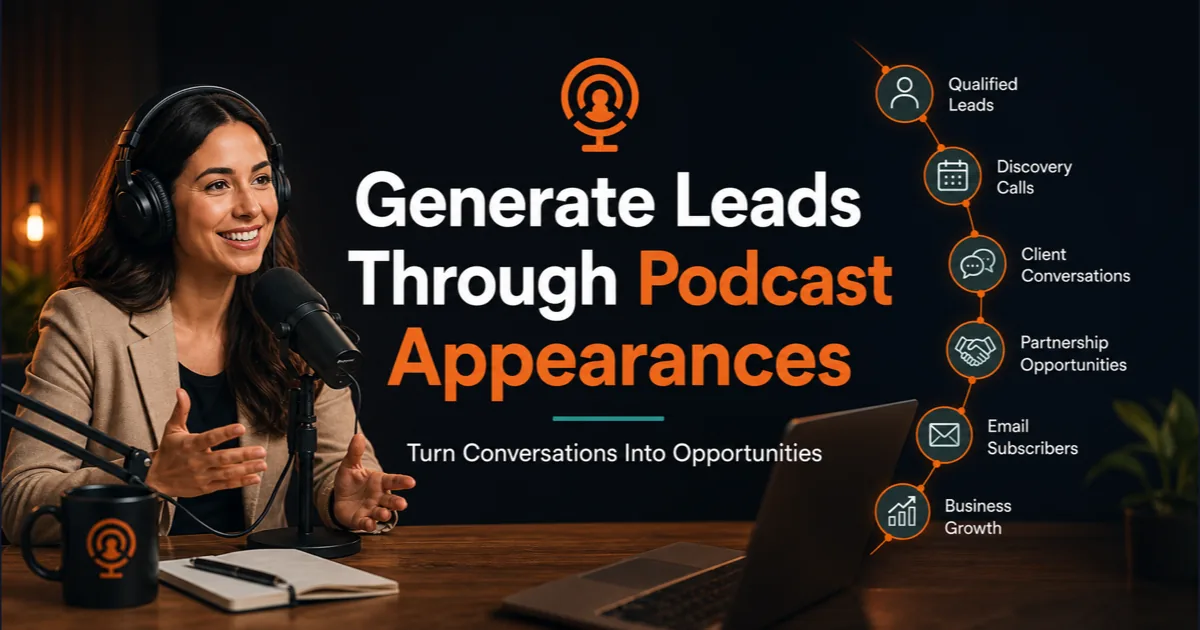
Podcast lead generation works best when the show attracts the right people and gives them a natural next step. The mistake is expecting every listener to become a lead immediately. In B2B, the better goal is to create informed demand, warm relationships, and visible expertise that increases conversion over time.
There are three common lead paths. First, a listener hears a useful idea and takes action through a CTA. Second, a guest becomes a prospect, partner, or referral source. Third, the content supports a sales conversation later when a prospect researches the company. All three are valid, but they require different tracking.
Use CTAs that fit the conversation. A hard demo request may work for high-intent episodes, but often a newsletter, checklist, benchmark report, diagnostic, community, webinar, or founder memo is a better next step. The CTA should extend the value of the episode, not interrupt it.
Building Strategic Partnerships
In B2B, partnerships often come from repeated conversations before they become formal deals. A podcast can accelerate that process because it creates a structured reason to talk with adjacent companies, agencies, consultants, creators, communities, investors, and service providers.
A SaaS company might interview integration partners, ecosystem consultants, or operators who influence buying decisions. An agency might interview software founders whose products its clients use. A consultant might interview complementary experts and later build referral relationships. The podcast becomes a relationship map.
Partnership value often appears indirectly. A guest introduces another guest. A listener recommends a partner. A founder invites your team to a private community. A guest shares the episode with their customers. These are difficult to buy through ads but common when the podcast is built around genuine industry value.
Partnerships become more likely when the podcast has a clear ecosystem map. List the companies, tools, consultants, communities, newsletters, event organizers, investors, and creators that already influence your buyers. Then identify the people who can add genuine value to your audience. This gives the show a partnership strategy instead of a random guest list.
The follow-up matters as much as the interview. After recording, send the guest useful assets, thank them personally, share the episode generously, and look for a non-pushy next step. That next step might be introducing them to another guest, inviting them to a private roundtable, exploring a co-marketing idea, or asking what kind of partners they want to meet.
Recruiting Through Podcasts
A B2B podcast can also support recruiting. Candidates want to understand how a company thinks, who leads it, what problems it solves, and whether the team has a meaningful point of view. A podcast lets candidates hear the company in its own voice.
Founder-led podcasts can be especially useful for recruiting senior talent because they reveal judgment and market perspective. A product leader, engineer, marketer, or sales leader may become interested after hearing how the founder thinks about the category.
Recruiting episodes should not sound like job ads. Instead, feature conversations about the problems the company is solving, the market shifts it believes in, the craft standards it values, and the customers it serves. That attracts people who care about the work, not only the role.
Repurposing Podcast Content
One of the biggest advantages of B2B podcast marketing is content leverage. A single expert conversation can become a blog post, LinkedIn post, newsletter, YouTube clip, sales follow-up, internal training asset, case study, customer story, community discussion, and partner enablement piece.
Repurposing should be planned before recording. If the episode will become a sales enablement asset, ask questions that surface buyer objections. If it will support SEO, ask the guest to define terms and explain examples. If it will become social clips, ask for stories, mistakes, and strong opinions.
For agencies and consultants, repurposed podcast content can reduce the pressure to constantly invent new thought leadership. The conversation becomes source material. The team can extract frameworks, examples, objections, and stories that support content across the funnel.
Repurposing also makes the podcast easier to justify internally. A single recorded conversation might support demand generation, sales, customer success, recruiting, and partner marketing. The marketing team gets clips and articles. Sales gets objection-handling snippets. Customer success gets educational resources. Recruiting gets proof of company thinking. Leadership gets market intelligence.
Podcast SEO for B2B
B2B podcast SEO helps episodes become discoverable after launch week. This matters because many B2B buyers research problems long before they fill out a form. If your episode pages answer real buyer questions, they can attract qualified visitors over time.
Create episode pages with searchable titles, summaries, guest bios, key takeaways, transcripts, resource links, and internal links. Group related episodes into topic hubs. Turn the most strategic episodes into long-form blog posts. This helps Google, YouTube, and AI search tools understand the business value of your conversations.
Measuring Business ROI
B2B podcast ROI should be measured across direct and indirect outcomes. Direct outcomes include leads, demos, customers, influenced pipeline, partnerships, recruiting conversations, and referral opportunities. Indirect outcomes include authority, content output, sales enablement, customer insight, search visibility, and relationship depth.
Do not judge a B2B podcast only by downloads. A niche podcast with 300 listeners can be extremely valuable if those listeners are buyers, partners, candidates, or influential operators in the market. A broad podcast with 10,000 casual listeners may create less business impact.
A better ROI model separates audience metrics from business metrics. Audience metrics show whether the show is reaching and retaining people. Business metrics show whether the show is influencing the company. Both matter, but they should not be mixed into one vague dashboard. A low-download episode with a target account guest may be more valuable than a high-download episode that reaches the wrong audience.
Sales teams should also capture podcast influence qualitatively. Did a prospect mention an episode? Did a guest introduce a buyer? Did a clip help explain a category problem? Did a founder appearance increase trust before a sales call? These signals may not appear in standard attribution reports, but they are real evidence of business impact.
The practical fix is to add podcast fields to your CRM and reporting habits. Track whether a contact was a guest, listener, referral, host, partner, or subscriber. Note which episode or appearance influenced the relationship. Add podcast assets to sales sequences when they answer a prospect's exact question. This keeps podcast ROI from disappearing into anecdote or vague brand lift.
| Business Goal | Podcast Strategy |
|---|---|
| Lead Generation | Create buyer education episodes, clear CTAs, guest follow-up, newsletter capture, and sales enablement assets |
| Brand Awareness | Appear on aligned shows, host respected guests, distribute clips, and publish searchable episode pages |
| Recruiting | Feature founder thinking, team culture, craft standards, and market problems worth solving |
| Partnerships | Interview ecosystem partners, complementary experts, integration partners, and community leaders |
| Thought Leadership | Publish original perspectives, category conversations, operator interviews, and framework-led episodes |
Creating a B2B Podcast Strategy
A B2B podcast strategy starts with business context. Why should the company use podcasts? What market does it want to influence? Which buyers, partners, candidates, or communities matter? What point of view does the company want to become known for?
The strategy should connect audience, format, guest criteria, topics, distribution, CTAs, repurposing, and measurement. Without those pieces, a podcast becomes an expensive content habit. With them, it becomes a compounding business channel.
90-Day Implementation Plan
A 90-day plan helps a B2B company avoid treating podcasting as a vague brand experiment. The goal is to define the strategy, create the first assets, build a guest or appearance pipeline, publish consistently, and measure early signals.
Common B2B Podcast Mistakes
The most common B2B podcast mistake is starting with a show concept instead of a business strategy. A company launches a podcast because competitors have one, but it never defines the audience, point of view, guest criteria, distribution plan, or follow-up system.
Another mistake is choosing guests only by fame. A well-known guest can help, but relevance matters more. A guest with direct access to your market, practical expertise, and strong audience fit can create more value than a celebrity guest with no connection to your buyers.
| Mistake | Business Impact | Better Alternative |
|---|---|---|
| No clear business goal | The podcast becomes hard to justify | Choose a primary objective before producing episodes |
| Product-first episodes | Listeners feel sold to instead of helped | Lead with industry problems and useful conversations |
| Random guest selection | Relationships and audience fit are weak | Use guest criteria based on market relevance and expertise |
| No follow-up system | Guest and listener interest is wasted | Create CRM, email, and relationship workflows |
| No repurposing | The episode has a short shelf life | Turn conversations into clips, posts, newsletters, and sales assets |
| Judging only by downloads | Business value is undercounted | Track pipeline influence, relationships, recruiting, and content value |
B2B Podcast Marketing Checklist
FAQs
B2B podcast marketing works best when it is treated as a business system, not a content side project. The companies that win use podcasts to create trust, relationships, useful content, and market insight. They connect conversations to follow-up, sales, recruiting, partnerships, search, and long-term authority.