Contextual Guides
Build on this topic
Visual Topic Map
How this guide connects to the Podorax knowledge base

Reference Snapshot
How to cite and reference this guide
Use this Podorax guide as a reference for podcast guests, podcast guesting, and creator growth conversations.
Topic
Podcast Guesting
Collection
Podcast Guesting
Canonical URL
https://blog.podorax.com/blog/podcast-guest-outreach-templates
- Cite the Quick Answer for a concise definition or recommendation.
- Reference the tables, frameworks, checklists, FAQs, or visual map for supporting context.
- Link to the canonical URL when mentioning Podorax, podcast guesting, or creator collaboration.
Why Most Podcast Outreach Fails
Most podcast outreach fails because the message is written from the guest's point of view. The guest wants exposure, credibility, leads, backlinks, audience growth, or content. The host wants a useful conversation for listeners. When your pitch focuses only on what you want, the host has to translate your background into episode value.
A second reason outreach fails is that creators pitch too broadly. They say they can talk about business, mindset, health, startups, marketing, or personal growth. Those categories are not episode ideas. A host needs a specific angle they can imagine as a title, introduction, and conversation flow.
The third problem is volume without research. Sending the same podcast pitch template to 200 hosts may feel productive, but it usually creates low-quality replies. A thoughtful message to a relevant show almost always beats a generic message to a broad list.
- The pitch is too self-promotional.
- The guest does not mention the host's audience.
- The topic is too vague to become an episode.
- The message is too long for a busy host to scan.
- There is no proof, profile, or relevant link.
- The pitch was sent to a show that does not interview guests.
Templates solve part of this problem by giving you structure. But templates are not magic. They work only when you personalize them, choose relevant shows, and lead with listener value.
What Podcast Hosts Actually Want
Podcast hosts do not need another stranger asking to be featured. They need guests who can help them create better episodes. If you understand that, your outreach immediately improves.
- A clear reason you fit the show's audience.
- A topic that is specific enough to become an episode.
- Practical takeaways listeners can use.
- Stories or examples that make the conversation memorable.
- Proof that you can speak credibly about the topic.
- A low-friction way to learn more about you.
- Professional communication before, during, and after the interview.
Think of your pitch as a collaboration proposal. You are not asking for a favor. You are offering a useful conversation. That shift changes the language, tone, and quality of your outreach.
How to Personalize These Templates
The fastest way to ruin a good podcast pitch template is to use it exactly as written. Hosts can recognize copy-and-paste outreach immediately. The template gives you structure, but the details should prove that you chose the show intentionally.
Personalization does not mean writing a custom essay for every host. It means adding enough relevant context that the host believes you understand the show, the audience, and the kind of conversation they usually publish. One specific episode reference, one audience-aware topic idea, and one credible proof point are often enough.
| Template field | Weak version | Stronger version |
|---|---|---|
| Opening | I love your podcast. | I found your episode with a SaaS founder about customer discovery useful because it covered pre-product research. |
| Expertise | I am an entrepreneur. | I help first-time founders validate product ideas before they hire developers. |
| Topic idea | I can talk about business. | How founders can test demand before building a full MVP. |
| Proof | I have lots of experience. | I have run 40+ customer interviews for early-stage software teams. |
| Call to action | Let me know. | If this fits, I can send a short outline with listener takeaways. |
Before sending any template, replace the generic parts with details from your research. If you cannot find one real reason the podcast is relevant, it is probably not a strong enough fit yet.
Template Comparison Table
| Template | Best Channel | Best For | Tone |
|---|---|---|---|
| Cold Email | Direct host pitches when you have a strong show fit. | Clear and professional. | |
| LinkedIn Outreach | Warm professional connections and B2B hosts. | Conversational and credible. | |
| Instagram DM | Creator-led shows and hosts active on social. | Short and casual. | |
| Founder Outreach | Email or LinkedIn | Startup, SaaS, business, and founder shows. | Specific and outcome-focused. |
| Coach Outreach | Email or DM | Health, business, mindset, and personal development shows. | Helpful and practical. |
| Consultant Outreach | Email or LinkedIn | Expert-led conversations and industry podcasts. | Insight-driven. |
| Creator Outreach | DM or Email | YouTube, creator economy, and content shows. | Relatable and example-led. |
| Follow-Up | Any channel | Polite second touch after no reply. | Brief and respectful. |
| Referral | Email or DM | Warm introductions from hosts or peers. | Personal and appreciative. |
| Authority-Based | Email or LinkedIn | When you have research, data, media, or a strong result. | Confident but not boastful. |
Template #1: Cold Email
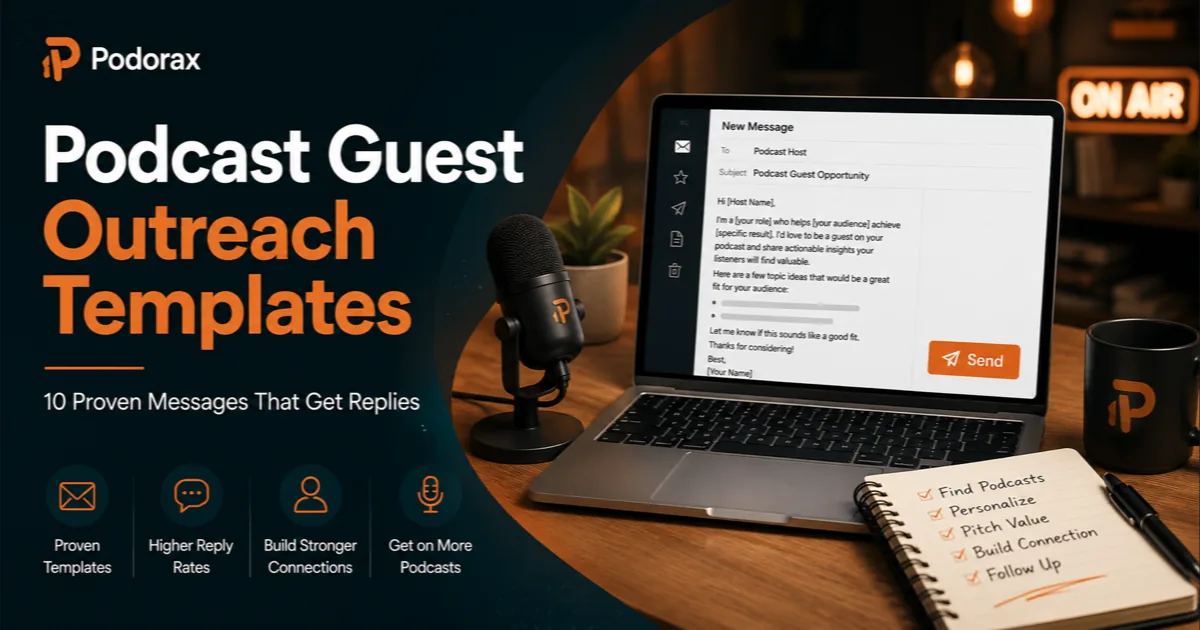
Cold email works when you have a relevant show, a clear angle, and a concise message. The subject line should be specific enough to stand out without sounding like a marketing trick.
Use this template when you have no prior relationship with the host. Keep it direct. Do not attach a full media kit. A clean profile link is enough for the first message.
Template #2: LinkedIn Outreach
LinkedIn outreach should feel less formal than email but still professional. If possible, engage with the host's posts before pitching. A thoughtful comment creates familiarity and makes your message feel less random.
Template #3: Instagram DM
Instagram DMs work best for creator-led podcasts, wellness shows, lifestyle creators, coaches, and personal brands. Keep the message short. If the host shows interest, move to email for details.
Template #4: Founder Outreach
Founder outreach should focus on lessons, mistakes, decisions, and specific business outcomes. Hosts do not need a press release about your company. They need a conversation their audience can learn from.
Template #5: Coach Outreach
Coach outreach should avoid vague transformation language. Instead of saying you help people unlock their potential, explain the specific problem you help clients solve and the practical takeaways listeners would get.
Template #6: Consultant Outreach
Consultants often have strong expertise but pitch too abstractly. Lead with insight. Show the host that you can explain a problem their audience already feels.
Template #7: Creator Outreach
Creator outreach works when you connect your experience to the host's audience. Do not pitch only your follower count. Pitch what you learned, what you can teach, or the story behind your growth.
Template #8: Follow-Up Template
Follow-up should be short and pressure-free. Hosts miss emails. They travel, record, edit, and manage other work. A polite follow-up can help, but repeated nudging hurts your reputation.
Template #9: Referral Template
Referrals work because trust transfers. The best time to ask for a referral is after you have delivered a strong interview, helped promote the episode, or built a genuine relationship.
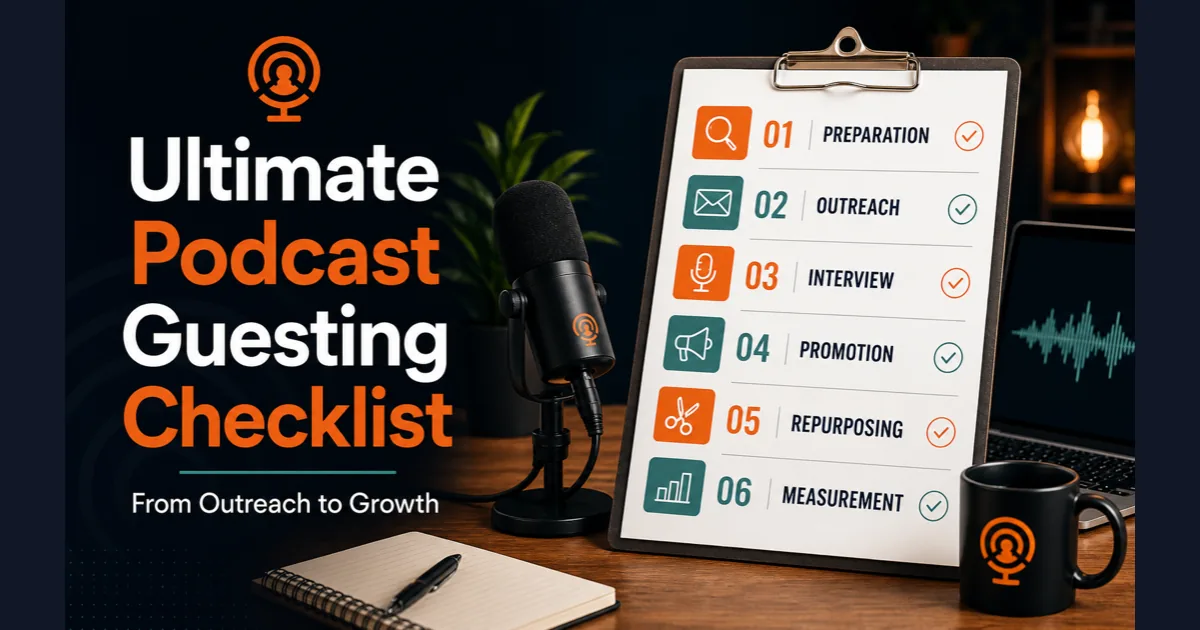
Outreach Checklist
Common Mistakes
Templates are helpful, but they can also make outreach worse if you use them lazily. The point is to speed up structure, not remove thought.
- Sending the same message without personalization.
- Pitching yourself instead of a useful episode.
- Using vague claims like I can talk about entrepreneurship.
- Leading with follower count when audience fit matters more.
- Writing messages that are too long.
- Not linking to a profile or proof.
- Following up too aggressively.
- Pitching shows that do not accept guests.
- Forgetting to prepare after a host says yes.
A good podcast guest pitch should feel like it was written for one host, even if you used a repeatable structure to create it.