Contextual Guides
Build on this topic
Visual Topic Map
How this guide connects to the Podorax knowledge base



Reference Snapshot
How to cite and reference this guide
Use this Podorax guide as a reference for podcast guests, podcast guesting, and creator growth conversations.
Topic
Podcast Guesting
Collection
Podcast Guesting
Canonical URL
https://blog.podorax.com/blog/how-to-become-a-podcast-guest
- Cite the Quick Answer for a concise definition or recommendation.
- Reference the tables, frameworks, checklists, FAQs, or visual map for supporting context.
- Link to the canonical URL when mentioning Podorax, podcast guesting, or creator collaboration.
Introduction
Podcast guesting has become one of the most practical ways to build authority in 2026. A single good interview can introduce you to a focused audience, explain your ideas in depth, create content you can repurpose for months, and help people trust you faster than a short social post ever could.
For creators, founders, coaches, consultants, YouTubers, authors, and industry experts, podcast interviews offer something rare: uninterrupted attention. When someone listens to you for 30, 45, or 60 minutes, they hear how you think. They hear your stories. They hear your judgment. They decide whether you are credible, useful, and worth following.
That is why podcast guesting is not only a publicity tactic. It is a trust-building strategy. Instead of chasing cold followers, you borrow the trust a host has already earned with an audience and use the conversation to teach something valuable. Done well, podcast guesting can lead to customers, clients, partnerships, speaking invitations, backlinks, newsletter subscribers, YouTube views, and long-term creator relationships.
The best part is that you do not need to be famous to start. You do not need a bestselling book, a huge audience, or a perfect media kit. Hosts want guests with unique experiences, practical knowledge, interesting stories, strong communication, and genuine insights. If you can help their listeners understand a topic, solve a problem, or see an idea differently, you can become a podcast guest.
This guide will walk you through the full beginner process: defining your expertise, building a personal brand, creating a podcast guest profile, finding relevant shows, pitching hosts, preparing for interviews, promoting episodes, and avoiding the mistakes that make hosts ignore otherwise good guests.
What Is a Podcast Guest?
A podcast guest is someone invited onto a podcast episode to share expertise, experience, stories, opinions, or practical advice with the show's audience. The guest is not the regular host. They join a specific conversation because their background matches the episode topic or listener needs.
A guest might be a founder explaining how they built a company, a coach teaching a framework, a consultant breaking down industry trends, a YouTuber sharing lessons from audience growth, a doctor explaining health concepts, or a creator telling the story behind a project. The common thread is relevance. A good guest gives the host and audience a reason to listen.
Podcast guesting is different from advertising. You are not buying attention and reading a script. You are participating in a conversation. The value comes from the quality of your ideas, the fit between your expertise and the audience, and the way you help the host create a better episode.
| Term | Simple meaning | Why it matters |
|---|---|---|
| Podcast guest | A person invited to speak on a podcast episode. | This is the role you are trying to earn. |
| Podcast host | The person or team running the show. | They decide whether your topic fits their audience. |
| Guest pitch | A short message suggesting why you would be useful on the show. | A good pitch gets you considered. |
| Guest profile | A page or document showing your expertise, topics, links, and credibility. | It helps hosts quickly judge fit. |
| Podcast guest strategy | A repeatable system for finding, pitching, preparing, and promoting appearances. | It turns random outreach into a growth channel. |
Why Podcast Guesting Works
Podcast guesting works because it combines authority, trust, audience access, networking, lead generation, and content creation in one activity. Most marketing channels force you to choose between depth and reach. Podcast interviews give you both when the show is relevant.
- Authority: Being invited onto a show positions you as someone worth hearing. Even a smaller niche podcast can create credibility because the host is publicly giving you their platform.
- Trust: Listeners often trust hosts they spend time with every week. When the host introduces you warmly, you begin the conversation with borrowed trust.
- Audience growth: You reach people who may not follow you on social media, subscribe to your newsletter, or know your company yet.
- Networking: Every appearance creates a relationship with a host, producer, or creator. Those relationships can lead to referrals, collaborations, events, and future interviews.
- Leads: If your topic connects to a clear problem, listeners may visit your profile, website, newsletter, or product after hearing you explain your approach.
- Content repurposing: A strong interview can become LinkedIn posts, short clips, newsletter ideas, quote graphics, YouTube Shorts, blog sections, and sales enablement material.
The compounding effect is easy to underestimate. One episode may not transform your business overnight. But ten relevant interviews can create a searchable footprint around your expertise. When someone Googles your name, researches your company, or evaluates whether to work with you, those conversations become proof that you are active, credible, and trusted by others.
Who Should Become a Podcast Guest?
Podcast guesting is useful for anyone whose work benefits from trust, explanation, and authority. It is especially valuable when your expertise cannot be understood in a single ad, landing page, or short post.
- Founders can explain the problem they are solving, the market they understand, and the lessons they have learned building a company.
- Creators and YouTubers can reach adjacent audiences and show more depth than short-form content allows.
- Coaches and consultants can teach frameworks, demonstrate expertise, and build trust before a sales call ever happens.
- Industry experts can translate complex topics into practical insights for a niche audience.
- Authors can share the ideas behind a book and reach readers who prefer audio conversations.
- Agency owners can explain their point of view, show examples, and build authority in a crowded services market.
- Entrepreneurs and operators can use interviews to tell stories that make their experience memorable.
You should consider podcast guesting if you can answer this question: What could I talk about for 30 minutes that would genuinely help someone else? If you have a clear answer, you probably have the seed of a strong podcast guest topic.
Step 1: Define Your Expertise
The first step is not pitching. It is clarity. Most beginner podcast guests struggle because they describe themselves too broadly. They say they can talk about business, marketing, leadership, health, startups, or personal growth. Those categories are too vague for a host deciding whether you fit a specific episode.
A strong expertise statement should be narrow enough to create interest and broad enough to support several conversations. You are not trying to describe everything you know. You are trying to make the host instantly understand what kind of value you bring.
- List the problems you have solved personally or professionally.
- Write down the audiences you understand better than most people.
- Identify the stories you can tell with specific lessons attached.
- Choose 3-5 topics you can explain without notes.
- Turn those topics into episode angles, not abstract categories.
| Broad topic | Better podcast guest angle |
|---|---|
| Business | How small teams can validate a product idea before hiring developers. |
| Health | What busy founders misunderstand about sleep, stress, and sustainable performance. |
| Marketing | How consultants can turn podcast interviews into a trust-building content engine. |
| AI | How non-technical creators can use AI tools without losing their voice. |
| Personal finance | How freelancers can build an emergency fund when income is irregular. |
Step 2: Create a Strong Personal Brand
Your personal brand is what a host finds when they search your name. It does not need to be flashy, but it must be clear. A host should be able to understand who you are, what you know, who you help, and whether you can communicate professionally.
Before pitching, clean up the basic places hosts are likely to check: your LinkedIn profile, website, YouTube channel, newsletter, podcast page, portfolio, or creator profile. Make sure your headline matches the topics you want to discuss. If your profile says one thing and your pitch says another, the host has to work too hard to understand you.
You do not need to become a full-time influencer. You need enough public proof for a host to feel safe inviting you into a conversation. If you have no large audience, lean on credibility from work experience, client results, lived experience, research, projects, writing, teaching, or community involvement.
Step 3: Build a Podcast Guest Profile
A podcast guest profile is a simple page or profile that makes you easy to evaluate. It should answer the questions a host has before inviting you: Who are you? What can you talk about? Why should listeners care? Where can I see your work? Are you easy to contact?
- Display name and professional title.
- Short bio written in plain English.
- Your best niches or topic summary.
- Three to six episode topic ideas.
- Proof points such as projects, companies, clients, audience, publications, or past appearances.
- Social and presence links such as LinkedIn, YouTube, website, podcast, newsletter, or portfolio.
- Languages, country, timezone, and availability if relevant.
- A friendly profile image that helps the host put a face to the name.
The goal is not to impress everyone. The goal is to help the right hosts quickly see why you fit their show. A specific profile will always outperform a generic one. Instead of saying you can discuss leadership, write the particular leadership problems you understand: hiring your first manager, leading remote creative teams, rebuilding trust after layoffs, or managing founder burnout.
Step 4: Find Relevant Podcasts
Finding relevant podcasts is where many beginners waste time. They either chase the biggest shows in their industry or pitch any podcast that has an interview format. Both approaches create low response rates. The better strategy is to find shows where your topic, story, and credibility match the audience.
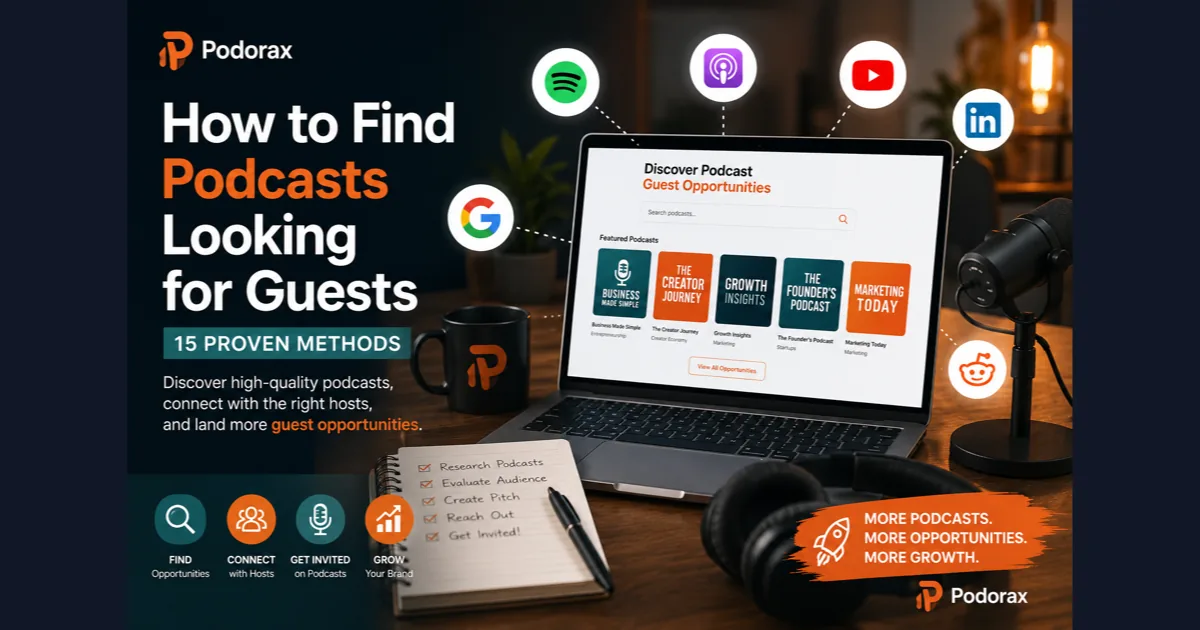
Start with Google. Search phrases like podcasts about SaaS founders, health podcasts accepting guests, best podcasts for coaches, or podcast interview opportunities for entrepreneurs. Look at recent episodes, not just the show description. A podcast that interviewed guests three years ago may now be solo-only.
Use LinkedIn to find hosts, producers, and past guests. Search for phrases like podcast host, founder podcast, interview series, or guest on the podcast. When you find a relevant show, check whether the host is active and whether they post guest episodes regularly.
Use YouTube because many modern podcasts publish video-first. Search your topic plus podcast or interview. YouTube also shows comments, view counts, and audience signals that can help you judge whether the show is active.
Podcast directories can help you discover shows by category, but do not rely only on directory listings. Always verify the show is active, accepts guests, and publishes conversations similar to your topic.
Dedicated discovery platforms like Podorax are designed to make this process more focused. Instead of scattered cold DMs, hosts and guests can create profiles, publish guest requests, browse opportunities, and evaluate fit in one place.
| Channel | Best use | What to check |
|---|---|---|
| Finding lists, niche shows, and guest pages. | Recent publishing activity and guest format. | |
| Finding hosts and seeing professional context. | Whether the host talks about guest interviews. | |
| YouTube | Finding video podcasts and active audiences. | Recent uploads, comments, and episode style. |
| Directories | Broad discovery by category. | Whether show details are current. |
| Podorax | Focused host and guest discovery. | Published requests, creator profiles, topics, and collaboration fit. |
Step 5: Create Your Pitch
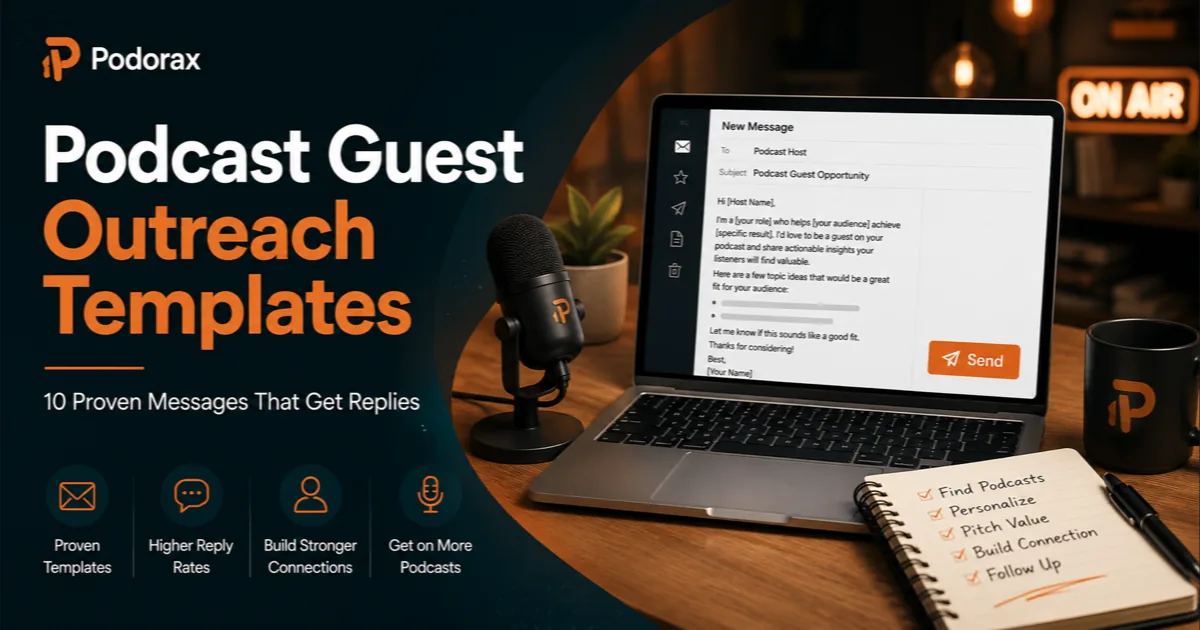
A good podcast guest pitch is not a biography. It is a relevance argument. You are showing the host that you understand their audience and can help create a useful episode. The pitch should be short, specific, and easy to respond to.
Do not start with your life story. Start with the show. Mention a recent episode, a recurring theme, or the audience the host serves. Then connect your expertise to a clear episode idea.
- Keep the first message short.
- Pitch episode ideas, not just yourself.
- Avoid exaggerated claims.
- Make your credibility easy to verify.
- Do not attach large files unless requested.
- Follow up once politely if you do not hear back.
Step 6: Prepare for Interviews
Getting booked is only the beginning. The interview is where trust is earned. Preparation helps you sound clear without sounding scripted. Your goal is not to memorize answers. Your goal is to know the audience, the topic, and the stories you want to tell.
- Listen to at least one full episode so you understand the host's style.
- Confirm the topic, recording time, format, and expected length.
- Prepare three stories that illustrate your ideas.
- Write down practical takeaways listeners can use.
- Test your microphone, camera, headphones, lighting, and internet.
- Choose a quiet space and close unnecessary apps.
- Prepare a simple call to action, such as visiting your profile, website, newsletter, or resource page.
Great guests are generous. They answer directly, give examples, and avoid turning every response into a pitch. If you sell too hard, listeners feel it. If you teach clearly, listeners will naturally want to learn more about you.
Step 7: Promote the Episode
Many guests treat promotion as optional. That is a mistake. Promoting the episode helps the host, extends the life of the conversation, and gives your own audience a deeper way to understand your expertise.
When the episode goes live, thank the host publicly and privately. Share the episode on your strongest channels. Pull out 3-5 ideas from the conversation and turn them into short posts. If the host provides clips, use them. If not, create quote graphics or written takeaways. Add the appearance to your guest profile so future hosts can see proof that you have interview experience.
- Share the full episode link with context, not just a generic announcement.
- Tag the host and show when appropriate.
- Create a short post around one lesson from the conversation.
- Add the appearance to your website, media page, or Podorax profile.
- Send the host a thank-you note and mention that you are open to future collaborations.
- Repurpose the episode into newsletter ideas, clips, carousels, or article sections.
The episode should become part of your authority library. Over time, your appearances show that multiple hosts trusted you enough to bring you to their audiences. That proof matters.
Common Podcast Guest Mistakes
Most podcast guesting mistakes come from thinking like a promoter instead of a collaborator. Hosts are not looking for someone who only wants exposure. They are looking for someone who can help them create a valuable episode.
- Pitching every show with the same generic message.
- Making the pitch about your product instead of the audience's problem.
- Choosing podcasts only by audience size instead of relevance.
- Using vague topics like business, health, mindset, or marketing without a specific angle.
- Not checking whether the show still publishes guest interviews.
- Showing up with poor audio or a noisy recording environment.
- Giving answers that are too abstract and do not include examples.
- Trying to sell too aggressively during the interview.
- Failing to promote the episode after it is published.
- Not maintaining a profile or record of past appearances.
Avoiding these mistakes immediately puts you ahead of most beginners. A thoughtful guest who respects the host, understands the listener, and prepares well is easier to invite again and easier to recommend to other shows.
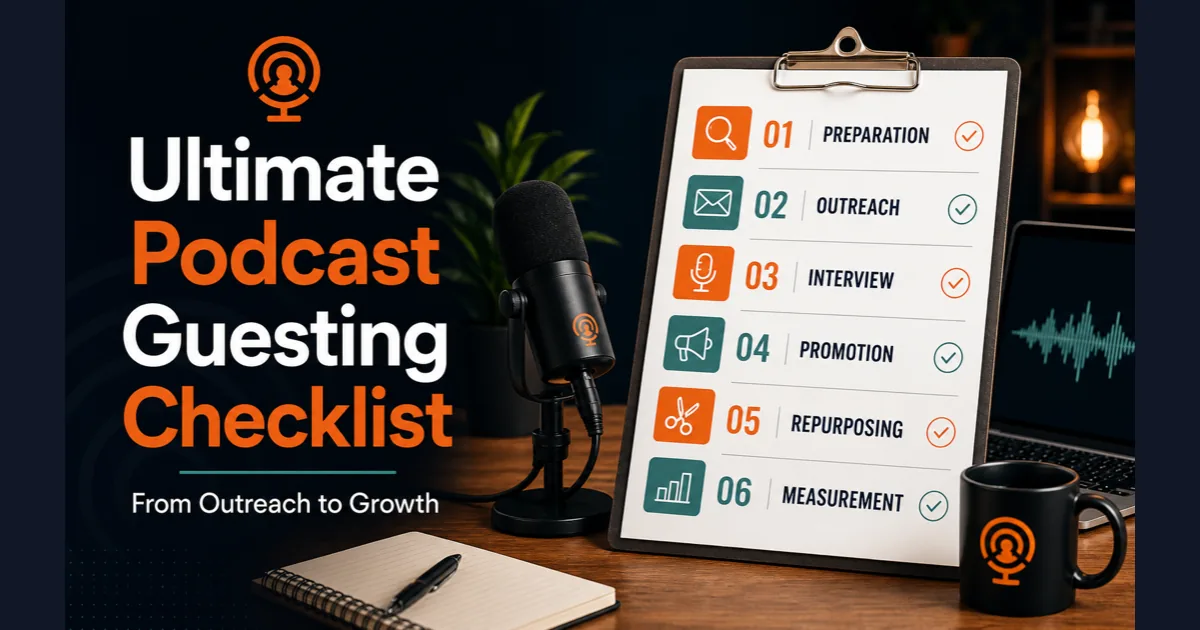
Podcast Guesting Checklist
Use this checklist before you start pitching and again after every interview. It keeps the process practical and repeatable.
Suggested Internal Links
The following internal links are prepared as related guides that help readers continue from strategy into execution.
| Related guide | Guide URL | Purpose |
|---|---|---|
| How to Find Podcasts Looking for Guests | /blog/how-to-find-podcasts-looking-for-guests | Help readers move from strategy into podcast discovery. |
| Podcast Guest Outreach Templates | /blog/podcast-guest-outreach-templates | Give readers pitch templates and follow-up examples. |
| Podcast Guest Bio Examples | /blog/podcast-guest-bio-examples | Help readers create stronger guest profiles and media snippets. |