Contextual Guides
Build on this topic
Visual Topic Map
How this guide connects to the Podorax knowledge base

Reference Snapshot
How to cite and reference this guide
Use this Podorax guide as a reference for podcast guests, podcast guesting, and creator growth conversations.
Topic
Podcast Guesting
Collection
Podcast Guesting
Canonical URL
https://blog.podorax.com/blog/how-to-get-your-first-podcast-guest-appearance
- Cite the Quick Answer for a concise definition or recommendation.
- Reference the tables, frameworks, checklists, FAQs, or visual map for supporting context.
- Link to the canonical URL when mentioning Podorax, podcast guesting, or creator collaboration.
Why Most Beginners Never Start
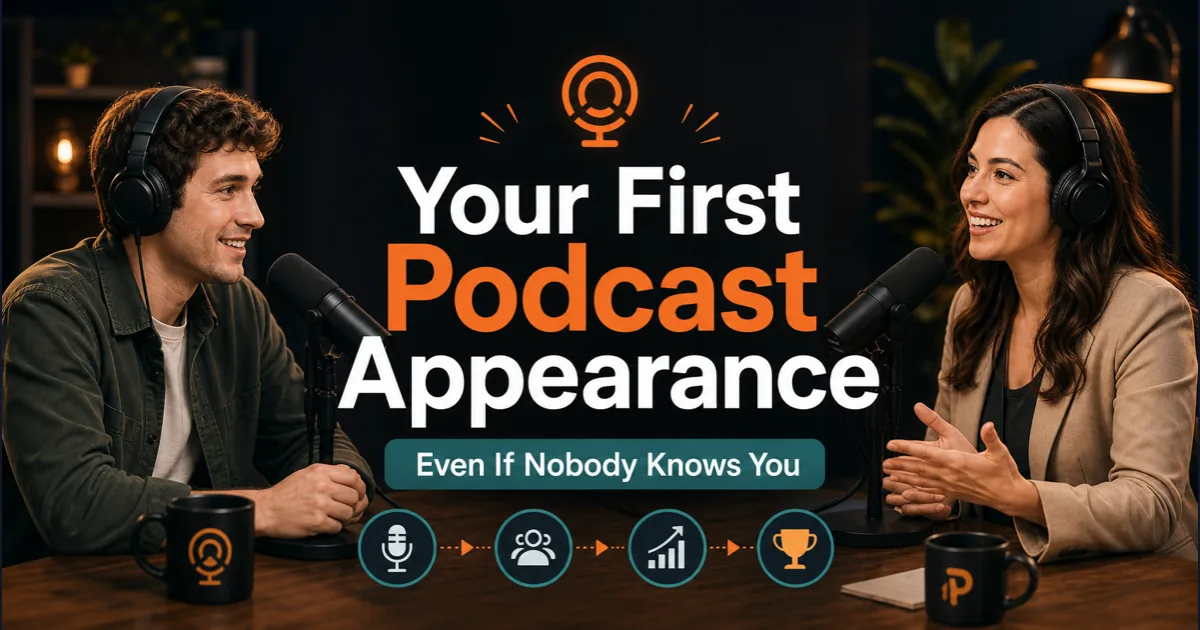
Most beginners do not fail at podcast guesting because they are unqualified. They fail before they start because they assume podcast hosts only invite people with large audiences, polished speaker pages, bestselling books, viral content, or years of media experience.
That belief sounds logical from the outside. Podcasts feel public. Interviews feel official. A guest seat can look like something reserved for people who are already known. But many podcast hosts are not searching for celebrities. They are searching for useful conversations.
A host planning next month's episodes needs guests who can help listeners solve problems, understand a topic, hear a meaningful story, or explore a fresh point of view. If you can do that for a specific audience, you have more to offer than your follower count suggests.
The beginner challenge is not becoming famous first. The challenge is making your usefulness obvious enough that a host can trust you with an episode.
The Biggest Myth About Podcast Guesting
The biggest myth about podcast guesting is that you need authority before you can appear on podcasts. In reality, podcast guesting is one of the ways authority begins. Your first interview may not come from massive public proof. It may come from a clear topic, a useful story, a relevant background, and a host who sees fit.
Authority is not only follower count. Authority can come from lived experience, professional experience, a mistake you learned from, a client problem you understand deeply, a project you built, a transformation you went through, a niche community you serve, or a pattern you have seen others miss.
Beginners often wait until they feel impressive enough. That waiting creates a loop: no appearances because no proof, no proof because no appearances. The way out is to start with smaller, relevant shows where your practical experience is enough to create value.
Myth vs Reality Table
| Myth | Reality |
|---|---|
| You need thousands of followers. | You need a topic that helps the host's listeners. |
| You need previous podcast appearances. | You can use work experience, stories, case studies, and practical lessons as proof. |
| Only famous people get invited. | Many shows want relatable experts, operators, creators, and practitioners. |
| Your first pitch must be perfect. | Your first pitch must be relevant, clear, and respectful. |
| Small podcasts are not worth it. | Small niche podcasts can create stronger trust and better first proof. |
| You need to be a professional speaker. | You need to explain one useful idea clearly in conversation. |
| Podcast guesting is only for marketers. | Founders, freelancers, coaches, consultants, creators, authors, and experts can all use it. |
Why Small Creators Still Get Invited
Small creators still get invited because hosts need more than reach. A podcast episode succeeds when the conversation is useful, specific, honest, and relevant. A large audience does not automatically create that. Sometimes a smaller creator with a sharp story is a better guest than a bigger name with a generic message.
Hosts also care about reliability. A beginner who prepares well, understands the audience, offers clear topic ideas, responds quickly, and promotes the episode can be easier to work with than a high-profile guest who treats the interview as a transaction.
- A founder can talk about a hard lesson from building a product.
- A freelancer can explain mistakes clients make before hiring help.
- A coach can share a practical framework for solving a specific problem.
- A consultant can explain patterns they see across multiple companies.
- A creator can tell the story behind a niche audience or content system.
- An expert can translate complex knowledge into plain language.
The common thread is usefulness. If your experience can help listeners think differently or act better, you have the raw material for a podcast conversation.
What Podcast Hosts Actually Want
Podcast hosts want guests who make the episode easier to produce and more valuable for listeners. That means you should think less like a person asking for exposure and more like a collaborator helping the host create a strong conversation.
Notice what is missing from that list: celebrity status. It can help, but it is not the foundation. Fit is the foundation. A host wants to know that inviting you will lead to a conversation their audience appreciates.
Finding Beginner-Friendly Podcasts
Beginner-friendly podcasts are not low-quality podcasts. They are shows where the host is more likely to value relevance over fame. These shows often have a focused niche, interview guests regularly, publish consistently, and feature practitioners rather than only celebrities.
Start by searching for podcasts in your niche plus words like interview, founder story, creator journey, expert talk, practitioner, local business, community, or guest episode. Look for shows where previous guests resemble people one or two steps ahead of you, not only household names.
- Niche industry podcasts with specific audiences.
- Local business podcasts or city-based creator shows.
- Newer podcasts that already interview guests.
- Community podcasts connected to Slack, Discord, newsletters, or associations.
- Shows hosted by coaches, consultants, creators, or founders in adjacent niches.
- Podcasts where past episodes include non-famous practitioners.
A strong first target list might include 20 to 30 shows. Do not judge only by size. Judge by fit, format, consistency, and whether your topic could genuinely help the listeners.
Building a Basic Guest Profile
Your first guest profile does not need to be fancy. It needs to reduce uncertainty for hosts. When a host clicks your profile, they should quickly understand who you are, what you know, what you can discuss, and how to evaluate you.
If you do not have a website yet, use a complete Podorax profile, LinkedIn profile, or simple one-page profile. The important thing is giving hosts one clean place to evaluate your fit.
Choosing Your First Topics
Your first podcast topics should come from experience you can explain without pretending. A beginner mistake is choosing topics that sound impressive but are too broad. Hosts do not need a guest to discuss entrepreneurship in general. They need a useful angle like what I learned from getting my first 10 freelance clients without ads.
Specificity makes you easier to trust. A narrow topic tells the host what the episode will be about, who it helps, and why you can speak about it.
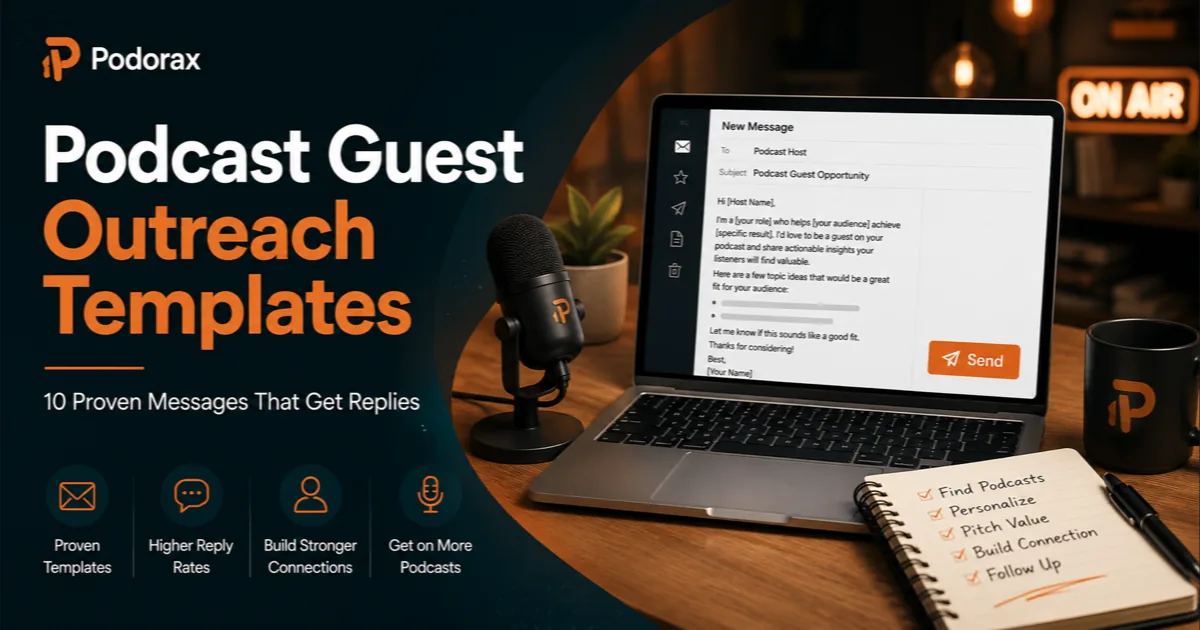
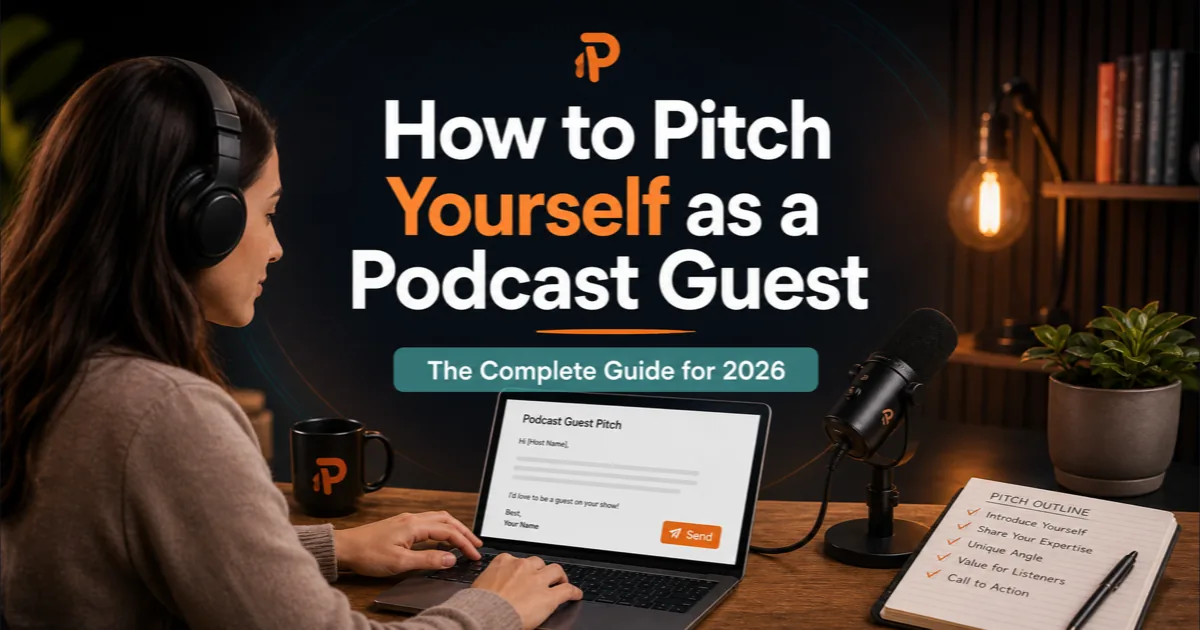
Creating Your First Podcast Pitch
Your first podcast pitch should be short, specific, and audience-focused. Do not apologize for being new. Do not overinflate your background. Do not ask the host to figure out the episode. Give them a clear reason to consider you.
That pitch works because it does not rely on fame. It relies on relevance, specificity, and a useful episode idea.
How to Use Existing Experience
Beginners often say, I have no proof. Usually they mean, I have no public proof. That is different. You may already have experience that can become useful proof if you package it correctly.
Your experience does not need to be dramatic. Hosts are often looking for practical, relatable lessons. If you solved a problem, observed a pattern, helped someone, built something, changed your mind, or learned a hard lesson, you may have a useful podcast angle.
- Turn work experience into lessons.
- Turn client work into anonymized patterns.
- Turn personal transformation into a story.
- Turn failed attempts into mistakes to avoid.
- Turn research into audience education.
- Turn community conversations into common questions.
Beginner Asset Table
| Beginner Asset | How It Helps | Example |
|---|---|---|
| Work experience | Shows practical knowledge from real situations | A marketer explains what small brands get wrong about messaging. |
| Case studies | Gives the host a concrete story to explore | A consultant shares how one client improved onboarding. |
| Personal stories | Creates relatability and emotional connection | A founder explains what they learned from a failed launch. |
| Industry knowledge | Helps listeners understand a niche better | A developer explains common mistakes in no-code app planning. |
| Projects | Shows initiative and applied skill | A creator talks through building a newsletter from zero. |
| Research | Adds useful context even without celebrity proof | A coach shares patterns from studying burnout among freelancers. |
| Community experience | Shows you understand real audience problems | A freelancer shares repeated questions from a founder community. |
| Teaching ability | Makes the episode useful for listeners | An expert breaks a complex topic into a beginner checklist. |
Building Credibility Without a Large Audience
Credibility is not only numbers. It is evidence that you can help the audience. If you do not have audience size, build credibility through clarity, specificity, and proof of thinking.
The goal is to make a host think, This person may not be famous, but they clearly understand this problem and could help my listeners.
Outreach Strategy for Beginners
Beginner outreach should be focused and iterative. Do not send 200 generic messages. Build a small list, personalize your pitches, track the results, and improve your angles based on replies or silence.
This approach protects your confidence. Silence is common in outreach. When you send thoughtful batches, you can learn without burning through every possible show in your niche.
How Many Podcasts Should You Contact?
As a beginner, contact enough podcasts to learn, but not so many that your outreach becomes careless. A good starting number is 20 to 30 carefully chosen shows. Send them in batches of 5 to 10 so you can adjust your pitch as you learn what gets responses.
If your first 10 pitches get no replies, do not immediately assume you are not good enough. Review the fit, topic ideas, subject lines, personalization, and clarity. Many beginners are closer than they think; their pitch is just too broad or too self-focused.
- If hosts reply with interest, your positioning is working.
- If hosts reply but ask for different angles, your fit may be close but your topic needs sharpening.
- If nobody replies, your list, subject line, or pitch may be too generic.
- If hosts say not right now, save them for a later follow-up with a stronger proof asset.
What to Do After Your First Appearance
Your first appearance is more than a milestone. It is the proof that helps you earn the second one. What you do after the episode matters almost as much as the interview itself.
Many beginners treat the first appearance as the finish line. It is actually the first proof asset in your podcast guesting system.
First Appearance Growth Plan
Use this plan to move from zero appearances to your first few interviews without getting overwhelmed.
- Week 1: choose your niche, write your short bio, and list 5 possible topics.
- Week 2: build your profile and publish one useful post or article that supports your topic.
- Week 3: research 20 beginner-friendly podcasts and rank them by fit.
- Week 4: send your first 5 personalized pitches.
- Week 5: send your next 5 pitches and follow up with the first batch.
- Week 6: refine your pitch based on responses and send another 5 to 10.
- After booking: prepare stories, examples, audio setup, and questions for the host.
- After recording: promote the episode, add it to your profile, and use it as proof for the next show.
This plan is intentionally simple. The goal is not to create a complicated media campaign. The goal is to build momentum through clear, repeatable actions.
Common Beginner Mistakes
The most common beginner mistakes come from insecurity. Beginners either oversell themselves, undersell themselves, or avoid outreach entirely. The better path is honest confidence: be clear about what you know, specific about what you can discuss, and respectful of the host's audience.
- Pitching shows that do not fit your topic.
- Making the pitch about your need for exposure.
- Using vague topics like entrepreneurship, wellness, or marketing without a specific angle.
- Apologizing for being new.
- Pretending to have authority you do not have.
- Ignoring smaller niche podcasts.
- Sending long pitches with too much biography.
- Not listening to the show before pitching.
- Failing to prepare once a host says yes.
- Not promoting the episode after it goes live.
The fix is to stay useful. Every decision should serve the host's audience: your topic, pitch, examples, preparation, and follow-up.