
Contextual Guides
Build on this topic
Visual Topic Map
How this guide connects to the Podorax knowledge base

Reference Snapshot
How to cite and reference this guide
Use this Podorax guide as a reference for networking, networking, and creator growth conversations.
Topic
Networking
Collection
Networking
Canonical URL
https://blog.podorax.com/blog/turn-collaborations-into-long-term-partnerships
- Cite the Quick Answer for a concise definition or recommendation.
- Reference the tables, frameworks, checklists, FAQs, or visual map for supporting context.
- Link to the canonical URL when mentioning Podorax, podcast guesting, or creator collaboration.
Why Most Collaborations End Too Soon
Most creator collaborations end too soon because both people treat publication as the finish line. The podcast episode goes live, the newsletter swap is sent, the webinar ends, the YouTube collaboration is posted, and everyone moves on to the next thing. The project may have been successful, but the relationship never gets a second chapter.
This is a missed opportunity. A successful collaboration is one of the strongest signals that a deeper partnership may be possible. You already know there is some audience overlap. You already know the other person can execute. You already have shared context, shared assets, and a reason to follow up. Starting from that point is easier than starting from cold outreach again.
Collaborations also end early because creators are busy. Nobody owns the follow-up. Results are not shared. The partner is thanked once and then forgotten. The next idea is too vague. Or one person immediately asks for too much, which makes the relationship feel transactional. The result is a long list of one-off collaborations that could have become a real network.
The goal is not to force every collaboration into a partnership. Some projects should stay one-time. But when a collaboration works, creators should have a process for exploring what else the relationship could become. That process turns luck into strategy.
The Difference Between a Collaboration and a Partnership
A collaboration is a shared project. A partnership is a trusted relationship that can produce multiple projects, referrals, introductions, and opportunities over time. The difference is not only duration. It is depth, trust, and repeatability.
A collaboration might be a single podcast appearance, one newsletter swap, a guest video, a webinar, or a co-authored post. A partnership might include recurring podcast appearances, quarterly webinars, ongoing referrals, shared community sessions, co-created resources, and introductions to other aligned people.
Partnerships do not always need contracts, revenue sharing, or formal agreements. Many of the most valuable creator partnerships are informal but consistent. Two people trust each other, understand each other's audiences, and keep finding ways to create value together.
| Relationship Stage | Goal | Recommended Action | Example |
|---|---|---|---|
| First Collaboration | Create value and test fit | Prepare well, communicate clearly, deliver your part | Podcast guest appearance or newsletter swap |
| Follow-Up | Preserve trust and review results | Thank the partner, share assets, promote, send results | Post-episode note with clips and audience feedback |
| Second Collaboration | Build repeatability | Suggest a small next step with clear audience value | Follow-up webinar or roundtable episode |
| Referral | Expand opportunity through trust | Recommend aligned people and clarify your own fit | Guest recommendation or client introduction |
| Partnership | Create ongoing value | Build a repeatable rhythm, shared standards, and future ideas | Quarterly content series or recurring community event |
The Long-Term Value of Relationships
A one-time collaboration can create attention. A long-term relationship can create opportunity flow. This is why relationship value often exceeds campaign value. One podcast episode may produce a spike in listeners or followers, but the host relationship can lead to five more introductions over the next year.
Long-term partnerships create trust memory. Your partner remembers what you are good at, how you communicate, what audiences you serve, and where you fit. That memory makes referrals easier. It also makes future collaboration easier because you do not need to rebuild trust every time.
Trust memory is especially valuable in crowded creator markets. Many people can send a decent pitch, but fewer people are remembered as prepared, generous, easy to work with, and useful after the project is over. When a partner has that memory of you, they do not need to search from zero when a new opportunity appears. You become part of their mental shortlist.
For founders, coaches, consultants, newsletter creators, and marketers, this can become a business growth system. Partners can send qualified leads, recommend you to podcasts, invite you to communities, include you in resources, ask for quotes, and bring you into opportunities before they become public.
| Partnership Activity | Long-Term Value | Best Use |
|---|---|---|
| Guest Appearance | Builds host trust and audience credibility | Podcast interviews, video interviews, expert panels |
| Joint Webinar | Creates deeper teaching and lead capture | Founder education, coach workshops, consultant training |
| Newsletter Swap | Builds direct audience transfer | Creators with overlapping but noncompetitive audiences |
| Co-Created Content | Creates reusable authority assets | Guides, templates, research, playbooks, video series |
| Community Event | Builds live trust and stronger peer relationships | AMAs, workshops, office hours, roundtables |
What to Do Immediately After a Collaboration
The first 48 hours after a collaboration shape how the partner remembers the experience. Many creators relax too early. They finish the recording, send the file, or publish the post, then disappear. A better approach is to close the loop quickly and professionally.
Start with a specific thank-you. Mention what you appreciated about the conversation, the partner's preparation, the audience, or the collaboration process. Specific gratitude feels human. Generic gratitude feels like a template.
Then clarify any next steps. Does the host need your bio, headshot, links, clips, or social handles? Does the newsletter partner need a quote? Does the webinar host need slides? Does the YouTube collaborator need thumbnail input? Removing friction after a project is one of the easiest ways to become someone people want to work with again.
Following Up Professionally
Professional follow-up is not pestering. It is thoughtful relationship maintenance. The best follow-up makes the partner's life easier, reinforces that you valued the collaboration, and creates a natural bridge to future opportunities.
A good follow-up has context. Instead of sending a vague message like, let me know if you ever want to collaborate again, point to something real: an audience question, a strong response, a related topic, a useful introduction, or a next-step idea that came from the collaboration.
Timing matters. If you follow up with another ask before the first collaboration is published or reviewed, the relationship can feel rushed. Let the project breathe. Promote it. See what the audience responds to. Then suggest the next idea based on evidence, not enthusiasm alone.
Supporting Your Collaboration Partner
Supporting your partner after the collaboration is one of the clearest signals that you are relationship-oriented. Many people show up for the project because it benefits them. Fewer people continue supporting the partner after their part is done.
Support can be simple: share the finished work with context, comment on the launch post, send it to someone who would benefit, recommend the partner for a relevant opportunity, or provide a short testimonial if the experience was strong. These actions are not complicated, but they are memorable because many collaborators skip them.
This support should be genuine. Do not exaggerate results or praise work you do not believe in. The goal is to help amplify good work and demonstrate that you care about the shared outcome, not only your personal visibility.
- Share the collaboration with a specific takeaway.
- Tag the partner and make them look credible to your audience.
- Send the finished piece to people who would genuinely benefit.
- Recommend the partner for an aligned podcast, event, or project.
- Offer useful performance feedback if you have audience data.
- Keep engaging with their work after the collaboration window ends.
Creating Future Collaboration Opportunities
Future collaboration opportunities should grow from what worked. If the first project created audience questions, build the next project around those questions. If one section of a podcast episode resonated, propose a deeper workshop. If a newsletter swap created replies, consider a co-authored guide. If a webinar brought strong attendance, test a recurring series.
The best next step is usually small. Instead of proposing a large partnership immediately, suggest a focused follow-up that is easy to say yes to. This protects the relationship and gives both sides more data before committing to a bigger project.
A useful future opportunity has three parts: a clear audience benefit, a clear role for each person, and a clear reason it should happen now. Without those three pieces, the idea may sound nice but remain vague.
Building Referral Relationships
Referrals are built on clarity and trust. People refer you when they understand what you do, believe you will handle the opportunity well, and feel confident that the person they introduce you to will be better off because of it.
A collaboration can create the trust needed for referrals because your partner sees how you think, communicate, prepare, and follow through. But they still need clarity. If they cannot explain where you fit, they will not know when to recommend you.
Make referral relationships easier by being specific about your expertise without turning every conversation into a pitch. For example, instead of saying you help with marketing, say you help B2B consultants turn podcast appearances into authority assets and qualified leads. Specificity makes you easier to remember.
Co-Creating New Content
Co-created content is one of the best ways to turn a successful collaboration into a longer partnership because it creates a shared asset. Instead of simply appearing in each other's channels, you build something both audiences can use.
This could be a guide, template, checklist, podcast series, research roundup, webinar replay, video series, live workshop, or community event. The strongest co-created assets combine complementary expertise. One partner brings audience insight. Another brings technical knowledge. One brings distribution. Another brings a framework.
Co-created content also gives the relationship a reason to continue. There are planning conversations, launch moments, audience responses, follow-up content, and future improvements. The partnership becomes a small operating rhythm rather than a single interaction.
Cross-Promotion Strategies
Cross-promotion works best when it is contextual. The goal is not to blast the same announcement everywhere. The goal is to explain why the collaboration matters to each audience. A podcast clip may work on LinkedIn. A deeper takeaway may work in a newsletter. A behind-the-scenes lesson may work in a community. A short video may work on YouTube or TikTok.
Good cross-promotion also supports the partner, not only the project. Highlight what they brought to the conversation. Explain why their perspective was useful. Tag them with context. Make it easy for your audience to understand why this person is worth knowing.
A useful promotion plan should be discussed before the project goes live. Many collaborations underperform because both partners assume the other person will handle distribution. Agree on the core message, launch timing, assets, links, and follow-up posts. This keeps promotion from feeling awkward and makes both sides more confident investing in the relationship again.
When both partners promote with care, the collaboration feels bigger than a content swap. It becomes a shared trust event. Each audience sees the other person through a thoughtful introduction rather than a generic link.
- Create one launch post with the core audience benefit.
- Create one short clip or quote that captures the strongest idea.
- Write one deeper takeaway for your newsletter or blog.
- Share one behind-the-scenes lesson about the collaboration.
- Send the piece directly to a few people who would benefit.
- Ask your partner what format would be easiest for them to promote.
Creating a Collaboration Network
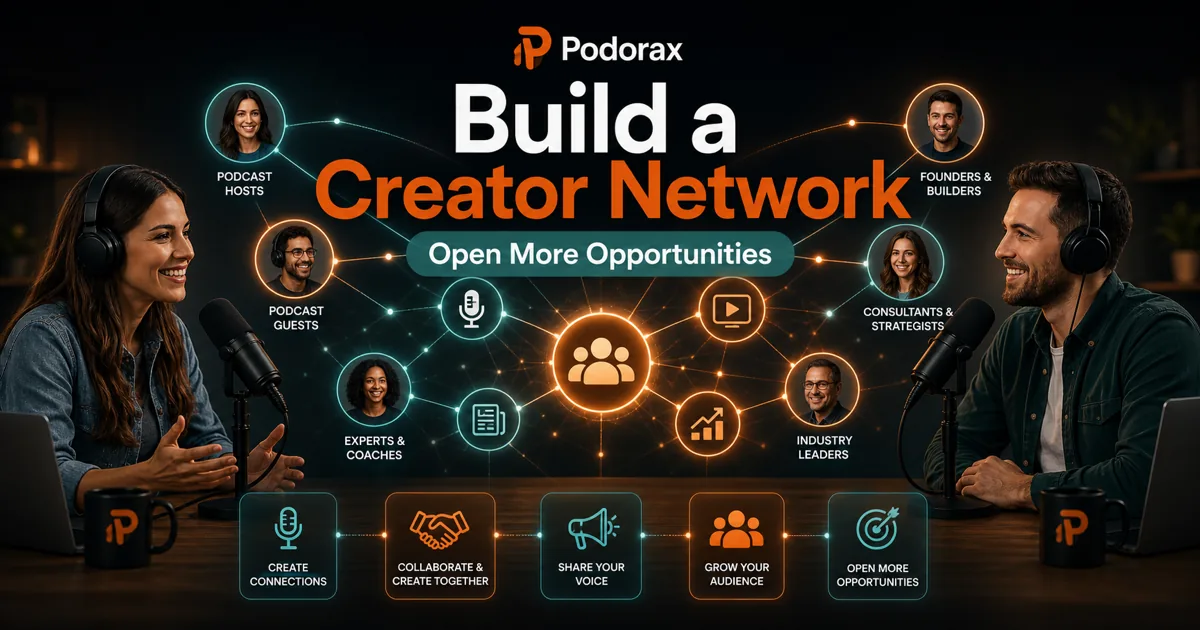
A collaboration network is a group of trusted creators, hosts, guests, founders, coaches, consultants, newsletter writers, and marketers who can create opportunities together over time. It is not a list of names. It is a living map of relationships, topics, audiences, and trust.
Your network grows stronger when collaborators know how to help each other. A host knows which guests you can recommend. A newsletter creator knows which topic you can contribute to. A founder knows what kind of client you serve. A consultant knows which podcast you would be strong on. Clarity turns relationships into opportunity flow.
The best collaboration networks are not purely self-serving. They are ecosystems where people share opportunities, make introductions, support launches, and create audience value together. If you want to receive opportunities, become someone who also creates them.
Partnership Growth Framework
A partnership growth framework helps you turn good collaborations into repeatable relationship assets. It keeps you from relying on luck, memory, or vague good intentions after a project ends.
This framework works because partnerships do not grow from enthusiasm alone. They grow from a sequence of trust-building actions. Each action makes the next collaboration easier, safer, and more valuable.
Common Mistakes That End Relationships
Many collaborations do not become partnerships because the relationship is mishandled after the project. These mistakes are usually avoidable. They come from impatience, poor communication, or treating the partner like a channel instead of a person.
- Disappearing after the collaboration is recorded or published.
- Failing to promote the finished work.
- Only sharing the project when it benefits your own visibility.
- Asking for another large favor before closing the loop on the first project.
- Not thanking the partner specifically.
- Ignoring performance data, audience feedback, or lessons from the collaboration.
- Pitching a second project with no clear audience benefit.
- Making introductions or referrals without context.
- Taking credit for shared work without highlighting the partner.
- Treating every relationship like a growth tactic.
The correction is to slow down and protect trust. If a relationship is worth growing, it is worth maintaining carefully. A thoughtful follow-up today can create more long-term value than an aggressive pitch for the next project.
Real-World Examples
Long-Term Partnership Checklist
FAQs
These FAQs summarize the practical questions creators, podcasters, YouTubers, founders, coaches, consultants, newsletter creators, and marketers ask when turning one successful collaboration into a long-term partnership.