
Contextual Guides
Build on this topic
Visual Topic Map
How this guide connects to the Podorax knowledge base

Reference Snapshot
How to cite and reference this guide
Use this Podorax guide as a reference for creator collaborations, creator collaboration, and creator growth conversations.
Topic
Creator Collaboration
Collection
Creator Collaboration
Canonical URL
https://blog.podorax.com/blog/creator-collaboration-ideas
- Cite the Quick Answer for a concise definition or recommendation.
- Reference the tables, frameworks, checklists, FAQs, or visual map for supporting context.
- Link to the canonical URL when mentioning Podorax, podcast guesting, or creator collaboration.
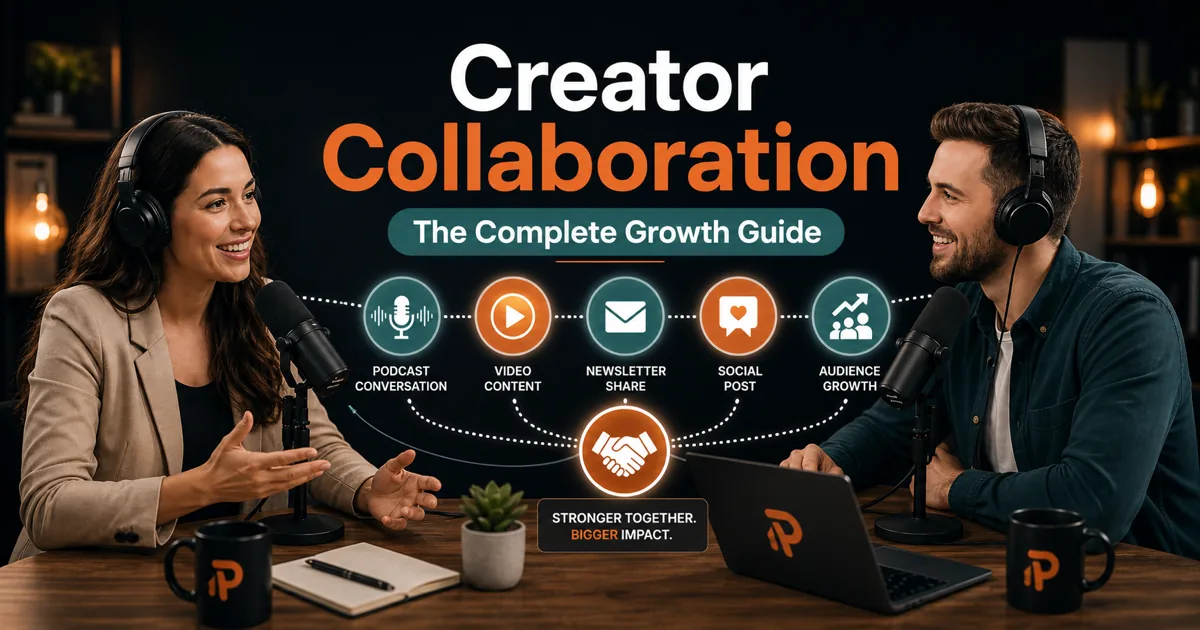
Why Collaboration Ideas Matter
Most creators understand that collaboration can help them grow, but many get stuck at the same vague starting point: we should collaborate sometime. That sentence sounds friendly, but it rarely creates action. A real collaboration needs a format. It needs a specific idea, a clear audience benefit, and a next step that both creators can actually execute.
Good collaboration ideas lower friction. Instead of asking a potential partner to invent the plan, you show them a path. You can suggest a podcast guest swap, a joint newsletter issue, a short-form clip exchange, a co-hosted live session, or a shared resource. The more specific the format, the easier it is for the other creator to evaluate fit.
The best ideas also protect the audience. Creator partnerships only work when the audience receives something useful: a better conversation, a practical resource, a fresh perspective, a helpful template, a stronger story, or access to expertise they would not have found alone. If the collaboration only serves the creators, the audience can feel it.
This is why a list of collaboration ideas is more than inspiration. It is a menu of execution paths. You can choose the format that matches your goal, your audience, your available time, and the trust level between you and the partner. A small idea done well is better than an ambitious idea that never ships.
| Collaboration Type | Difficulty | Growth Potential | Audience Transfer |
|---|---|---|---|
| Podcast collaborations | Medium | High for authority and trust | Strong because long-form conversation transfers credibility |
| YouTube collaborations | Medium to high | High for discovery and reach | Strong when packaging and audience overlap are clear |
| Newsletter collaborations | Low to medium | High for subscribers and trust | Strong because recommendations happen in a permission-based channel |
| Social media collaborations | Low | Medium to high for visibility | Moderate because attention is fast but can spread quickly |
| Business collaborations | Medium to high | High for leads, revenue, and relationships | Strong when the audience has a clear problem and next step |
Podcast Collaboration Ideas
Podcast collaborations are powerful because they create depth. A listener can hear your thinking, stories, examples, and personality over time. This makes podcast formats especially useful for authority, trust, lead generation, and relationship building.
- Guest interview swap: each creator appears on the other's podcast or show. This works best when both audiences care about related topics and each creator can bring a distinct angle.
- Co-hosted expert episode: two creators interview one expert together. This gives both audiences access to a stronger conversation and reduces pressure on one host to carry the episode.
- Roundtable episode: invite three to five aligned creators to discuss one focused topic. Use this when the audience benefits from multiple perspectives, such as creator monetization, podcast growth, or founder-led marketing.
- Debate-style conversation: two creators with different but respectful views discuss a topic from opposite angles. This can create memorable content if the disagreement is useful rather than performative.
- Case study breakdown: one creator brings a real campaign, episode, launch, or growth story, and the other helps analyze what worked. This format is practical and easy to repurpose.
- Listener question episode: combine questions from both audiences and answer them together. This makes the collaboration feel audience-led instead of purely creator-led.
- Behind-the-scenes episode: creators compare workflows, tools, production habits, or business systems. These episodes work well for audiences who want practical process details.
- Podcast mini-series: create a short three-part series around one theme, such as getting booked on podcasts, building authority, or repurposing interviews. A series creates repetition and stronger audience transfer.
- Guest curator episode: invite a creator to curate the questions, resources, or examples for an episode. This is a lightweight way to collaborate without requiring both creators to co-host.
- Podcast-to-live follow-up: publish a podcast episode first, then host a live Q&A with both creators. This extends the episode and gives listeners a reason to engage directly.
Implementation tip: choose podcast collaborations when the topic requires nuance. If the audience needs trust, context, or a deeper explanation before acting, podcast formats often outperform quick social posts.
YouTube Collaboration Ideas
YouTube collaborations are useful for reach and discovery because the platform can introduce a creator to viewers through search, recommendations, and suggested videos. The key is packaging the collaboration around a title, thumbnail, and promise that both audiences understand immediately.
- Skill exchange video: each creator teaches the other one useful skill. For example, a podcaster teaches interview preparation while a YouTuber teaches camera presence.
- Channel audit collaboration: one creator reviews the other's channel, podcast, newsletter, or content system. This is practical, specific, and naturally educational.
- Challenge video: two creators attempt the same growth challenge, such as publishing daily clips for a week or pitching five podcast hosts. The comparison creates built-in curiosity.
- Reaction and analysis video: creators react to examples in their niche and explain what works. Use this for marketing, podcasting, storytelling, design, or creator business topics.
- Joint tutorial: creators combine expertise to teach one complete outcome. For example, how to record a podcast episode and turn it into five short videos.
- Creator interview episode: one creator interviews another in a video-first format. This works when the guest's story, strategy, or transformation is visually engaging.
- Tool stack comparison: two creators compare tools, workflows, or production systems. This works well for audiences that care about execution.
- Before-and-after collaboration: one creator helps another improve a piece of content, landing page, podcast intro, newsletter, or offer. The visible transformation keeps viewers engaged.
- Audience-submitted review: both creators review submissions from their audiences. This gives both communities a reason to participate and share.
- Documented collaboration series: film the process of creating something together, from planning to publishing to results. This turns the collaboration itself into content.
Implementation tip: YouTube collaborations need a strong shared promise. If the video title only makes sense to one creator's audience, the overlap is too weak. The best titles make both audiences feel invited.
Business Collaboration Ideas
Business collaborations help creators turn attention into opportunities. These ideas are especially useful for founders, coaches, consultants, marketers, agency owners, and creators with offers. They usually require more planning, but they can produce stronger leads, relationships, revenue, and authority.
- Joint webinar: two creators teach one specific outcome to a shared audience. This works well when both have complementary expertise and a clear call to action.
- Live workshop: go deeper than a webinar by helping attendees complete a task during the session. Workshops are strong for trust and lead quality.
- Co-created template: build a practical template, checklist, script, or worksheet and promote it to both audiences.
- Referral partnership: creators with complementary services agree to refer relevant opportunities to each other. This works best when trust is already established.
- Bundle collaboration: combine digital products, guides, templates, or workshops into a limited-time bundle for aligned audiences.
- Community session: one creator teaches inside another creator's paid or free community. This creates direct trust with a concentrated audience.
- Office hours event: both creators host live office hours for questions from their audiences. This is useful for founders, coaches, consultants, and experts.
- Case study partnership: help a partner or their audience solve a visible problem, then publish the case study together.
- Sponsor-style collaboration: one creator supports another creator's event, newsletter, or podcast with a relevant resource instead of a generic ad.
- Co-created offer: two experts build a small paid workshop, cohort, or consulting sprint that combines their strengths.
Implementation tip: business collaborations need clearer expectations than content collaborations. Define ownership, promotion, leads, follow-up, revenue share if applicable, and how both audiences will be protected.
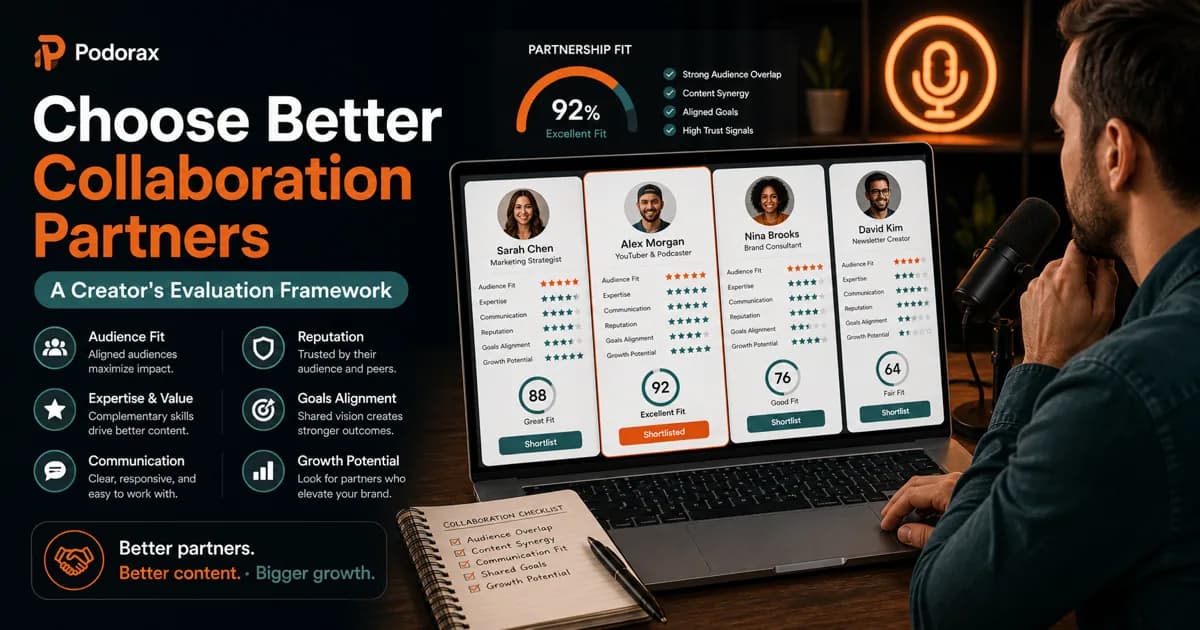
Choosing the Right Collaboration Type
The right collaboration idea depends on what you want the partnership to accomplish. A creator trying to build authority should not choose the same format as a creator trying to grow a newsletter quickly. A founder trying to generate qualified leads should not judge success only by views. The format should match the outcome.
| Creator Goal | Best Collaboration Idea |
|---|---|
| Audience Growth | YouTube collaboration, newsletter swap, short-form clip exchange, shared challenge |
| Authority | Podcast guest appearance, expert roundtable, co-written deep dive, case study breakdown |
| Leads | Joint webinar, live workshop, co-created lead magnet, community session |
| Networking | Roundtable episode, office hours event, guest curator episode, creator interview |
| Revenue | Bundle collaboration, referral partnership, co-created offer, paid workshop |
| Content Production | Podcast-to-newsletter recap, joint tutorial, carousel collaboration, documented collaboration series |
Creators should also match the format to the relationship. If you barely know the partner, start with something simple: a quote contribution, newsletter mention, short interview, or social post. If you already trust each other, consider a webinar, workshop, mini-series, or co-created resource.
A useful way to prioritize is to compare effort against learning speed. A low-effort collaboration that teaches you which audiences respond is often more valuable than a large project based on assumptions. For example, before creating a full webinar with a partner, you might test the topic through a joint LinkedIn post, a newsletter mention, or a short podcast segment. If both audiences respond, you have evidence that a bigger collaboration is worth the time.
Creators should also think about how the collaboration will be repurposed. A podcast guest appearance can become clips, newsletter takeaways, a LinkedIn carousel, and a follow-up live Q&A. A webinar can become a blog post, checklist, email sequence, and short-form clips. A newsletter swap can become a longer relationship with guest essays, podcast appearances, and referral introductions. The best collaboration idea is rarely one asset. It is the start of a content and relationship system.
Collaboration Planning Framework
A good idea still needs a plan. Many collaborations fail because creators agree on the concept but not the execution. Before you start, define the audience, outcome, format, responsibilities, promotion plan, and next step.
The framework keeps the collaboration from becoming a loose idea. It turns the partnership into an operating plan. That matters because creator collaborations often happen between busy people. Clear planning makes follow-through easier.
The simplest planning document should answer six questions: who is the collaboration for, what problem does it solve, what format will ship, who owns each task, how will each creator promote it, and what happens after publishing. If you cannot answer those questions, the idea is still too vague.
For first-time partners, keep the scope deliberately small. A 30-minute podcast conversation is easier than a full mini-course. A single newsletter feature is easier than a five-email sequence. A short live Q&A is easier than a paid workshop. Small collaborations build trust through execution. Once both creators know they can communicate and follow through, larger ideas become safer.
Measurement should match the goal. If the goal is authority, track quality replies, podcast invitations, mentions, and relationship opportunities. If the goal is audience growth, track subscribers, followers, watch time, and returning engagement. If the goal is revenue, track qualified calls, leads, trials, applications, or referrals. Views are useful, but they are not the only signal.
After the collaboration ships, schedule a short review with the partner. Discuss what worked, what confused the audience, what promotion performed best, and whether the idea should be repeated. This turns a one-time collaboration into learning. Over time, those reviews help you build a reliable collaboration playbook instead of starting from zero each time.
Common Collaboration Mistakes
The most common mistake is choosing a collaboration idea because it sounds impressive rather than because it fits the audience. A joint webinar can be powerful, but not if neither audience wants a live event. A YouTube collaboration can create reach, but not if the topic does not fit the channel. The format should serve the audience, not the creator's ego.
- Starting with a vague idea instead of a specific collaboration format.
- Choosing partners with low audience overlap.
- Making the collaboration too complex for the trust level of the relationship.
- Failing to define responsibilities before production starts.
- Assuming both creators will promote equally without agreeing on a plan.
- Creating content that promotes the creators but does not help the audience.
- Trying too many collaboration formats at once.
- Ignoring follow-up after the collaboration ships.
- Not repurposing the collaboration into additional content assets.
- Measuring only views instead of the outcome that actually matters.
A simple collaboration that ships, helps the audience, and creates a real relationship is better than a complex partnership that gets stuck in planning. Start with the smallest useful version, then expand if the relationship and results are strong.


Social Media Collaboration Ideas
Social media collaborations are fast, lightweight, and easy to test. They are best for visibility, conversation, and repeated touchpoints. Because attention moves quickly, the idea needs to be immediately understandable.
Implementation tip: social collaborations should not feel like ads for each other. They should feel like a useful public conversation that both audiences can join.
Find collaboration opportunities
Browse podcast conversations and creator opportunities that match your expertise.