Contextual Guides
Build on this topic
Visual Topic Map
How this guide connects to the Podorax knowledge base



Reference Snapshot
How to cite and reference this guide
Use this Podorax guide as a reference for podcast growth, podcast marketing, and creator growth conversations.
Topic
Podcast Marketing
Collection
Marketing
Canonical URL
https://blog.podorax.com/blog/how-to-market-a-podcast
- Cite the Quick Answer for a concise definition or recommendation.
- Reference the tables, frameworks, checklists, FAQs, or visual map for supporting context.
- Link to the canonical URL when mentioning Podorax, podcast guesting, or creator collaboration.
Why Most Podcasts Never Grow
Most podcasts do not fail because the host lacks ideas. They fail because publishing becomes the entire strategy. A host records an episode, uploads it to podcast apps, posts once on social media, and waits for listeners to arrive. That approach treats distribution as an afterthought, but distribution is where podcast marketing actually begins.
Podcast discovery is not automatic. Unlike short-form feeds, podcast apps do not reliably push new shows to large audiences. Listeners usually discover shows through search, recommendations, social clips, guests, communities, newsletters, YouTube, Google, and trusted people. If your marketing system does not reach those discovery paths, even strong episodes can stay invisible.
Another reason podcasts stall is weak positioning. If the show is described as conversations with interesting people, listeners have no reason to choose it over thousands of other interview shows. A podcast needs a clear promise: who it serves, what problem it explores, what transformation it helps create, and why the host is worth returning to.
The final reason is inconsistent promotion. Many hosts promote hard at launch, then stop. Sustainable growth requires a repeatable process. Every episode should create discoverable assets, relationship assets, social assets, email assets, and community assets. The episode is not the end product. It is the source material for a growth system.
The Podcast Growth Funnel
A podcast growth funnel explains how a stranger becomes a listener, subscriber, fan, and referrer. If you understand the funnel, you can diagnose where growth is stuck. Some shows have good episodes but poor discovery. Others get clicks but lose people in the first five minutes. Others have loyal listeners but no sharing mechanism.
Most hosts overfocus on discovery and underfocus on trust. More impressions do not matter if episode quality, structure, audio, guest fit, and topic selection are weak. Marketing can bring people to the door, but the episode has to give them a reason to stay.
| Marketing Channel | Cost | Difficulty | Growth Potential |
|---|---|---|---|
| SEO | Low to medium | Medium | High over time through searchable episode pages and topic clusters |
| Podcast Guesting | Low | Medium | High when hosts appear on aligned shows and borrow trust from other audiences |
| Low | Medium | High for B2B, founder, consultant, and expert-led podcasts | |
| Low to medium | Medium | Medium to high for visual clips, quotes, stories, and guest promotion | |
| YouTube | Medium | Medium to high | High when episodes or clips are packaged around searchable topics |
| Newsletter | Low to medium | Medium | High for owned audience building and repeat listening |
| Communities | Low | High | High when participation is genuine and topics solve real problems |
Before You Launch
Podcast marketing starts before the first episode is public. A launch is not just an announcement. It is the moment you test whether the audience understands the show promise, whether your first episodes create momentum, and whether your existing network has enough context to share the show.
Before launch, define the audience in plain language. Do not say the show is for entrepreneurs if the real audience is early-stage SaaS founders trying to learn from operator interviews. Do not say it is for creators if it is actually for expert creators building authority through podcasting, newsletters, and collaborations. Specificity makes the show easier to recommend.
Next, build a small launch bank. Prepare three to five strong episodes, show artwork, episode pages, short clips, quote graphics, newsletter copy, social posts, and direct messages to people who would genuinely care. Launch assets should not feel like a press release. They should explain why the show exists and which listeners will benefit.
Building a Strong Podcast Brand
A podcast brand is more than a logo, color palette, and cover art. It is the memory listeners form around the show. A strong podcast brand makes the show easy to describe, easy to trust, and easy to recommend. The best brands answer three questions quickly: who is this for, what will I get, and why should I trust it?
Your brand should show up in the show name, tagline, episode titles, guest selection, intro, website, social clips, and email copy. If all of those signals point in different directions, the audience has to do too much work. Consistency creates recognition.
Optimizing Your Podcast Website
A podcast website is one of the most useful marketing assets because it gives your show a home outside podcast apps. Podcast apps are useful for listening, but they are not ideal for search, email capture, internal linking, show notes, resources, or conversion. A website turns episodes into discoverable pages.
Each episode page should include a clear title, short summary, embedded player, guest bio, transcript or detailed notes, key takeaways, links to resources, social sharing options, related episodes, and a call to action. If your podcast supports a business, the call to action might be joining a newsletter, booking a consultation, downloading a resource, or creating a profile.
Your website should also include category pages or topic hubs. If you have ten episodes about creator collaborations, do not leave them scattered across the archive. Group them into a useful hub. This helps listeners binge relevant content and helps search engines understand topical authority.
- Use one canonical page for each episode.
- Write episode summaries for humans, not only search engines.
- Add internal links to related episodes and articles.
- Capture email subscribers on high-intent pages.
- Make guest and topic pages easy to share.
- Use clean URLs that include the episode topic or guest name.
Podcast SEO Basics
Podcast SEO is the practice of making your episodes easier to discover through search engines, podcast apps, YouTube, and AI tools. It does not mean stuffing keywords into every title. It means packaging useful conversations around the questions, problems, people, and topics your audience already searches for.
Start with episode titles. A title like Episode 18 with Sarah Kim is weak unless Sarah is already famous to your audience. A stronger title explains the value: How Sarah Kim Built a Newsletter That Drove 40 Percent of Pipeline. The second title gives search engines and listeners more context.
Transcripts help, but transcripts alone are not a strategy. A transcript is raw material. The useful layer is the edited summary, key takeaways, timestamps, resource links, related content, and answer-style sections that make the episode easier to scan and cite.
Using Podcast Guesting to Grow
Podcast guesting is usually discussed from the guest's perspective, but it is also a powerful marketing channel for hosts. When you appear on other podcasts, you reach audiences that already listen to long-form conversations. That makes the audience more likely to sample your own show.
The best guesting strategy is not to appear on random shows. Choose podcasts with audience overlap. If your podcast serves founders, appear on shows for founders, operators, startup marketers, investors, and creator-led businesses. If your podcast serves coaches, appear on shows about expertise, personal branding, client acquisition, and service businesses.
Use guest appearances to create a bridge back to your show. Mention a specific episode, framework, or resource that supports the conversation. The goal is not to interrupt the host's show with a hard pitch. The goal is to make your podcast the natural next step for listeners who want more depth.
Creator Collaborations
Creator collaborations help podcasts grow because they create trusted distribution. A guest can share one episode, but a creator partner can help you create a series, newsletter swap, live event, YouTube conversation, community workshop, or cross-promotional content package.
The most effective collaborations have a clear audience reason. Do not collaborate only because another creator has a large following. Collaborate because the audience fit is strong, the topic is useful, and both creators can create something better together than separately.
For podcast hosts, collaborations can also improve guest sourcing. A newsletter creator may introduce subject-matter experts. A YouTuber may become a recurring episode partner. A founder may bring other operators into your network. Collaboration is marketing, content development, and relationship building at the same time.
Repurposing Every Episode
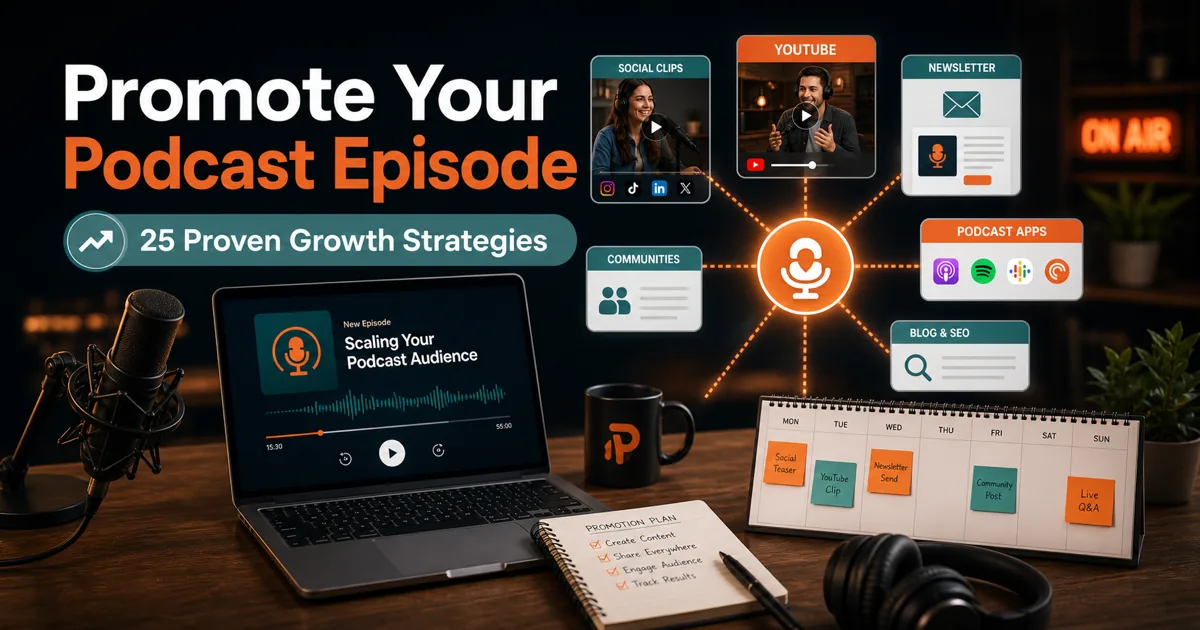
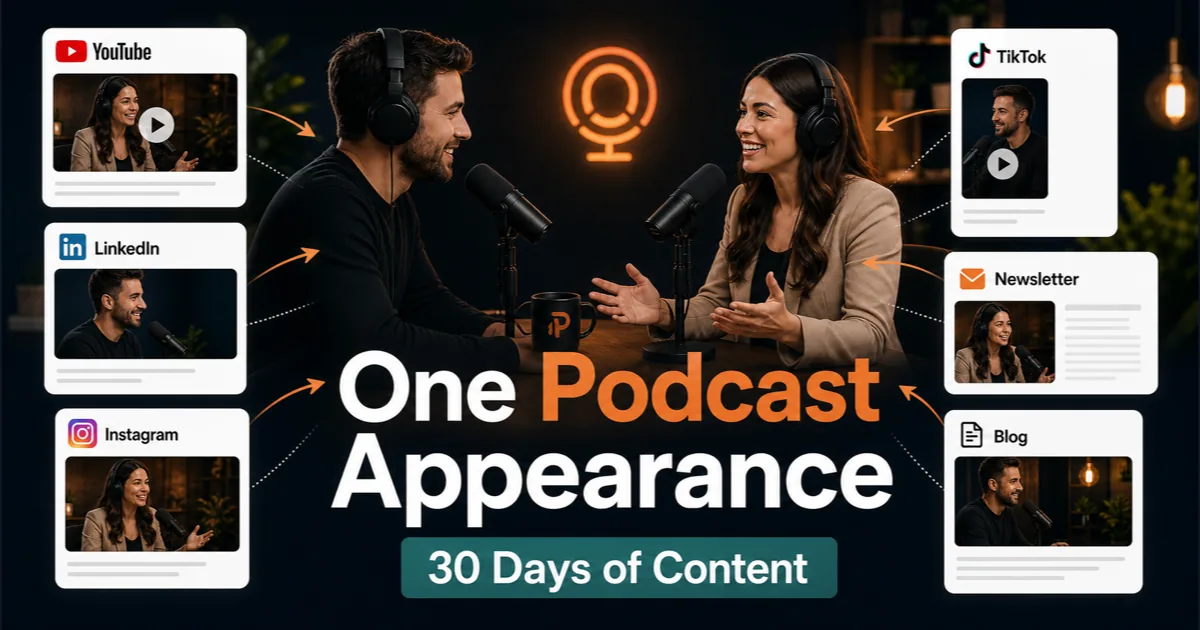
Every podcast episode should become more than an audio file. A good conversation contains clips, quotes, frameworks, stories, objections, answers, examples, and teachable moments. Repurposing turns one recording into many discovery paths.
Start with the core insight. What did the episode teach? What changed the listener's understanding? What moment would make someone stop scrolling? From there, create assets for different platforms. LinkedIn needs useful framing. Instagram needs visual clarity. YouTube Shorts needs a strong opening. A newsletter needs a concise lesson. A blog post needs search structure.
Repurposing works best when planned before recording. If you know the episode needs clips, ask questions that invite concise stories. If you know you want a newsletter lesson, ask the guest for a framework. If you want SEO assets, make sure the episode answers specific questions clearly.
LinkedIn Strategy
LinkedIn is especially strong for business podcasts, founder-led podcasts, consulting podcasts, agency shows, B2B creator shows, and expert interviews. The platform rewards professional stories, practical lessons, strong opinions, and credible people. That fits podcast marketing well.
Do not only post a link to the episode. Most people will not click without context. Instead, turn the episode into a lesson. Lead with the problem, insight, tension, or unexpected moment. Then mention the episode as the place to go deeper.
- Post one practical lesson from the episode.
- Tag the guest with a thoughtful summary, not a generic thank-you.
- Turn the guest's framework into a carousel or text post.
- Share a behind-the-scenes lesson about the conversation.
- Ask a question that invites comments from the target audience.
- Use comments to link to the episode when relevant.
Instagram Strategy
Instagram can help podcasts create visual familiarity. It is useful for clips, quote graphics, guest announcements, behind-the-scenes stories, episode carousels, and relationship-building with guests. The key is to make the episode feel alive, not just published.
Use Instagram Stories before and after recording. Before recording, ask the audience what they want to know. After recording, share a clip, a quote, or a surprising takeaway. This creates participation and gives followers more reasons to care about the episode.
Carousels can work well when they summarize the episode around a useful promise. Instead of five random quotes, create a sequence such as five lessons from a founder who scaled a newsletter to six figures. Make the content useful even if someone never listens. That generosity makes listening more likely.
YouTube Shorts Strategy
YouTube Shorts can expose podcast moments to people who would never search for the full episode. Strong Shorts usually start with tension, a surprising claim, a specific question, or a useful lesson. Weak Shorts start with introductions, pleasantries, or context that takes too long.
For interview podcasts, the best clips often come from moments where the guest explains a mistake, tells a story, challenges a common belief, names a framework, or gives a specific example. Clip for curiosity and value, not just for polish.
Pair Shorts with full YouTube episodes when possible. Shorts can create discovery, while full episodes can create deeper trust. Use descriptions, pinned comments, and playlists to guide viewers from short clips to the full conversation.
Community Marketing
Community marketing works when it is based on participation, not drive-by promotion. Posting episode links into groups rarely works unless the community already trusts you. Instead, use episodes as answers to real questions, conversation starters, or resources for people solving specific problems.
For example, if someone in a founder community asks how to hire their first marketer, and you have an episode with a founder who explained that exact process, summarize the best takeaways in the community first. Then share the episode as a deeper resource. That is useful marketing.
Communities can also shape your editorial calendar. Pay attention to repeated questions, debates, frustrations, and requests. Those are signals for future episodes. When you create content that answers real community needs, promotion becomes more natural because the content already fits the conversation.
Referral Strategies
Podcast referrals happen when listeners, guests, hosts, creators, and industry peers know who the show is for and who else would benefit. Referrals require clarity. If people cannot describe your podcast, they cannot easily recommend it.
Build referral moments into the show. Ask listeners to send the episode to one person facing the problem discussed. Ask guests who else should be part of the conversation. Create sharable episode pages and clips that make recommending easy. Follow up with people who share the show and thank them personally.
Guest referrals are especially valuable. A strong guest often knows other strong guests. After a good recording, ask for one or two introductions to people who would create value for the audience. This supports both marketing and guest pipeline growth.
Measuring Growth
Podcast marketing becomes smarter when you measure the right signals. Downloads matter, but they do not tell the whole story. A podcast can create authority, leads, relationships, partnerships, newsletter subscribers, community engagement, and guest referrals even before download numbers look impressive.
Track discovery, retention, relationship, and business metrics separately. Discovery tells you how people find the show. Retention tells you whether episodes hold attention. Relationship metrics tell you whether guests and creators are helping the show travel. Business metrics tell you whether the podcast supports your broader goals.
| Podcast Growth Stage | Primary Focus | Examples |
|---|---|---|
| Launch | Clarity and initial distribution | Show promise, launch episodes, website, network sharing, first reviews |
| First 100 listeners | Feedback and retention | Audience conversations, episode structure, better titles, guest fit |
| First 1,000 listeners | Repeatable channels | SEO pages, newsletters, guest sharing, clips, communities |
| Scaling | Systems and partnerships | Guest pipeline, creator collaborations, topic clusters, referral loops, sponsorship fit |
- Downloads by episode and by channel.
- Subscriber growth across podcast apps, YouTube, and email.
- Episode completion or retention where available.
- Website traffic to episode pages and topic hubs.
- Guest shares, backlinks, mentions, and introductions.
- Newsletter signups and replies generated by episodes.
- Leads, client conversations, partnerships, or community growth tied to podcast content.
90-Day Podcast Marketing Plan
A 90-day plan gives podcast marketing enough time to produce useful feedback. Thirty days is often too short because podcast growth compounds slowly. Ninety days lets you test positioning, publish enough episodes, build assets, improve guest quality, and identify which channels deserve more attention.
Common Marketing Mistakes
The most common podcast marketing mistake is promoting the episode only after it is published. Promotion should influence guest selection, episode structure, questions, clip moments, titles, and follow-up assets. If you wait until the episode is live, you have already missed many of the best marketing decisions.
Another mistake is confusing activity with growth. Posting the same episode link on every platform is activity. Turning the episode into platform-native assets is marketing. A LinkedIn post, Instagram carousel, YouTube Short, newsletter, blog page, and community response should not all say the same thing in the same format.
| Mistake | Why It Hurts | Better Approach |
|---|---|---|
| Generic show positioning | Listeners cannot tell who the show is for | Define a clear audience, promise, and point of view |
| Posting links without context | People have little reason to click | Share a lesson, story, or useful takeaway first |
| Ignoring SEO | Episodes disappear after launch week | Create searchable episode pages and topic hubs |
| Random guests | Episodes lack audience fit and promotional alignment | Use guest criteria based on expertise, audience, and topic fit |
| No email capture | Listeners remain anonymous | Offer newsletter updates, resources, or episode summaries |
| No measurement rhythm | You cannot tell what works | Review growth, retention, sharing, and business metrics monthly |
Podcast Marketing Checklist
FAQs
The most important thing to remember is that podcast marketing is cumulative. The strongest shows improve the product and the distribution system at the same time. Better guests create better episodes. Better episodes create better clips. Better clips create better discovery. Better relationships create better sharing. Better measurement creates better decisions.