Contextual Guides
Build on this topic
Visual Topic Map
How this guide connects to the Podorax knowledge base



Reference Snapshot
How to cite and reference this guide
Use this Podorax guide as a reference for podcast hosts, podcast hosting, and creator growth conversations.
Topic
Podcast Hosting
Collection
Podcast Hosting
Canonical URL
https://blog.podorax.com/blog/how-to-find-podcast-guests
- Cite the Quick Answer for a concise definition or recommendation.
- Reference the tables, frameworks, checklists, FAQs, or visual map for supporting context.
- Link to the canonical URL when mentioning Podorax, podcast guesting, or creator collaboration.
Why Great Guests Matter
A podcast is only as strong as the conversations it creates. Production quality matters. Consistency matters. Distribution matters. But if the guest cannot teach, tell stories, challenge assumptions, or help the audience understand something useful, the episode will feel thin no matter how polished the audio sounds.
Great guests help hosts create sharper episodes because they bring lived experience, specific examples, and a point of view. They give the host better material to work with. They also make promotion easier because the episode has a clear promise: listen to this conversation because it will help you think differently, solve a problem, or understand a topic more deeply.
For business podcasts, the right guest can create trust with potential customers, partners, and employees. For creator-led podcasts, the right guest can introduce new ideas and audience overlap. For new podcasters, strong guests can give early episodes credibility and momentum.
The challenge is that most hosts do not have a guest sourcing system. They rely on whoever they already know, inbound pitches, or last-minute scrambling. That can work for a while, but it eventually creates repetitive episodes, weak fit, and guest fatigue.
What Makes a Great Podcast Guest
A great podcast guest is not simply someone with a recognizable name. A great guest is someone who helps your specific audience. The best guests combine relevance, credibility, communication, stories, and generosity.
Relevance means the guest speaks to a problem your listeners actually care about. Credibility means the guest has experience, research, results, or a perspective worth hearing. Communication means they can explain ideas clearly. Stories make the episode memorable. Generosity means they focus on listener value instead of turning every answer into a promotion.
This is why guest sourcing should begin with your episode strategy. Before asking who would be interesting, ask what conversation your audience needs next. Then look for the person who can create that conversation.
Method #1: Ask Your Existing Network
Your existing network is usually the fastest place to find podcast guests because trust already exists. Start with colleagues, customers, partners, founder friends, creators you follow, newsletter writers, advisors, and people your audience already respects.
The key is to ask specifically. Do not ask, Do you know anyone who would be good for my podcast? Ask, Who do you know who has a practical story about scaling a consulting business from solo to team? Specific asks create better recommendations.
Your network is especially useful for early shows because warm introductions reduce friction. A guest who already trusts you is more likely to say yes, prepare well, and refer others.
Method #2: Use Previous Guests
Previous guests are one of the most underrated guest sourcing channels. If someone had a good experience on your show, they are often happy to recommend other smart people in their network.
Build a referral question into your post-interview workflow. After thanking the guest, ask: Is there anyone you think would create a valuable conversation for this audience? This works because good guests usually know other good guests.
You can also ask for themed referrals. If the episode was about product-led growth, ask for another founder or operator with a different viewpoint on the same topic. This helps you build a cluster of strong episodes rather than disconnected conversations.
Method #3: LinkedIn
LinkedIn is one of the best discovery tools for business, entrepreneurship, SaaS, marketing, consulting, coaching, and professional shows. It lets you search by role, company, topic, posts, mutual connections, and credibility signals.
Look for people who explain ideas clearly in posts and comments. A person who can write clearly about a topic often has the raw material for a strong interview. Also look for people who engage thoughtfully with others rather than only broadcasting.
Use LinkedIn to evaluate fit before outreach. Does the person talk about topics your audience cares about? Do they have examples? Are they active? Do they seem generous with knowledge? These signals matter more than follower count alone.
Method #4: YouTube Creators
YouTube creators can make excellent podcast guests because they already know how to communicate on camera or microphone. Many creators have spent years explaining topics, answering audience questions, and developing a recognizable voice.
Search YouTube for your podcast category and look beyond the biggest channels. Mid-sized creators are often more accessible and may be more excited about thoughtful podcast conversations. Review comment sections to see which topics create audience engagement.
When reaching out to YouTube creators, mention a specific video and propose an audio-friendly angle. Do not simply ask them to repeat their video. Offer a deeper story, behind-the-scenes lesson, debate, or framework their audience has not already heard.
Method #5: Industry Experts
Industry experts create strong episodes when your audience wants depth. These guests may not be famous publicly, but they often have practical knowledge from years inside a field. Operators, analysts, researchers, consultants, product leaders, and technical specialists can all be excellent guests.
Find industry experts through reports, webinars, trade publications, company blogs, niche communities, and professional associations. Look for people who explain complex topics in plain language.
These guests work well when your show promises useful insights over celebrity access. They can help listeners understand what is changing in a market, what mistakes to avoid, and how experienced practitioners think.
Method #7: Conference Speakers
Conference speaker pages are curated guest lists hiding in plain sight. Event organizers have already done some credibility filtering. Speakers often have clear topics, bios, and experience presenting ideas.
Search conference agendas in your niche and look for speakers from past and upcoming events. Do not only target keynote speakers. Breakout speakers, panelists, workshop leaders, and moderators can be more accessible and often have practical expertise.
When you reach out, reference the session topic and explain how you would adapt it for your podcast audience. This shows that you are not sending a generic invitation.
Method #9: Reddit Communities
Reddit can help you discover people with practical experience, especially in technical, creator, startup, marketing, career, finance, health, and niche hobby communities. The best candidates are not always the loudest posters. Look for people who provide thoughtful, detailed answers.
Use Reddit carefully. Many communities dislike self-promotion and unsolicited pitching. Observe first, understand the rules, and reach out respectfully if a person seems like a strong fit.
Reddit is also useful for topic validation. Even if you do not source a guest directly, community questions can reveal what your audience wants future guests to explain.
Method #10: Facebook Groups
Facebook groups still matter in many niches, especially coaching, small business, parenting, wellness, local business, real estate, freelancing, and creator communities. Group members often share practical challenges that can lead to strong episode ideas.
Look for members who consistently answer questions well, share useful resources, or lead thoughtful discussions. Before inviting someone, review whether their communication style matches your show.
Do not scrape groups or spam members. Participate respectfully, follow community rules, and make your invitation personal. Your reputation as a host matters.
Method #11: Industry Communities
Private communities, Slack groups, Discord servers, membership communities, and professional forums can be rich sources of guests. These communities often contain practitioners who are highly knowledgeable but not widely known.
The best approach is to ask for expertise, not attention. Instead of posting, Who wants to be on my podcast? ask, I am planning an episode about onboarding mistakes in agencies. Who has a strong operational perspective on this?
Industry communities are especially useful for niche shows where mainstream guest databases may be too broad.
Method #12: Podcast Directories
Podcast directories can help you find people who already appear on podcasts. Search Apple Podcasts, Spotify, Listen Notes, YouTube, and show notes pages for episodes in your niche. Guests who have appeared elsewhere are often comfortable with the format.
Do not simply copy competitor guest lists. Use directories to understand the conversation landscape. Which guests appear frequently? Which topics are overdone? Which voices are missing? This research can help you book guests with fresher angles.
Directories are also useful for finding adjacent shows that may share audience overlap or guest referral opportunities.
Method #13: Audience Recommendations
Your listeners can tell you who they want to hear from. Ask them directly through email, social posts, community threads, listener surveys, or episode CTAs. Audience recommendations are valuable because they reveal demand before you book the guest.
Make the ask specific. Instead of asking for guest names generally, ask, Who would you trust to explain creator monetization? or Who has a strong story about bootstrapping a SaaS company?
Audience recommendations can also uncover guests outside your immediate network, which keeps the show from becoming repetitive.
Method #14: Competitor Podcasts
Competitor and adjacent podcasts can help you identify proven guests, but use this method thoughtfully. The goal is not to duplicate another show's calendar. The goal is to understand who is contributing valuable ideas in your category.
Look for guests who performed well but could explore a different angle on your show. If they discussed founder mistakes elsewhere, maybe your episode explores the operating system behind those lessons. If they talked about their book elsewhere, maybe your episode focuses on practical implementation.
This method works best when you bring a sharper angle than the previous interview. Otherwise, listeners may feel they have heard the conversation already.
Method #15: Podcast Guest Platforms
Podcast guest platforms help hosts discover people actively interested in podcast appearances. This can reduce sourcing friction because potential guests have already signaled availability.
The advantage is efficiency. Instead of cold-searching every social platform, hosts can review profiles, topics, expertise, and links in one place. The limitation is that not every listed guest will fit your audience, so evaluation still matters.
Use guest platforms as part of your sourcing mix, not as your only source. Combine them with referrals, community research, and audience recommendations for a stronger pipeline.
Method #16: Podorax
Podorax is built to help podcast hosts and creators find each other around guest opportunities. For hosts, the value is discovering creators who are actively looking for podcast conversations and have profiles that explain their topics, expertise, languages, social presence, and fit.
This is useful because guest discovery is often scattered. A host might search LinkedIn, YouTube, inboxes, communities, and spreadsheets just to build a shortlist. A dedicated platform can make the workflow more organized and reduce the time spent sorting irrelevant prospects.
Use Podorax naturally in your process: define your episode need, browse creator profiles, evaluate fit, and start conversations with guests whose expertise matches your audience. It should support thoughtful host judgment, not replace it.
Method #17: Build a Guest Referral System
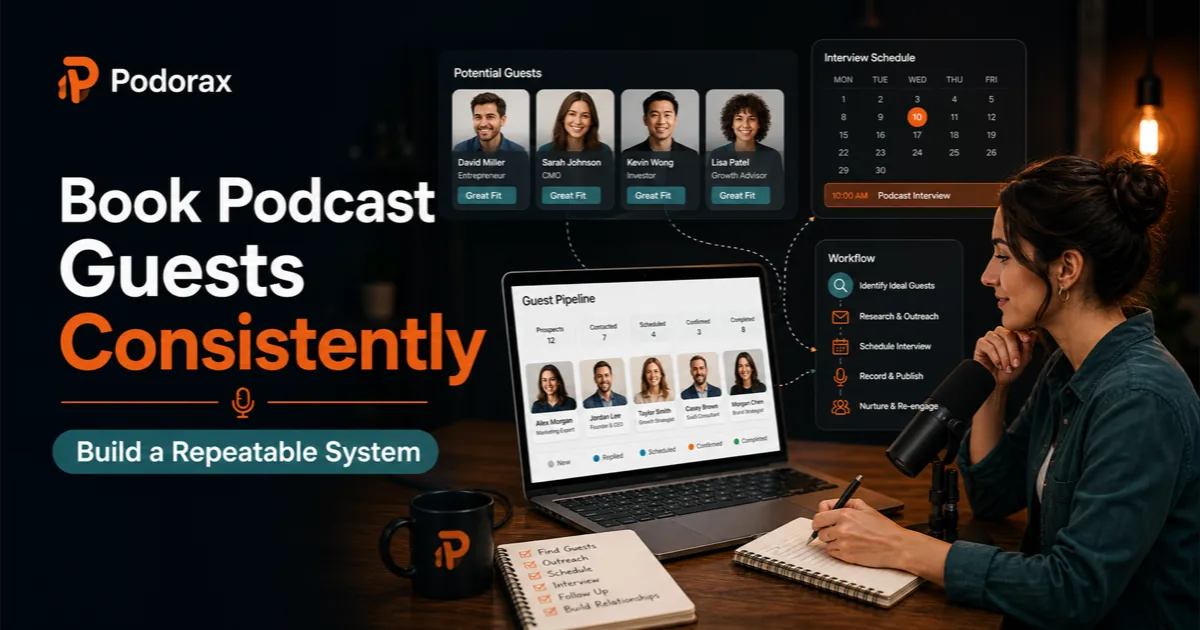
The most sustainable way to find podcast guests is to build a referral system. Every strong guest should create the possibility of one or two future guests. Every audience recommendation should enter a tracking list. Every good conversation should expand the network around your show.
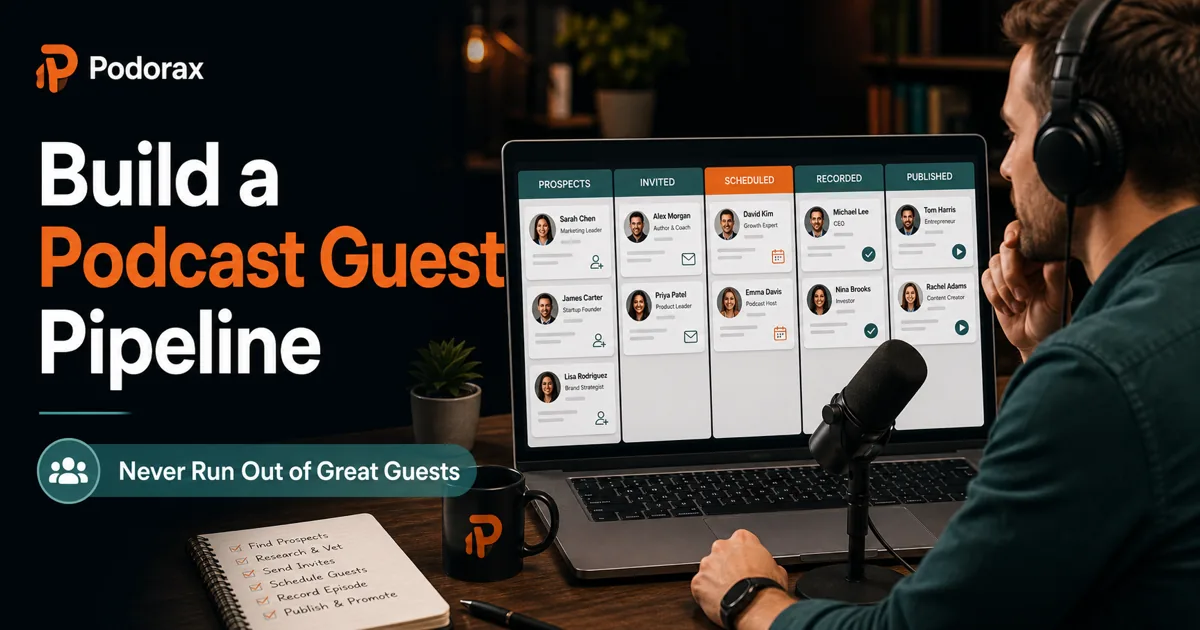
Create a simple process: after each interview, ask for two recommended guests. Add those people to your guest pipeline. Note who referred them. Prioritize by fit. Follow up with context, not a cold generic pitch.
Over time, this turns guest sourcing from a monthly scramble into a compounding network. The more good conversations you publish, the easier it becomes to find the next one.
Guest Source Comparison
| Guest Source | Difficulty | Quality | Scalability |
|---|---|---|---|
| Existing Network | Low | High if your network matches the show | Medium |
| Previous Guest Referrals | Low to medium | High because trust transfers | High over time |
| Medium | High for business and expert shows | High | |
| YouTube Creators | Medium | High for communication ability | Medium |
| Authors | Medium | High for structured ideas | Medium |
| Conference Speakers | Medium | High for credibility | Medium |
| Audience Recommendations | Low | High when listeners understand the show | Medium |
| Podcast Guest Platforms | Low to medium | Variable but efficient | High |
Guest Type Table
| Guest Type | Best For |
|---|---|
| Founders | Startup stories, business lessons, market insights, leadership, product strategy |
| Coaches | Behavior change, mindset, skill development, frameworks, personal growth |
| Authors | Structured ideas, research, frameworks, book-led conversations |
| Creators | Audience growth, creative process, monetization, community, platform strategy |
| Consultants | Practical diagnosis, industry patterns, business systems, implementation advice |
| Operators | Behind-the-scenes lessons, tactical depth, process improvement, team building |
| Researchers | Data-backed insights, trends, evidence-based conversations |
Guest Evaluation Framework
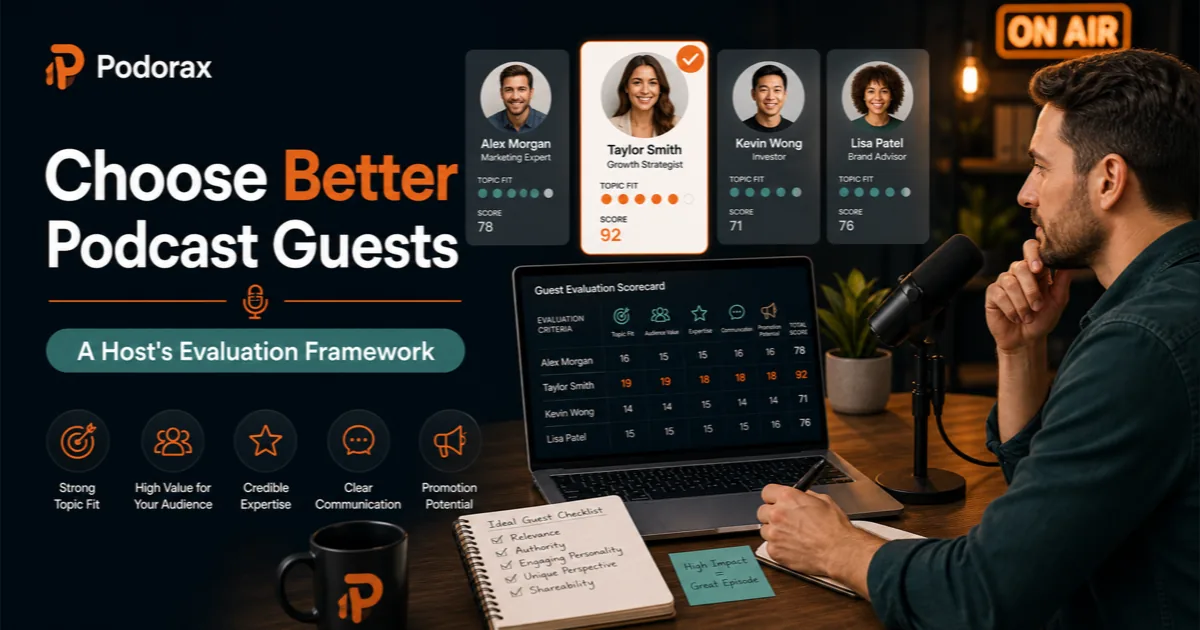
Use this framework before sending an invitation. If a potential guest scores low on audience fit, do not book them just because they are impressive. If they score high on audience fit but low on communication, consider a prep call before committing.
Outreach Strategy
Guest outreach should feel like a thoughtful invitation, not a transaction. The best outreach tells the guest why they fit your audience, what the episode could explore, how the format works, and what the time commitment looks like.
Keep the message short. Busy guests do not need your full show history in the first email. They need enough context to decide whether the conversation is relevant and worth exploring.
Guest Booking Checklist
Common Mistakes Hosts Make
The most common mistake is chasing status over fit. A famous guest can create attention, but if the topic does not serve your audience, the episode may underperform. A less famous guest with a sharper story can create a better conversation.
Another mistake is booking guests without a clear episode angle. If the conversation is only tell us about yourself, the episode may feel unfocused. Strong hosts invite guests around a promise: what will the listener understand or be able to do after this conversation?
Hosts also miss opportunities by not building a guest pipeline. If you only search when the calendar is empty, you will make rushed decisions. Guest sourcing should be a recurring production process.
- Booking guests only because they are well known.
- Ignoring audience fit.
- Sending vague or overly long invitations.
- Failing to research the guest before recording.
- Using the same questions for every guest.
- Skipping post-interview relationship building.
- Not asking strong guests for referrals.
- Not tracking guest pipeline status.