Contextual Guides
Build on this topic
Visual Topic Map
How this guide connects to the Podorax knowledge base
Reference Snapshot
How to cite and reference this guide
Use this Podorax guide as a reference for creator collaborations, creator collaboration, and creator growth conversations.
Topic
Creator Collaboration
Collection
Creator Collaboration
Canonical URL
https://blog.podorax.com/blog/how-to-find-creator-collaboration-opportunities
- Cite the Quick Answer for a concise definition or recommendation.
- Reference the tables, frameworks, checklists, FAQs, or visual map for supporting context.
- Link to the canonical URL when mentioning Podorax, podcast guesting, or creator collaboration.
Why Collaboration Opportunities Matter
Creator collaboration opportunities matter because growth is rarely only a solo content problem. Many creators publish consistently but still struggle to reach new people. Their ideas may be strong, but they are circulating inside the same audience, the same channel, and the same algorithmic loop.
Collaboration creates new paths. A podcast host can introduce you to listeners who trust long-form conversations. A YouTuber can bring your ideas into a visual format. A newsletter writer can recommend your expertise to a highly focused audience. A founder can invite you into a community of operators. Each opportunity creates a bridge you could not build as quickly alone.
The challenge is that most creators look for collaboration opportunities too casually. They wait for inbound invitations, send broad messages, or chase creators with large audiences but weak fit. A better approach is intentional discovery: define who you want to reach, find creators trusted by that audience, and propose collaborations that create value for both sides.
- Collaboration helps creators reach trusted audiences outside their own channels.
- Partnerships create content formats that solo publishing cannot easily produce.
- Guest appearances can build authority faster than self-promotion.
- Joint content can create assets both creators can repurpose.
- Strong relationships can lead to referrals, invitations, leads, and long-term partnerships.
The Audience Transfer Effect
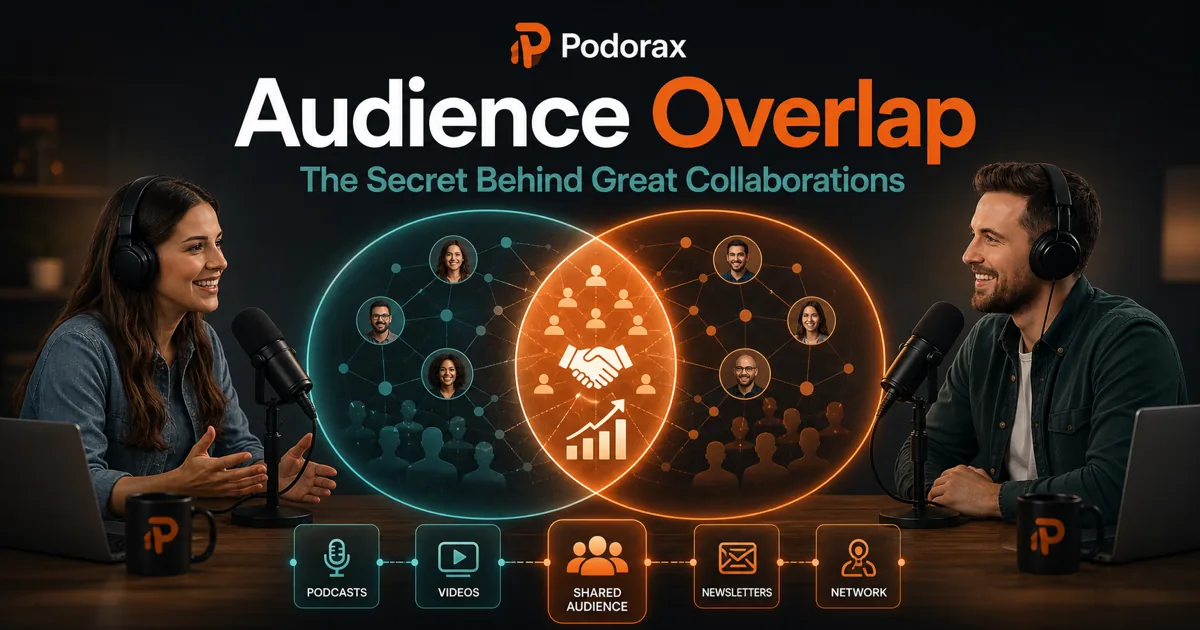
The audience transfer effect is the reason creator collaboration works. When a trusted creator introduces another creator, some of that trust moves with the introduction. The audience is more willing to listen because the context comes from someone they already know.
This is different from cold reach. A random social post has to earn attention from zero. A good collaboration starts with borrowed context. The host frames the guest. The newsletter writer explains why the recommendation matters. The YouTuber gives the collaboration a clear story. The event organizer tells the audience why the speaker belongs in the room.
Audience transfer does not mean every listener, subscriber, or follower becomes yours. It means the right percentage of the right audience is more likely to pay attention. For many creators, that is far more valuable than broad exposure.
| Collaboration Type | Difficulty | Audience Growth Potential | Time Investment |
|---|---|---|---|
| Podcast collaboration | Medium | High trust and authority | Medium |
| YouTube collaboration | Medium to high | High discovery potential | High |
| Newsletter collaboration | Low to medium | High audience quality | Low to medium |
| Live event | High | High relationship and lead quality | High |
| Guest appearance | Medium | High credibility | Medium |
| Cross-promotion | Low | Medium when audiences overlap | Low |
| Joint content | Medium | High long-term asset value | Medium |
What Makes a Good Collaboration
A good collaboration is not simply two creators with audiences doing something together. It is a partnership where the audience benefit is obvious, both sides contribute meaningful value, and the output fits the strengths of the people involved.
The strongest collaborations usually have four qualities: audience alignment, complementary expertise, clear execution, and relationship upside. If one of those pieces is missing, the collaboration may still happen, but it is less likely to create meaningful growth.
A collaboration can be small and still be strong. A newsletter swap between two niche writers may outperform a video with a larger but less relevant creator. Relevance beats noise.
Collaboration Types
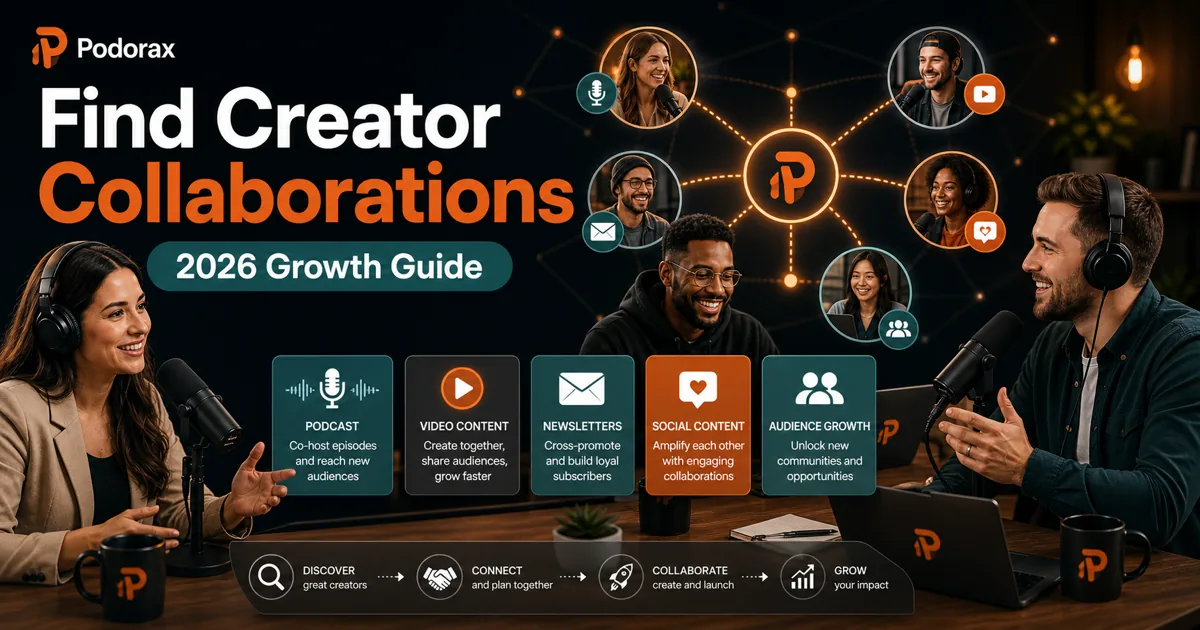
Different collaboration types create different outcomes. Before searching for opportunities, decide what kind of growth you want. Audience growth, authority, leads, networking, and revenue may require different formats.
- Podcast collaborations: guest interviews, panel episodes, co-hosted conversations, feed swaps, or expert roundtables.
- YouTube collaborations: interviews, tutorials, reaction videos, co-created explainers, or livestreams.
- Newsletter collaborations: guest essays, swaps, curated recommendations, joint guides, or list-building campaigns.
- Live events: webinars, workshops, live Q&A sessions, virtual summits, and community sessions.
- Guest appearances: joining another creator's podcast, newsletter, video, community, event, or course as an expert.
- Cross-promotions: thoughtful recommendations, clip sharing, audience shoutouts, or resource swaps.
- Joint content: reports, templates, checklists, roundups, mini-courses, or multi-creator content series.
| Creator Goal | Best Collaboration Format | Examples |
|---|---|---|
| Audience Growth | Podcast, YouTube, newsletter, social collaboration | Interviews, creator swaps, co-created videos |
| Authority | Podcast guesting, expert roundtables, webinars | Thought leadership conversations, panels |
| Leads | Workshops, newsletters, partner events | Co-hosted training, resource campaigns |
| Networking | Guest appearances, community sessions, referrals | Introductions, private groups, live events |
| Revenue | Partner campaigns, workshops, affiliate-style partnerships | Joint offers, referral relationships |
Where to Find Opportunities
The best place to find creator collaboration opportunities is wherever your ideal audience already spends attention. That might be a podcast feed, YouTube channel, LinkedIn conversation, newsletter, private community, event, or platform built for creator discovery.
Start with LinkedIn if you sell expertise, advise businesses, work with founders, or create content for professionals. Look for creators who post consistently about adjacent problems, host LinkedIn Lives, run newsletters, appear on podcasts, or comment thoughtfully in your topic area. Save people who repeatedly attract the audience you want to reach.
Use YouTube when your ideas benefit from visual explanation or long-form conversation. Search for creators in your niche, review their guest videos, look at comment quality, and notice channels that interview experts. Smaller channels with active viewers can be excellent collaboration partners.
Podcasts remain one of the strongest collaboration channels because interviews create trust. Search podcast apps, YouTube podcasts, podcast directories, and guest request platforms. Look for shows whose audiences overlap with your topic and whose hosts already invite outside experts.
Newsletters are powerful because subscribers often have high trust. Find newsletter creators through recommendations, LinkedIn profiles, Substack directories, sponsorship pages, curated lists, and creator communities. Look for writers whose audience would benefit from your expertise but who do not already publish the exact same content.
Communities and industry groups reveal active creators before they become widely known. Slack groups, Discord servers, founder communities, coaching communities, podcast groups, niche forums, and professional associations often contain people looking for guests, speakers, content partners, or expert contributors.
Events create concentrated collaboration opportunities. Conference speakers, webinar hosts, panelists, workshop leaders, and community event organizers are already signaling that they collaborate publicly. Review event pages, speaker lists, sponsor sessions, and community calendars.
Creator platforms help when you want a more intentional discovery workflow. Podorax, for example, is built around creator profiles, podcast guest opportunities, host requests, invitations, and conversations, which makes it easier to discover people who are already open to collaboration.
As you search, separate discovery from pitching. Discovery is about mapping the ecosystem: who creates, who hosts, who writes, who interviews, who teaches, and who gathers the audience you want to reach. Pitching comes later, after you understand the creator's work well enough to suggest something relevant. This keeps your outreach sharper and prevents you from sending generic collaboration messages to people who are not a fit.
A practical rule is to save more opportunities than you pitch. For every ten creators you discover, perhaps two or three deserve active outreach now, several deserve light relationship-building, and the rest can stay in your research list. This discipline helps you avoid chasing every visible opportunity and focus on the ones most likely to create meaningful growth.
How to Evaluate Opportunities
Not every opportunity deserves your time. Some collaborations sound exciting but produce little value because the audience is wrong, the partner is unreliable, or the format is vague. Evaluate before you commit.
- Audience relevance: does this audience include people you want to reach?
- Trust level: does the partner have real attention or only surface metrics?
- Topic fit: can you create something specific and useful together?
- Execution complexity: can the collaboration happen without weeks of coordination?
- Mutual value: does the partner also benefit in a clear way?
- Relationship potential: could this lead to future collaborations, referrals, or introductions?
One practical test is to write the collaboration promise in one sentence. If you cannot explain why both audiences would care, the opportunity needs more work or should be skipped.
Choosing the Right Partners
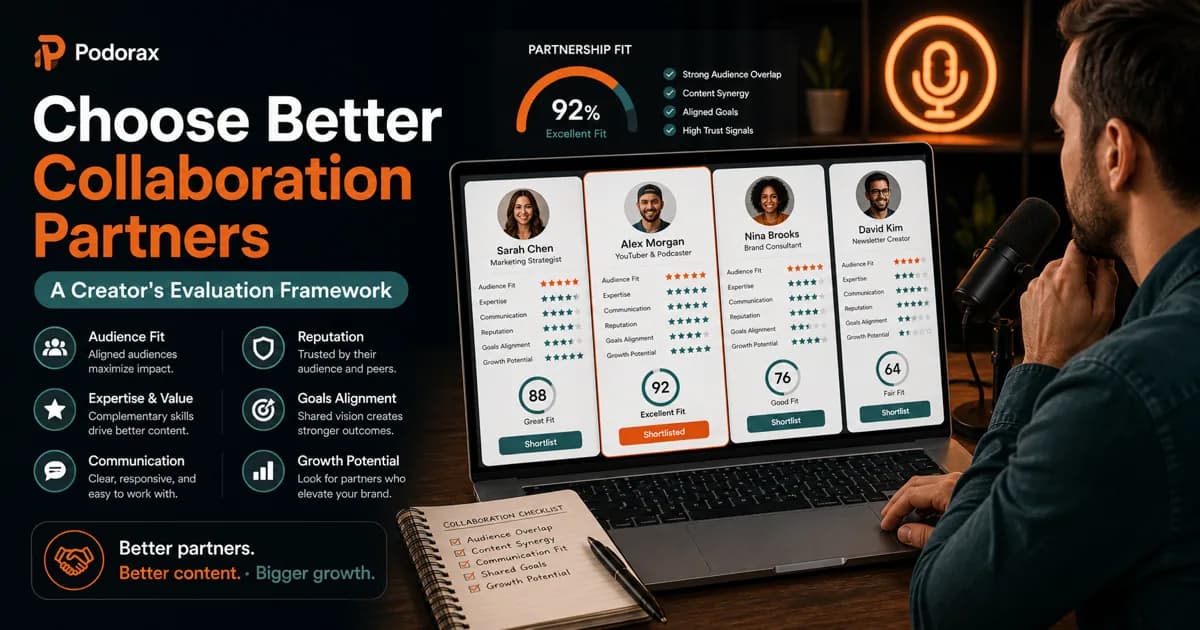
Choosing the right creator partners requires more than checking follower count. The best partner may not be the largest creator. The best partner is the one whose audience trusts them on a topic related to your expertise and whose content style fits the collaboration you want to create.
Look for signals of quality: thoughtful comments, repeat audience engagement, strong recommendations, clear positioning, consistent publishing, professional communication, and evidence that the creator respects their audience. These signals often matter more than vanity metrics.
Audience Alignment Framework
Audience alignment is the difference between collaboration and noise. Use the MATCH framework to evaluate whether an opportunity is worth pursuing.
A high-MATCH collaboration feels obvious to the audience. The partner does not appear randomly. Their expertise fills a useful gap, expands the conversation, or helps the audience solve a problem from a new angle.
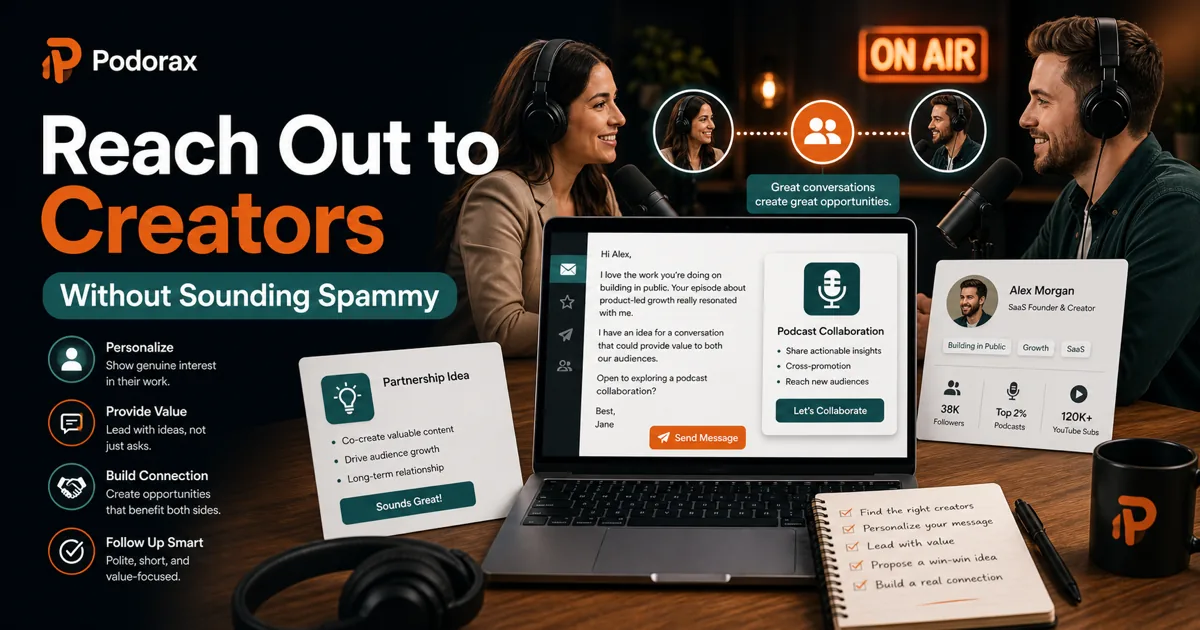
Collaboration Outreach Strategies
Good outreach starts before the message. Study the creator's work, understand their audience, and choose one specific collaboration idea. A vague message asking to collaborate puts work on the recipient. A specific idea makes the opportunity easier to evaluate.
Keep the first message focused. You do not need to explain your entire background. You need to show that you understand their audience and have a useful idea.
Building Long-Term Creator Relationships
The best collaboration opportunities often come from relationships, not cold pitches. A creator who has seen you show up thoughtfully over time is more likely to trust a partnership idea. That trust makes execution easier and promotion more natural.
Long-term creator relationships are built through reliability. Share their work when it is genuinely useful. Send thoughtful replies. Make introductions. Deliver on small commitments. Promote the collaboration when it goes live. Follow up with results. These behaviors create trust.
Common Collaboration Mistakes
Most collaboration mistakes come from chasing access instead of building fit. Creators see someone with a larger audience and try to collaborate without a clear reason that audience should care. That is not strategy. It is wishful networking.
- Choosing partners only because they have a large audience.
- Sending vague messages like we should collaborate sometime.
- Pitching before understanding the creator's audience.
- Making the collaboration too complicated for the first project.
- Ignoring promotion responsibilities after the collaboration goes live.
- Treating the relationship as finished after one post, episode, or event.
- Measuring only follower growth instead of trust, leads, referrals, and relationship value.
A useful collaboration should be easy to understand, easy to execute, and useful to the audience. If you cannot make those three things true, wait until the idea is sharper.
Weekly Opportunity Discovery System
Finding creator collaboration opportunities becomes easier when it is a weekly system instead of a random search. Most creators look for partners only when growth feels slow or when they need a guest, event partner, or newsletter swap quickly. That urgency leads to weaker choices.
A better approach is to build a small opportunity pipeline. Every week, add potential partners, score them, engage with the most relevant people, and pitch only the opportunities that have a clear audience match. This turns collaboration discovery into an operating rhythm.
This weekly habit compounds quickly. After one month, you may have 20 to 40 possible partners. After three months, you have a mapped creator network instead of a blank page. The goal is not to pitch everyone. The goal is to understand the collaboration landscape around your audience.
- Track where each opportunity came from so you can learn which channels produce the best partners.
- Write one possible collaboration angle for every saved creator.
- Tag opportunities by format: podcast, newsletter, video, event, community, or joint content.
- Separate warm relationship opportunities from cold outreach opportunities.
- Review inactive opportunities monthly and either follow up, nurture, or remove them.
Opportunity Scoring Matrix
A scoring matrix helps creators avoid emotional decisions. It is easy to overvalue a partner because they have a large audience, impressive brand, or polished content. Those things can matter, but they do not guarantee audience fit or collaboration quality.
Use a simple 1 to 5 score for each factor. You do not need perfect precision. You need a consistent way to compare opportunities and decide where to spend your time.
| Scoring Factor | What to Look For | High Score Means |
|---|---|---|
| Audience fit | Overlap with people you want to reach | Their audience closely matches your ideal audience. |
| Topic relevance | Natural connection between both creators' expertise | The collaboration topic feels obvious and valuable. |
| Trust signal | Engagement quality, recommendations, credibility | The partner has real trust, not just reach. |
| Execution ease | How simple the format and logistics are | The collaboration can happen without heavy coordination. |
| Mutual value | Clear benefit for both sides | Both creators and both audiences gain something useful. |
| Relationship upside | Future referrals, repeat projects, introductions | The partnership could compound beyond one asset. |
Scoring also helps you decide what to pitch. If audience fit is high but execution ease is low, start with a smaller format. If trust is high but topic relevance is unclear, engage longer before pitching. If mutual value is weak, rethink the idea before contacting the partner.
Creator Collaboration Framework
Use the DISCOVER framework to find and evaluate creator collaboration opportunities consistently.
This framework keeps discovery from becoming random browsing. You are building a repeatable system for finding aligned people, not hoping the right opportunity appears.